Twelfth Night
On the evening of 5 January 1601, in the hall of the Middle Temple in London, an audience of lawyers watched a new comedy full of disguises, mistaken twins and a humiliated steward. A diarist named John Manningham noted the performance; the play was Shakespeare’s Twelfth Night, or What You Will, and its title named the very season in which such revels belonged. Twelfth Night — the eve of the twelfth day after Christmas — was the climax and the closing of the whole Christmas festival, the wildest night of a wild season, presided over by mock kings and misrule, sealed with a special cake and a hidden bean, and shadowed by a firm old rule: when it was over, the greenery had to come down.
When Twelfth Night Falls
The date needs a word of explanation, because people place it on two different evenings. Counting the Twelve Days of Christmas from Christmas Day itself, 25 December, the twelfth day lands on 5 January and the twelfth night is the evening of the fifth — the eve of the Epiphany, which falls on 6 January. This is the reckoning the Church of England and most modern usage follow, and it is the date kept here. An older tradition began the count on the day after Christmas, which pushes Twelfth Night to the evening of 6 January, the feast of the Epiphany itself. Both usages have long histories, and the ambiguity is genuine, but the eve of Epiphany — the night of 5 January — is the most widely recognised Twelfth Night today. It closes the season that runs from Christmas through to the coming of the Magi and points on to Epiphany the following morning.
History and the Feast of Misrule
Twelfth Night’s roots run deep into the midwinter festivals of Europe, and its spirit of inversion and licensed disorder recalls the Roman Saturnalia, in which social ranks were briefly overturned and masters served their slaves. By the medieval and Tudor periods, the Christmas season in England and much of Europe had become a sustained festival of feasting and misrule, and Twelfth Night was its high point. Great households and royal courts appointed a Lord of Misrule — sometimes called the Abbot of Unreason — to preside over the revels, a temporary master of ceremonies who overturned the ordinary order of things and licensed a season of games, disguising and mischief. The court of the Tudors and Stuarts kept Twelfth Night with lavish masques, plays and banquets; it was among the grandest nights of the royal year, which is exactly why Shakespeare’s company found an audience for a comedy of the same name.
The office could be surprisingly grand. The boy king Edward VI appointed the gentleman George Ferrers as his Lord of Misrule over the Christmas seasons of 1551 and 1552, furnishing him with a retinue, a fool and a mock court to rival the real one. The Inns of Court, London’s law schools, staged their own elaborate Christmas revels under mock princes, and in the parishes the same instinct produced boy bishops and mock mayors, ordinary people briefly raised to an authority they would surrender at Epiphany. The Puritans loathed all of it, and when they held power in the 1640s and 1650s they banned the keeping of Christmas outright, Twelfth Night revels included, so that only the Restoration of 1660 brought the festival fully back to life.
The Cake and the Bean
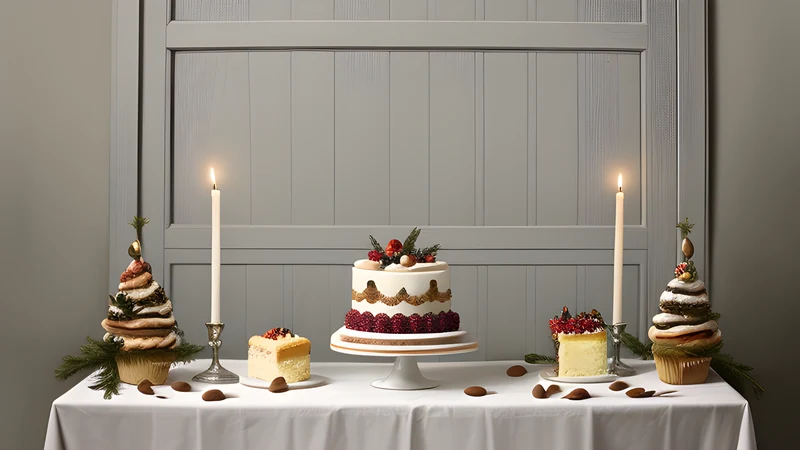
The most enduring Twelfth Night custom is the cake. A special Twelfth-cake, rich with fruit and often elaborately iced, was baked for the occasion, and into it were hidden a dried bean and a dried pea. Whoever found the bean in their slice was crowned King of the Bean for the night, and whoever found the pea was Queen, and the pair reigned over the evening’s games and toasts, their commands obeyed by the whole company. This custom of the hidden token is old and widespread, and it survives directly in the French and Spanish galette des rois and roscón de reyes, the “kings’ cakes” eaten at Epiphany with a hidden figurine or bean, and in the king-cake tradition carried to New Orleans, where finding the token brings luck and the duty of hosting the next celebration. The English Twelfth-cake itself gradually evolved, over the nineteenth century, into the iced and marzipanned Christmas cake now eaten weeks earlier.
The custom is far older than Tudor England. The Romans chose a mock king by lot at their midwinter Saturnalia, and the medieval French crowned a roi de la fève, a “king of the bean”, at Epiphany feasts across the continent. A little porcelain figurine, the fève, still hides in the French galette today, and bakeries sell a paper crown with every cake for whoever finds it. Tradition holds that the youngest child at the table crawls beneath it and calls out who shall receive each slice as it is cut, so that no one can be accused of steering the token into a favoured hand.
The Baddeley Cake at Drury Lane
One Twelfth Night custom has survived unbroken in the least likely of places, a London theatre. Robert Baddeley, a comic actor who had once worked as a pastry cook, died in 1794 and left one hundred pounds in trust to the Theatre Royal, Drury Lane, the interest to buy a cake and wine for the company performing on Twelfth Night each year. More than two centuries later the Baddeley Cake is still cut in the green room every 6 January, the cast in costume drinking the health of a long-dead comedian who wanted the players who came after him to keep the feast. It is the last living fragment of the old theatrical Twelfth Night, when the season’s most celebrated new comedies were staged for the holiday, and it ties the modern stage directly back to the revels that gave Shakespeare’s play its name.
Wassailing the Orchards
In the cider counties of the West of England, Twelfth Night carried a second, older ritual: the wassailing of the apple trees. Villagers would process into the orchards after dark, gather around the finest tree, and drink its health with hot spiced cider, pouring some at the roots and hanging toast soaked in cider in the branches for the robins. They made a great deal of noise — shouting, banging pots, firing guns into the boughs — to wake the sleeping trees and drive off evil spirits, so that the coming year’s crop would be abundant. The custom survives, revived and cherished, in parts of Somerset, Devon and Herefordshire, where wassails are still held each January, some on the modern date and some on “Old Twelfth Night,” 17 January, which follows the pre-1752 Julian calendar.
Taking Down the Greenery
For all its riot, Twelfth Night ends on a note of order. The most stubborn superstition attached to the day is that all Christmas decorations — the holly, the ivy, the mistletoe and, in the modern era, the tree — must be taken down by Twelfth Night, and that to leave them up beyond it invites bad luck for the year ahead. In some traditions the greenery not cleared by Twelfth Night could linger only until Candlemas on 2 February, the truly final deadline, but the common modern rule fixes the reckoning on the night of 5 January. Whichever date one keeps, the message is the same: the festival is over, the evergreen must go back to the cold, and ordinary time resumes.
How It Is Celebrated
Twelfth Night is quieter than it once was, but it is far from dead. In London, an actors’ company gathers each 6 January outside a Bankside theatre for the Holly Man ceremony, a modern revival of seasonal mumming, wassailing and the cutting of a Twelfth-cake. Orchards across the West Country hold their wassails in January. Churches keep the eve of Epiphany, and many families still treat the night as the moment to undress the tree and pack away the decorations. Some cooks bake a modern Twelfth-cake or a king-cake with a hidden token, keeping the game of the bean alive.
Fun Facts
Shakespeare’s Twelfth Night is named for the holiday but contains almost nothing about it — the title simply signals a play written for, or in the spirit of, the season’s topsy-turvy revels, in which servants outwit masters and a woman disguised as a man turns a whole household upside down.
The recorded performance of the play at the Middle Temple in early January 1601 is one of the earliest firm dates in Shakespeare’s stage history, giving scholars a rare fixed point in a career full of uncertainties.
The King of the Bean tradition was so established across Europe that in some courts a real coin or precious token was baked into the cake, and finding it could mean a night of genuine, if temporary, authority over one’s social superiors.
Because Britain switched from the Julian to the Gregorian calendar in 1752, dropping eleven days, some rural festivities — including certain orchard wassails — still cling to “Old Twelfth Night” on 17 January, eleven days after the modern date, preserving the older reckoning of the season.
In New Orleans the descendant of the Twelfth-cake, the king cake, opens the Carnival season on this very night and is eaten right through to Mardi Gras; whoever finds the tiny figure baked inside is expected to buy the next cake in the chain.
A Closing Reflection
Twelfth Night is the calendar’s great exhale. For twelve days the ordinary rules had been suspended — the poor made kings, the household turned upside down, the trees toasted like honoured guests — and on this last night the licence burned itself out in one final blaze of cake and misrule. Then the candles were snuffed, the holly came down, and the year returned to its senses. There is a wisdom in that shape, in fencing off a season of permitted excess and then decisively ending it, and it is worth remembering on any 5 January, as the last of the decorations goes back into its box for another year.
Related Content