Swedish Midsommar
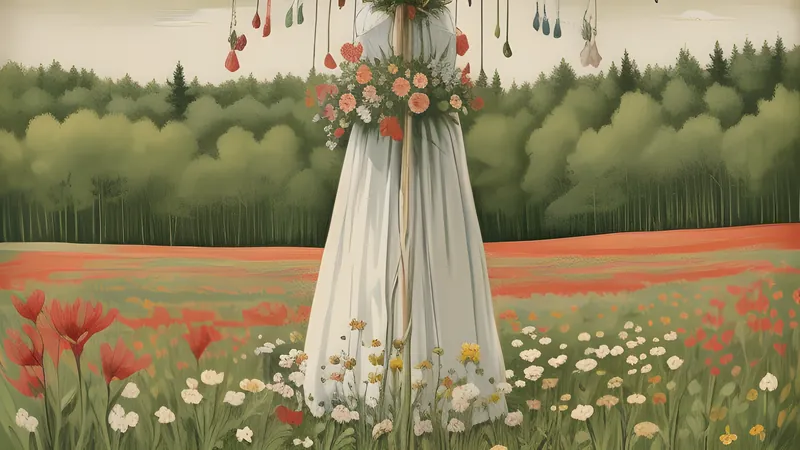
Picture a meadow somewhere in central Sweden a little before midnight in late June, where a tall pole wrapped in birch and wildflowers stands at the centre of a ring of dancers, and the sun simply refuses to set. This is Midsommar, the great Swedish midsummer festival, and for many Swedes it is the most cherished day of the year after Christmas. Officially it falls on Midsummer’s Eve, fixed since 1953 to the Friday between 19 and 25 June, so the exact date drifts a little from year to year. It is a celebration of light, greenery and the short, dazzling northern summer, spent almost entirely outdoors with family and friends, and it carries an emotional charge that surprises visitors who expected nothing more than a picnic.
Pagan roots under a thin Christian coat
Midsommar’s roots reach back into pre-Christian times, when the solstice marked a pivotal turn in the agricultural and natural year. In a land of extreme seasonal contrast, where winter swallows the light for months, the long days of high summer were a cause for genuine rejoicing, and rituals tied to fertility, growth and the power of green nature attached themselves to the season. The gathering of foliage and the raising of a decorated pole almost certainly descend from these older fertility customs.
With Christianity the festival was folded into the feast of John the Baptist, whose nativity the church set at 24 June, and Midsummer’s Eve corresponds to the eve of that feast. Yet in Sweden the religious overlay sits very lightly indeed. The day feels far more like a celebration of nature and the season than a saint’s feast, and many of its practices keep a frankly pagan character that no amount of ecclesiastical rebranding has managed to scrub away.
The pole, the dance and the date
The midsommarstång, the midsummer pole, is the festival’s defining emblem, though its history is more tangled than its prominence suggests. The custom of raising a decorated pole was imported into Sweden from continental Europe, very probably via Germany, during the medieval period, where comparable poles featured in May Day celebrations. Transplanted north, it absorbed local plants and flowers and migrated from May to midsummer, because, unlike in warmer lands, it is precisely now that the Swedish countryside offers ample fresh greenery to dress it with.
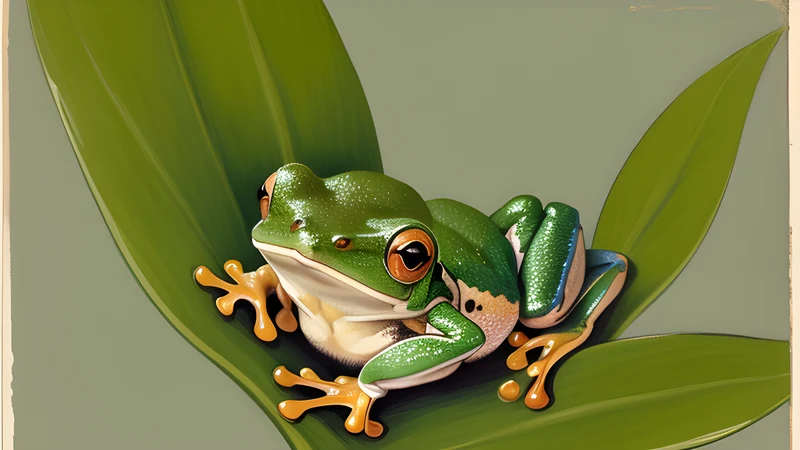
The best-loved dance around that pole is Små grodorna, the little frogs, in which dancers hop and mime to a cheerful tune, illustrating with their hands the ears and tails that frogs conspicuously lack. The song has an unexpectedly martial pedigree: its melody comes from La Chanson de l’Oignon, the Onion Song, a march from the era of the French Revolution. The story goes that the British, mocking their French enemies, rewrote the words as “Au pas, grenouilles”, in step, little frogs, and the melody eventually drifted into Sweden to become the most beloved and most gently absurd moment of the national summer.
The date itself was tidied up in living memory. For generations Midsummer’s Eve sat on a fixed calendar date of 23 June, but in 1953 Sweden moved it to a weekend, fixing the eve to the Friday between 19 and 25 June so that the whole country could reliably take the holiday together. It is one of the rare cases where you can name the year a venerable tradition was rescheduled by administrative convenience.
Why it matters
Midsommar is bound up with Swedish identity in a way few other days are. It expresses a national love of nature, of the outdoors, and of the fleeting summer that rewards the patience of a long, dark winter. There is a measurable quality to that patience: in the far north of Sweden the sun does not set at all around the solstice, and even in Stockholm the June nights never grow fully dark, so the festival is staged under a sky that contradicts everything the winter taught. That physical fact, the refusal of the light to leave, gives the day an intensity that no calendar entry alone could explain. It is also a festival of return and reunion, when families reassemble at country cottages and on the islands of the archipelago, and old friendships are renewed beneath an evening light that barely fades. The same appetite for shared seasonal ritual surfaces all year in Sweden, from the candlelit procession of Swedish Lucia Day at the year’s darkest point to the warm-kitchen gatherings of Swedish National Cinnamon Bun Day; Midsommar is simply the brightest and most uninhibited of them.
How it is celebrated
The day’s rhythm is gentle and communal. The pole is raised and dressed with foliage and flowers, and people gather to dance around it, the frog dance first among many. A long lunch follows, and it is gloriously fixed in its menu. At the centre sits pickled herring, sill, served in several styles, mustard, onion, dill, alongside boiled new potatoes with dill, soured cream and chives, very often gravlax or other cured salmon, and strawberries with cream, or layered into a sponge cake, to finish. Holding it all together is snaps, the small glass of clear, often herb-flavoured spirit; when flavoured with dill and caraway it becomes aquavit, a term now legally protected in Europe, though elderflower, honey and wormwood versions abound. Each glass is preceded by a snapsvisa, one of the short drinking songs every Swede knows, and the singing grows steadily louder and less precise as the afternoon wears on into the long, bright evening.
The grandest celebrations are in the province of Dalarna, the cultural heartland of folk costume and fiddle music. At Sammilsdalsgropen in Leksand, the festivities have swelled to around thirty thousand people gathering each year around what is billed as the world’s tallest midsummer pole, a single village event grown into an international pilgrimage. For many Swedes, though, the ideal Midsommar is the opposite of that crowd: a small gathering at a summer cottage on the archipelago or by a forest lake, with just enough people to dance a ragged ring around a homemade pole.
Flowers, folklore and symbols
Flowers are everywhere. Crowns of wildflowers, once worn chiefly by young women and now by people of every age, are woven and worn through the day, and an old piece of folklore holds that a girl who picks seven different flowers in silence, crossing seven fences or stiles to gather them, and places them beneath her pillow will dream of her future spouse. The detail of silence and the seven barriers matters in the older tellings: the magic was thought to work only if the ritual was performed without speaking, on the one night of the year when the boundary between the natural and the supernatural was believed to thin. The greenery, the pole and the flower crowns together speak of fertility and the abundance of high summer, the season’s life made visible. The new potatoes and the first strawberries are symbols in their own right, their arrival timed almost exactly to the festival, so that the meal itself becomes a marker of the year’s peak, the first proper taste of a summer that has been waited for through six months of dark.
Across the Nordic and Baltic world
Sweden’s Midsommar belongs to a wider family of solstice celebrations. Denmark and Norway light bonfires for Sankt Hans, Finland keeps Juhannus by lakeside fires, and the Baltic states hold their own vivid solstice festivals, Latvia’s Jāņi among the most exuberant. Swedish emigrant communities, especially in the American Midwest, carry the tradition far from home, raising poles and serving herring under skies that grow properly dark at night, where the magic of the never-setting sun has to be imagined rather than seen.
Fun facts
- The melody of the frog dance, Små grodorna, descends from a French Revolutionary military march, La Chanson de l’Oignon, reworked by mocking British soldiers.
- Midsummer’s Eve was moved to a fixed Friday only in 1953; before that it sat on the calendar date of 23 June.
- The midsommarstång is not a native Swedish invention but a medieval import from continental Europe, probably Germany, where similar poles belonged to May Day.
- Despite falling at the height of summer, Midsommar is notorious for rain, a recurring disappointment Swedes meet with stoic good humour.
- The festival is taken so seriously that it has been proposed, only half in jest, as a better candidate for Sweden’s national day than the official date in June.
A closing reflection
There is a particular Swedish wisdom in placing the year’s greatest celebration at the exact moment the light begins, imperceptibly, to retreat. Midsommar is joyful and a little wistful at once, because everyone dancing around the pole knows that from this peak the days will only shorten, the dark winter already implied in the endless evening sun. That awareness does not dampen the festival; it sharpens it. The herring tastes better, the songs grow louder, and the flower crowns are worn with more abandon precisely because the brightness will not last, which is, after all, the only honest reason to dance.
Related Content