Purple Day for Epilepsy
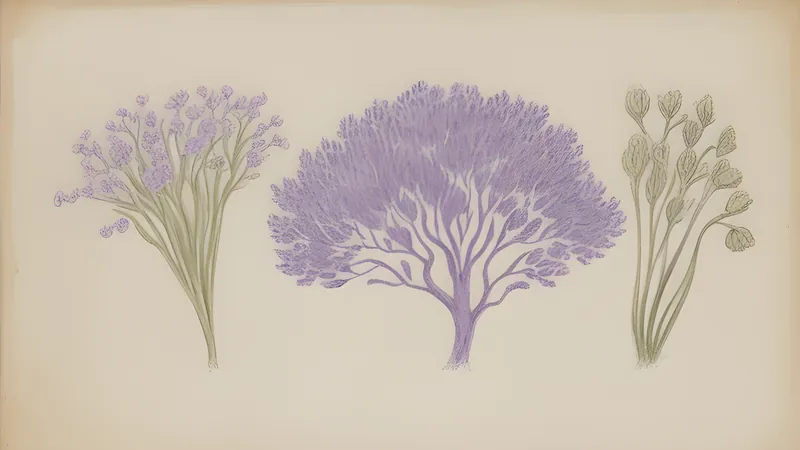
Roughly one in every hundred people will be living with epilepsy at any given time, which means that almost everyone knows someone affected, often without realising it. The condition has been documented since antiquity, described in Babylonian medical tablets and later given the name the Greeks used for it, yet for most of recorded history it was misread as possession, madness or contagion. Purple Day for Epilepsy, observed each 26 March, exists to replace those inherited misconceptions with plain medical fact, and to remind everyone managing seizures quietly that they are part of a very large company indeed.
A child’s idea, now international
The day was created in 2008 by Cassidy Megan, then nine years old, from Nova Scotia in Canada. Diagnosed with epilepsy herself, she wanted to establish a single occasion on which people could learn about the condition and on which those living with it would know they were not alone. Working at first with the Epilepsy Association of Nova Scotia, and from 2009 with the Anita Kaufmann Foundation in the United States, she saw her idea spread until it was marked in more than a hundred countries. Canada went on to recognise the day in law through the Purple Day Act of 2012. The story is worth keeping in view because it grounds an abstract health observance in a concrete human motive: a child who did not want others to feel as isolated as she once had.
What epilepsy actually is
Epilepsy is a neurological condition defined by a tendency to recurrent, unprovoked seizures, which are caused by sudden, excessive electrical discharges among the brain’s nerve cells. Crucially, it is not a single illness but a spectrum, and seizures take many forms. A focal seizure may produce only an odd taste, a wave of déjà vu, a twitching hand or a few seconds of altered awareness, while a generalised tonic-clonic seizure involves loss of consciousness and convulsions and is the form most people picture. Some individuals have many seizures a day; others may go years between them. Causes range from genetic factors and brain injury to infection, stroke and tumours, and in a substantial proportion of cases no cause is ever identified. This variety is the root of much misunderstanding, since two people described as having epilepsy may have experiences with almost nothing in common.
Knowing what to do: seizure first aid
One of the most valuable things Purple Day spreads is practical, life-relevant knowledge, because the right response during a seizure is neither obvious nor instinctive. For a convulsive seizure, the guidance is to stay calm and time it, to ease the person to the ground and cushion their head, to remove nearby hazards, and to turn them gently onto their side once the convulsions subside to keep the airway clear. Two long-standing instincts must be resisted: do not restrain the person, and do not put anything in their mouth, since the old fear of someone “swallowing their tongue” is a myth and forcing objects between the teeth causes injury. An ambulance is warranted if a seizure lasts more than five minutes, if one follows another without recovery in between, or if the person is injured, pregnant or not their usual self afterwards. Carried by enough people, this knowledge turns frightened bystanders into useful ones.
Why early diagnosis changes outcomes
Timely recognition matters because epilepsy is, for most people, treatable. Anti-seizure medications control seizures fully in a majority of those diagnosed, allowing them to drive, work and live with little restriction once stable. The barrier is often delay: subtle seizures, especially absence and focal types, are easily mistaken for daydreaming, clumsiness or stress, sometimes for years. By describing the fuller range of what a seizure can look like, Purple Day encourages people to seek assessment sooner, which can shorten the interval before effective treatment and reduce the risks that come with uncontrolled seizures, including injury and, in rare cases, sudden unexpected death in epilepsy.
The lived reality
Behind the clinical picture are everyday experiences that awareness campaigns are designed to honour. For many, well-controlled epilepsy is a background fact of life rather than a defining one. For others, unpredictable seizures undermine confidence and independence in ways that are hard for outsiders to appreciate: the loss of a driving licence, the caution around swimming or baths, the calculation that goes into a night out, the fatigue and side effects that some medications bring. Stigma compounds all of this. Unfair assumptions in hiring, condescension, or the simple awkwardness of others can be as wearing as the seizures themselves. Listening to people with lived experience, rather than speaking over them, is how communities become genuinely accommodating, and it is a central aim of the day.
Triggers, myths and the things people get wrong
Part of the value of a dedicated day is the chance to correct specific, persistent errors. Flashing lights are widely assumed to set off all seizures, but photosensitive epilepsy, in which flickering patterns or strobes are a trigger, affects only a small minority of people with the condition; for most, light has nothing to do with it. Common genuine triggers are more mundane: lack of sleep, missed medication, stress, illness with fever, and for some, alcohol. Another widespread error is to assume that anyone having a seizure is in immediate mortal danger and that dramatic intervention is required, when in fact most seizures end on their own within a couple of minutes and the right response is calm protection rather than panic. There is also the lingering belief that epilepsy is rare or that it implies reduced intelligence, neither of which is true; it is one of the most common neurological conditions and affects people across the full range of ability and achievement. Replacing these specific falsehoods with specific facts is exactly the kind of work a single focused day can do well.
How it is observed
On 26 March, schools, workplaces, hospitals and charities encourage people to wear purple, to decorate their spaces, and to hold fundraising and educational activities. Public buildings and landmarks in some cities are illuminated in the colour. Charities run awareness sessions and distribute first-aid guidance, while people affected by epilepsy share their stories online, often using the day as a rare opportunity to speak openly. The barrier to entry is intentionally low: a purple garment, a shared post, a small donation or twenty minutes spent learning seizure first aid all count, and their cumulative effect across countless individuals is considerable.
Famous lives, ordinary lives
One quiet purpose of awareness days is to dislodge the assumption that a condition limits what a person can achieve, and epilepsy offers ample material for that. A striking number of figures across history are believed, on varying degrees of evidence, to have lived with seizures, from rulers and generals to writers and artists, and while retrospective diagnosis is always uncertain, the broader point stands: epilepsy has never been a barrier to a full and consequential life. Far more important than any famous name, though, are the unremarkable cases, the teacher, the nurse, the engineer, the parent who manages a chronic condition without it defining them, and whose ordinariness is itself the message. Purple Day’s quiet ambition is to make that ordinariness the default expectation rather than a pleasant surprise, so that disclosing epilepsy carries no more weight than mentioning any other managed health condition.
Symbols and their meaning
The colour purple, and lavender in particular, is the internationally recognised emblem of epilepsy, chosen for its calming associations and its quiet acknowledgement of the isolation the condition can bring. The lavender flower frequently accompanies it. These symbols matter because they make support visible without demanding explanation; a person living with epilepsy who sees others wearing purple receives, without a word, the message that their condition is understood rather than feared.
Fun facts
- Epilepsy is among the oldest medical conditions on record, appearing in Babylonian cuneiform tablets and in the writings of Hippocrates, who argued it was a disorder of the brain rather than a curse.
- The notion of someone “swallowing their tongue” during a seizure is anatomically impossible, yet it persists, which is why first-aid teaching specifically warns against putting anything in the mouth.
- Anti-seizure medication controls seizures completely in a large majority of people diagnosed, making epilepsy one of the more treatable serious neurological conditions.
- Many seizures involve no convulsions at all, presenting instead as brief blank spells, unusual smells or tastes, or moments of confusion that are easily missed.
- Cassidy Megan was nine when she founded the day, and Canada later became the first country to recognise it in law.
A closing reflection
A colour cannot cure a condition, but it can change the atmosphere around it, and atmosphere is much of what makes epilepsy hard to live with. The seizures are medical; the silence, the shame and the misplaced fear are social, and those are precisely the things a day of open conversation can shift. What gives Purple Day for Epilepsy its quiet force is that it asks so little of each participant and yet, multiplied across a hundred countries, alters the experience of being diagnosed. The most generous thing most people can offer is not money or expertise but a willingness to understand, and that, conveniently, is free.
The same colour anchors the wider Purple Day observance, and the campaign’s commitment to evidence over fear sits naturally alongside the World Health Organization’s World Health Day.
Related Content