National Tempura Day
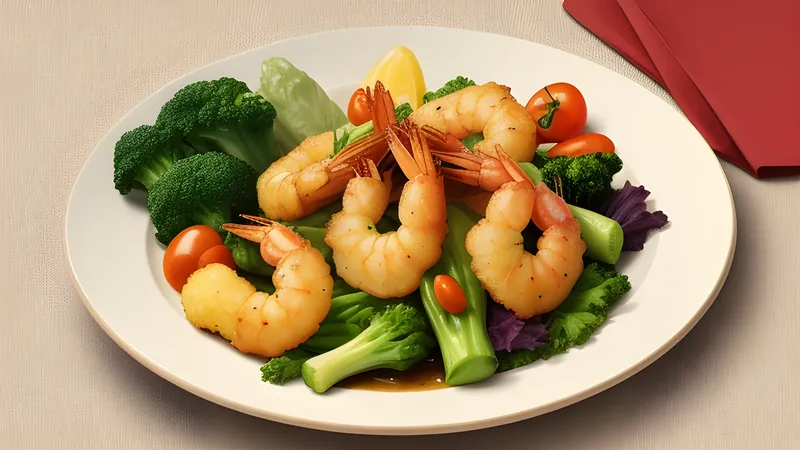
Sometime in the 1540s, Portuguese ships made landfall in southern Japan, and with the traders and Jesuit missionaries came a habit that would, by a long and unlikely route, become one of the proudest dishes in Japanese cuisine. They fried vegetables in batter. The Japanese cooks who watched them took the idea, stripped it down, chilled it, lightened it, and turned a foreign fasting-day staple into something almost weightless. National Tempura Day, observed each year on 7 January, marks the result: prawns and vegetables sheathed in a whisper-thin, lacy coating, fried to pale gold and served at the instant of perfect crispness. The day is a small annual reminder that the most Japanese of foods began as an import, and that what counts is not where a technique comes from but what a culture does with it.
Where the name comes from
The word “tempura” almost certainly travelled from Latin into Japanese by way of the Portuguese. The likeliest source is “ad tempora cuaresma” and the related “tempora”, the Ember Days, the quarterly periods of fasting in the Catholic calendar during which the faithful abstained from meat and ate fish and vegetables instead, frequently fried. The Portuguese dish that crossed the water was a close ancestor: peixinhos da horta, literally “little fish of the garden”, green beans and other vegetables dipped in batter and deep-fried, eaten during Lent precisely because it contained no meat. Japanese cooks adopted both the method and, in adapting it, a corrupted form of the religious vocabulary that had surrounded it. The etymology is a neat fossil of the encounter: a Latin liturgical term, carried by sixteenth-century missionaries, surviving in the name of a dish now eaten by people who have never heard of an Ember Day.
How Edo made it Japanese
The crucial transformation happened not in Nagasaki, where the technique first arrived, but in Edo, the sprawling city that would become Tokyo, during the long peace of the Edo period from 1603 to 1868. There tempura became street food, sold from open-air stalls to a hungry urban population. The outdoor setting was not incidental. Edo was a city of wood and paper, and a deep pot of hot oil indoors was a serious fire hazard; regulations and simple prudence pushed tempura frying out into the open air, where vendors set up their stalls and fried skewers of fish and vegetables to order for passers-by. Customers would stand at the stall, take a hot skewer, dip it in sauce and eat on the spot, the fast food of a teeming early-modern metropolis.
From those stalls the dish climbed steadily in status. What had been cheap, satisfying fare became, over generations, a refined cuisine with its own specialist restaurants and its own demanding standards. The shift mirrors the path of other foods that began on the street and ended on white tablecloths, and it is a journey worth setting beside other entries in the calendar of edible curiosities, from the imported indulgence celebrated on National Ice Cream Day to the everyday staple honoured on Extra Virgin Olive Oil Day. In each case a foodstuff once taken for granted, or once foreign, has been elevated by attention and craft into something people set aside a day to celebrate.
The shogun and the fried sea bream
Tempura carries one of the most famous death legends in Japanese history, attached to no less a figure than Tokugawa Ieyasu, the warlord who unified the country and founded the dynasty of shoguns that ruled Japan for more than two and a half centuries. The story has it that in early 1616 Ieyasu, by then retired but still the most powerful man in Japan, ate a meal of sea bream fried in oil — tai no tempura — and died of it shortly after. For generations the tale was repeated as a tidy moral: the iron-willed unifier of Japan, felled at last not by a rival’s blade but by a rich plate of fried fish.
The chronology, sadly for the legend, does not hold. Ieyasu ate the fried sea bream in the first month of the old lunar calendar and did not die until the fourth month — too long a gap for simple food poisoning. Modern historians generally attribute his death to stomach cancer, possibly aggravated by the heavy, unfamiliar meal that a man of austere habits was not used to. What survives is not a true cause of death but a wonderful piece of folklore, and a useful date for the curious: it places fried, battered fish firmly in elite Japanese hands by the early seventeenth century, only decades after the Portuguese first introduced the technique. The legend is false in its medicine but revealing in its history.
The discipline behind the lightness
Good tempura looks effortless, which is precisely why it is hard. The batter is deliberately under-mixed and kept icy cold, often made with chilled or sparkling water and barely stirred, because too much mixing develops the gluten and produces a heavy, bready crust rather than a delicate lace. The oil must be held within a narrow temperature band, hot enough to set the coating instantly but not so hot that it browns; the cook judges this by the sound and speed of the bubbles as much as by any thermometer. Each piece is lifted out at the exact moment it is done and not a second later. A skilled tempura chef treats a prawn, a slice of aubergine and a shiso leaf as three entirely different problems, adjusting batter consistency, oil temperature and timing for each, sometimes within the same service.
This is why the finest tempura is eaten at a counter, one piece at a time, fried to order and handed straight to the diner. There is no holding tempura; it begins to soften and lose its character within minutes. The whole arrangement, chef and diner facing one another across the fryer, exists to deliver the food in the brief window when it is at its best.
How the day is kept
The straightforward way to mark 7 January is to eat tempura, ideally fried fresh. At a specialist restaurant in Tokyo or Osaka that means a counter seat and a procession of single pieces, each dipped in tentsuyu, a light broth of dashi, soy sauce and mirin, usually with a mound of grated daikon radish stirred in, or simply touched to a small heap of flavoured salt, matcha-green or citrus-scented. At home, enthusiasts mix the batter at the last possible moment, fry in small batches, and eat immediately. Many serve it not on its own but as part of a fuller meal: as tendon, a bowl of rice crowned with tempura and a sweet-savoury sauce, or as tempura soba and udon, where a piece or two sits atop a bowl of hot noodles.
Variations near and far
Tempura has proven extraordinarily portable. It anchors the menu of Japanese restaurants from London to São Paulo, and “tempura-style” has entered the wider culinary vocabulary as shorthand for a light, crisp batter. The dish has also generated its own internal variations within Japan: kakiage, in which shredded vegetables and small shellfish are bound into a single fritter, is a tempura cook’s way of using up odds and ends without waste. Some food historians have pointed to intriguing, if unprovable, parallels between batter-fried fish and the development of British fish and chips, a reminder that the technique of frying in batter has crossed and recrossed cultural borders for centuries rather than belonging to any one nation.
Fun facts
- The crisp scraps of fried batter that scatter from the oil during cooking, called tenkasu or agedama, are never thrown away; they are saved and sprinkled over noodles, rice and takoyaki to add richness and crunch, and are sold in bags in their own right.
- Tempura was banned indoors in much of Edo as a fire risk, which is the practical reason it grew up as outdoor stall food rather than home cooking.
- The name preserves a piece of Catholic liturgical Latin, “tempora”, the Ember Day fasts, carried to Japan by Portuguese missionaries and surviving in a word now understood as purely Japanese.
- Kakiage, the mixed-vegetable fritter, exists partly as a thrift dish, a way of folding leftover scraps of vegetable and seafood into something deliberate.
- The classic accompaniment of grated daikon in the dipping broth is not mere garnish; the radish’s enzymes are thought to help cut the richness of the fried food and aid digestion.
- The shogun Tokugawa Ieyasu was long said to have died from eating sea bream tempura in 1616, though the months separating the meal from his death make the story far more legend than fact.
- Tempura is traditionally counted among the Edo no sanmi, the trio of foods most associated with old Tokyo, alongside soba noodles and nigiri sushi — all three of them invented or perfected as fast street food.
A closing reflection
There is a quiet irony at the heart of tempura. The dish that many people abroad would name as quintessentially Japanese arrived as a foreign borrowing, complete with a borrowed name drawn from a religion almost no one in Japan practised. What made it Japanese was not invention but refinement: the patient subtraction of everything heavy until only the lightest possible coating remained. On a cold January day, a plate of golden tempura is worth more than its taste. It is a small lesson in how a culture can take something from elsewhere and, by paying it close and unhurried attention, make it entirely and unmistakably its own.
Related Content