National Strawberry Day
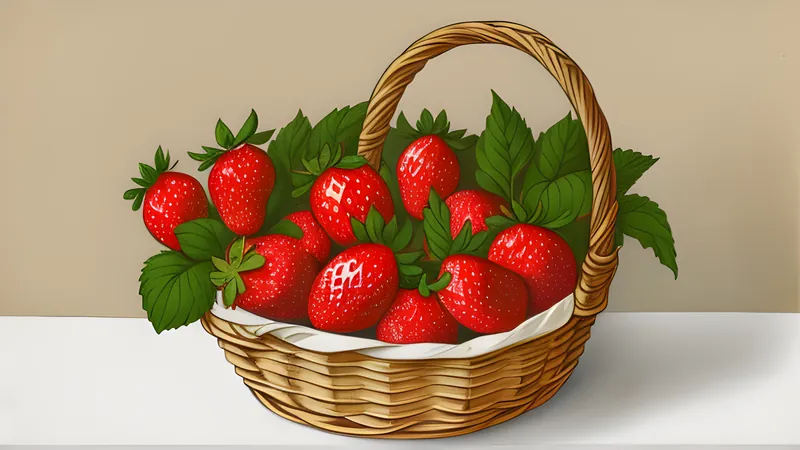
In 1714 a French military engineer named Amédée-François Frézier stepped off a ship at Marseille carrying five strawberry plants he had smuggled out of Chile. He had been sent to spy on Spanish fortifications along the Pacific coast, sketching harbour defences under cover of being a tourist, and he came home with a botanical prize that would change European dessert forever. The plants were Fragaria chiloensis, the Chilean strawberry, bearing fruit far larger than anything grown in France. National Strawberry Day, marked each year on 27 February, sits oddly early in the calendar — weeks before the fruit ripens in any northern garden — but the timing suits a fruit whose whole appeal is the promise of warmth still to come. It also gives us a reason to retell one of the strangest origin stories in the history of food, because the plump red berry sold today did not exist until two species from opposite ends of the Americas were accidentally introduced in a garden in Brittany.
A spy, a botanist, and an accident
Frézier’s five plants had a problem the engineer could not have foreseen: they were all female. Fragaria chiloensis produces male and female flowers on separate plants, and without a pollinator his Chilean imports flowered but set almost no fruit. For decades the giant Chilean strawberry languished in French botanical gardens as a handsome curiosity that refused to crop. The breakthrough came when these barren plants were grown near a different American species, Fragaria virginiana, the small, intensely aromatic strawberry that earlier colonists had carried back from the eastern seaboard of North America. The two crossed, probably in the gardens of Brittany around the 1750s, and produced a hybrid that combined the size of the Chilean parent with the perfume and flavour of the Virginian one.
That hybrid is the strawberry on every supermarket shelf today, and it carries its history in its Latin name: Fragaria × ananassa, the “pineapple strawberry”, so called because the new fruit smelled of pineapple. Everything before this union — Roman strawberries, medieval strawberries, the strawberries of Shakespeare — was the wild woodland berry, fraises des bois, no bigger than a fingernail. The modern dessert strawberry is barely 250 years old, an accident of empire and botany rather than the ancient fruit it is so often assumed to be.
The older history of a small wild berry
The wild strawberry itself, of course, goes back much further, and its history is bound up with art and symbolism. Medieval European painters used the strawberry as an emblem of righteousness and of the Virgin Mary, partly because the plant produces fruit, flower and leaf at once, and the three-lobed leaf was read as a sign of the Trinity. Strawberries appear in the borders of illuminated manuscripts and in tapestries such as the celebrated unicorn series, scattered across the grass as tokens of purity and earthly delight at the same time. The fruit’s heart shape and blood-red colour made it equally available as a symbol of temptation, which is why it turns up in Hieronymus Bosch’s The Garden of Earthly Delights, where figures cluster around an outsized berry.
The English name is older than the modern fruit and its origin is genuinely uncertain. One long-standing suggestion connects “strawberry” to the straw laid under the plants to keep ripening fruit off the wet soil; another links it to the way runners “stray” across the ground from the parent plant. Both are guesses. What is documented is that by the nineteenth century the new hybrid, improved variety by variety, met the spreading railways, and fresh strawberries that had once been a fleeting local treat could suddenly reach the cities. The fruit became a fixture of summer fairs and garden teas, and the link with that brief season has clung to it ever since.
Why a winter strawberry day makes sense
A strawberry day in late February looks like a mistake until you consider what the fruit has always represented. Before greenhouses, polytunnels and air freight, the strawberry season lasted only a few precious weeks, and that scarcity was the whole point — the berry tasted of summer because it arrived with summer and vanished with it. Holding a day for strawberries in the grey end of winter is a way of preserving that older sense of anticipation in an age when the fruit is sold every month of the year. It marks not the harvest but the longing for it, which is arguably the more honest thing to celebrate.
How the day is kept
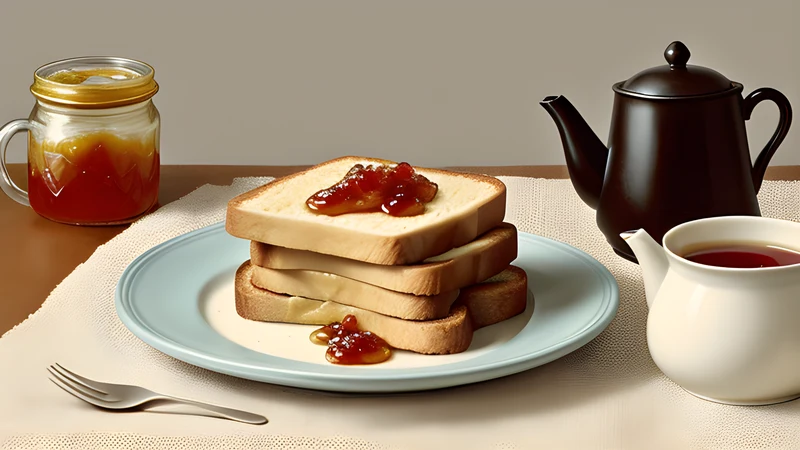
The simplest observance is also the best: a punnet of ripe strawberries, perhaps hulled and sliced, perhaps left whole, eaten as they are. Cooks who want more reach for the classics — strawberry shortcake, tarts glazed with redcurrant jelly, jam set with a little lemon to sharpen the sweetness, or the British summer staple of strawberries and cream. Bakers post their sponges and pavlovas; pick-your-own farms in warmer climates open their gates; and plenty of cooks simply macerate a bowl of berries with a spoonful of sugar and a few minutes’ patience to coax out the juice. Because the day falls out of season in the north, it tends to send people to imported fruit or to jars and conserves, which has its own logic: this is a day about the idea of the strawberry as much as the fresh article.
The pairing with cream, that most genteel of combinations, has its own folklore, often credited to Thomas Wolsey’s kitchens at Hampton Court in the early sixteenth century, where strawberries and cream are said to have been served to Henry VIII’s court. Whether or not Wolsey invented it, the dish became inseparable from the English summer, and above all from the Wimbledon tennis championships, where spectators get through tonnes of strawberries every year.
Strawberries around the world
In Japan the strawberry has been raised almost to the status of jewellery. Premium cultivars such as the Amaou and the white Shiroi Houseki are grown to flawless uniformity, individually wrapped, and sold in cushioned boxes as luxury gifts, with single perfect berries occasionally fetching prices that would buy a meal. France retains a deep affection for the tiny, fragrant fraises des bois of its woodlands, the closest living link to the pre-hybrid fruit. In the United States, towns built on strawberry farming hold festivals that crown a strawberry queen and bake shortcakes by the hundred, while Spain’s Huelva region supplies much of Europe’s winter fruit from vast tunnels along the Atlantic coast. The same berry, in other words, is a humble field crop, a national festival and a boxed luxury depending on where you stand.
This habit of devoting whole celebrations to a single sweet pleasure is hardly unique to the strawberry, and the day sits comfortably alongside others in the calendar of indulgences, from the frozen treats of National Ice Cream Day to the cooling spoonfuls honoured on US National Strawberry Sundae Day, where the berry of course takes the leading role.
The trouble with a perfect berry
For all the affection lavished on it, the strawberry is a maddening fruit to grow and sell. It does not ripen after picking, so it must be harvested at the precise moment of sweetness and rushed to market before it sulks; a strawberry picked early to survive shipping never develops the sugars it would have gained on the plant, which is why an out-of-season supermarket berry can look flawless and taste of almost nothing. The fruit also bruises if you so much as look at it sternly, and it is still picked overwhelmingly by hand because no machine has yet matched the human eye and the human thumb at judging ripeness and handling the fruit gently.
Breeders have spent two centuries pulling the strawberry in opposite directions. The traits that make a berry travel well — firmness, uniform size, a tough skin, a long shelf life — are often the very traits that dull its flavour, while the most intensely perfumed varieties tend to be soft, irregular and quick to spoil. The giant, durable, slightly watery strawberry of the global supermarket and the small, fragile, fragrant berry of a good farmers’ market are both Fragaria × ananassa; they simply represent different answers to the same compromise. Understanding that tension is half the pleasure of eating the fruit well: a strawberry is at its best close to where and when it was grown, and most disappointing when it has been engineered to survive a journey rather than a tasting.
Fun facts
- The strawberry is not, botanically, a berry at all. It is an “accessory fruit”: the fleshy red part is swollen flower receptacle, and the real fruits are the tiny pips on the outside, each one a separate seed-bearing achene.
- A single strawberry carries roughly 200 of those pips on its surface, making it the only common fruit to wear its seeds on the outside.
- Gram for gram, strawberries contain more vitamin C than oranges.
- The modern strawberry owes its existence to a spy: Frézier’s mission in Chile was military reconnaissance, and the fruit was a souvenir of espionage.
- Belgium maintains a museum dedicated entirely to the strawberry, at Wépion, a village that built its identity on the fruit.
A closing reflection
It is strangely fitting that the strawberry, the very emblem of natural summer abundance, should turn out to be a manufactured thing — a hybrid that could not have arisen without ships, empires and a spy’s botanical curiosity. The fruit we treat as timeless is younger than most cathedrals. Perhaps that is the quiet pleasure of a strawberry day set in February: it asks us not only to look forward to the season, but to remember that even the most “natural” of treats has a history full of accident and human intent. The berry tastes of summer, but it carries the whole story of how two continents were brought together on a plate.
Related Content