National Static Electricity Day
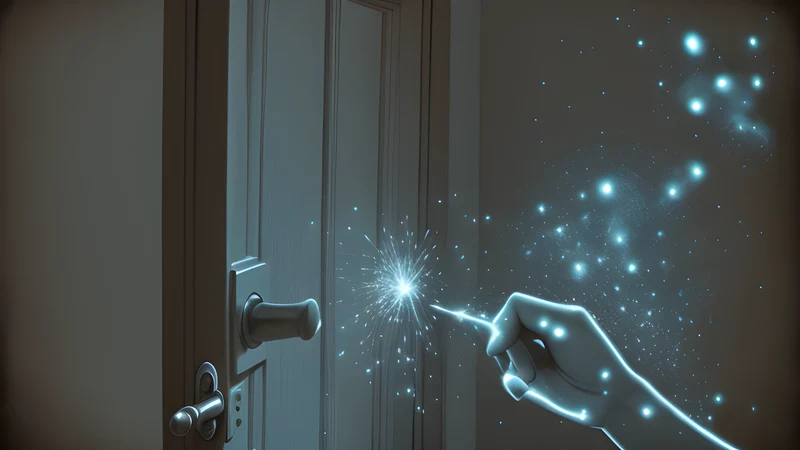
National Static Electricity Day is marked on 9 January, in the depth of the northern winter when dry indoor air makes the phenomenon most noticeable, and everyone becomes briefly familiar with the small blue spark that leaps from a fingertip to a metal doorknob. It is a light-hearted observance with a serious pedigree, because the crackle in your jumper and the shock at the car door are the same force that first set humanity thinking about electricity at all, some two and a half thousand years ago.
The oldest electrical observation
Around 600 BC, the Greek philosopher Thales of Miletus recorded that a piece of amber, when rubbed with fur or cloth, would attract light objects such as dust, feathers and bits of straw. The Greek word for amber was elektron, and it is from that fossilised tree resin that the entire vocabulary of electricity ultimately derives. For over two millennia this odd attractive power was a curiosity with no explanation, filed alongside the very different attraction of the lodestone. The connection to a broader science had to wait until 1600, when the English physician William Gilbert, in his great work De Magnete, carefully distinguished magnetism from the amber effect and coined the Latin term electricus, “like amber”, to describe substances that behaved the same way. The word “electricity” grew directly from his coinage.
What is actually happening
Static electricity is a build-up of electric charge on the surface of a material, produced when two different surfaces are brought into contact and then separated, most familiarly by rubbing. The process, known as the triboelectric effect, transfers electrons from one material to the other, leaving one with a surplus of negative charge and the other with a deficit, which reads as positive. Materials can be ranked in a triboelectric series according to how readily they give up or gain electrons, which is why particular combinations, wool and plastic, hair and a balloon, socks and a nylon carpet, generate such a satisfying charge. The imbalance holds until it finds a path to equalise, and when that path is a sudden jump through the air to an earthed conductor, the result is the tiny spark and the sharp click of a static discharge. Winter makes it worse because cold air holds little moisture, and dry air is a poor conductor that lets charge accumulate instead of leaking harmlessly away.
The century that tamed the spark
The eighteenth century turned the amber curiosity into a science. Around 1663 the German experimenter Otto von Guericke built a friction machine using a rotating globe of sulphur that generated charge on a scale never seen before. In 1729 the Englishman Stephen Gray demonstrated that electricity could be conducted along threads over considerable distances, distinguishing conductors from insulators. The decisive leap came in 1745 and 1746 with the invention of the Leyden jar, developed independently by Pieter van Musschenbroek in the Dutch city of Leiden and Ewald von Kleist in Germany, the first device able to store a substantial static charge, which is to say the first capacitor. Experimenters could now accumulate a jolt strong enough to knock a person down, and electrical demonstrations became a fashionable public entertainment.
Franklin and the lightning
The most consequential figure was Benjamin Franklin, who reasoned that the spark from a Leyden jar and the flash of lightning were the same phenomenon at wildly different scales. His famous and genuinely dangerous kite experiment of 1752 drew charge from a storm cloud down a wet string to a key, confirming that lightning is a colossal electrostatic discharge. Franklin gave us the language of positive and negative charge, and his practical invention, the lightning rod, has protected buildings ever since. A bolt of lightning is static electricity on an almost unimaginable scale: a discharge that can carry a potential of hundreds of millions of volts, briefly heating the surrounding air to roughly five times the temperature of the sun’s surface, with the Earth struck several million times every day.
Putting numbers to the spark
The generations after Franklin turned the crackle into exact science. In 1785 the French engineer Charles-Augustin de Coulomb used a delicate torsion balance to measure the force between two charged spheres and showed that it weakened with the square of the distance between them, a relationship now taught everywhere as Coulomb’s law; the standard unit of electric charge, the coulomb, carries his name. A decade earlier, in 1775, the Italian Alessandro Volta had built the electrophorus, a simple plate device that could produce charge again and again by induction, giving experimenters a reliable static source long before the battery he would later invent. Michael Faraday, working in London in the 1840s, sealed himself inside a room lined with metal foil and charged its outside to a high voltage, proving that the charge stayed on the outer surface and left the interior untouched. That result, the principle of the Faraday cage, is why passengers are safe inside a car struck by lightning and why sensitive electronics are shielded in earthed metal boxes today.
Why the day matters
Beyond the fun of the winter spark, static electricity is a genuine force in modern life, for good and ill. It is the working principle of the photocopier and the laser printer, in a process called xerography that the American physicist Chester Carlson invented in 1938, using a charged plate to attract toner powder to the image of a page. It cleans the air in electrostatic precipitators that pull soot from power-station chimneys, and it coats cars evenly in electrostatic paint spraying. It is also a serious hazard: a static discharge too small for a person to feel can destroy the delicate circuitry of a microchip, which is why electronics are handled with earthing wristbands in antistatic workshops, and a spark in the presence of fuel vapour or fine dust can cause an explosion, which is why grounding is mandatory at petrol stations and grain silos. The day slots naturally beside other observances of science and invention such as World Engineering Day, the International Day of Mathematics and World Sudoku Day.
Hair-raising demonstrations
Static electricity is the star of the science classroom because its effects are so immediate and so entertaining. The Van de Graaff generator, built in 1929 by the American physicist Robert J. Van de Graaff, uses a moving belt to pile up an enormous static charge on a polished metal dome; a volunteer who places a hand on it and finds their hair standing on end is seeing the charge spread across every strand, each one repelling its neighbours and straining to get as far away as possible. The same repulsion explains why a balloon rubbed on a jumper will stick to a wall or make hair follow it across a room, and why cling film clings. Rubbing a plastic comb and using it to bend a thin stream of water from a tap turns the invisible force visible, and shuffling across a nylon carpet in dry weather before touching a friend delivers a shock that is entirely harmless and reliably annoying. These party tricks are real physics, and they are the reason static is one of the first electrical phenomena most children ever meet.
Static in the natural world
Living things exploit static electricity in ways only recently understood. A foraging honeybee builds up a positive charge as it flies, and flowers carry a slight negative charge, so pollen leaps the gap to the visiting bee; researchers have shown bees can even sense a flower’s electric field and read whether it has recently been visited. Spiders are thought to use atmospheric electric fields to launch their silk and “balloon” across the sky, drifting for miles on charged threads. On a grander scale, the towering charge separation inside a thundercloud, driven by ice and water churning in violent updraughts, is what builds towards the lightning stroke, and the same electrification of blowing dust can spark the eerie glow and crackle reported in desert sandstorms and volcanic ash plumes. The small shock at the door is one modest expression of a force woven through the whole natural world.
Surprising facts
The very particle responsible for it all, the electron, takes its name from the same Greek word for amber that started the story; the physicist George Johnstone Stoney coined “electron” in 1891, long before anyone had seen one. Remarkably, the triboelectric effect that produces a static charge by rubbing is the oldest known electrical phenomenon and yet remains only partially explained, with physicists still debating the precise mechanism of charge transfer at the point of contact. The first-ever xerographic copy, made by Chester Carlson in a makeshift Queens laboratory on 22 October 1938, simply read “10-22-38 Astoria”, the date and the district where he made it. The shock you feel stepping out of a car is usually charge built up by your body sliding against the fabric seat, discharging through your hand to the metal door. And the Scottish physicist Lord Kelvin devised a contraption in 1867, the Kelvin water dropper, that generates thousands of volts of static electricity from nothing more than two streams of dripping water, a demonstration that still startles anyone who sees a spark conjured out of a leaking tap.
A closing reflection
There is something appealing about a national day for a force everyone has felt and almost no one thinks about. The spark from a doorknob is a direct, physical encounter with the electron, the same particle that runs every computer and lights every city, met here in its rawest and most personal form. National Static Electricity Day invites a moment of attention to the small marvel hiding in a dry January jumper, and a nod to the long line of thinkers, from Thales rubbing his amber to Franklin flying his kite, who followed that trivial crackle all the way to the modern electrical world.
Related Content