National Spanish Paella Day
In October 2016 the British chef Jamie Oliver posted a photograph of his dinner and detonated an international incident. “Good Spanish food doesn’t get much better than paella,” he wrote, describing a version that combined chicken thighs and chorizo. Within hours, Valencians were calling it an insult to their gastronomy and their culture; the abuse grew so heated that Oliver reportedly received threats. All this over a sausage in a rice dish. To understand why a single ingredient could provoke such fury, you have to understand what paella means to the people who invented it, and that is precisely what National Spanish Paella Day, observed each 27 March, exists to honour. It is a day for a dish that began as a labourers’ lunch and ended up as a battleground for national identity.
What the Day Marks
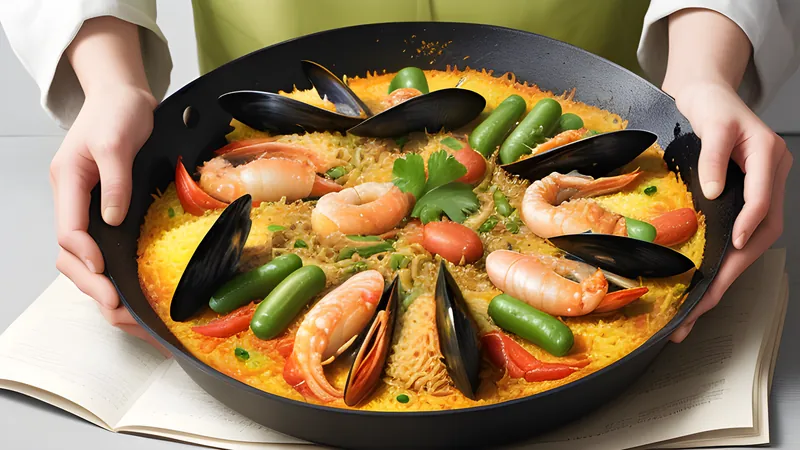
Paella is a rice dish cooked in a wide, shallow, two-handled pan over an open flame, the rice spread thin so it absorbs the stock and toasts against the metal rather than turning soft and creamy. National Spanish Paella Day is one of several unofficial food observances that float around the calendar without a single founding body to claim them, propagated by restaurants, food writers and the rhythm of social media. There is no decree behind 27 March, no committee in Valencia that ratified it. What gives the date its weight is the dish itself, which carries enough history and controversy that it hardly needs an official charter to merit attention.
Origins in the Albufera
Paella was born on the marshy plain south of the city of Valencia, around the freshwater lagoon called the Albufera. The shallow, flooded land there proved ideal for rice, a crop the Moors had introduced to the Iberian Peninsula centuries earlier, and by the early nineteenth century rice paddies ringed the lagoon. The dish that emerged was a midday meal for the men and women who worked those fields. They cooked it outdoors over a fire of orange-tree and vine prunings, using whatever the surrounding land offered: rabbit and chicken from the farm, snails gathered from the rosemary bushes, and beans grown alongside the rice.
The name records the dish’s humble mechanics rather than any grand idea. According to the Catalan etymologist Joan Coromines, the word travelled from Latin patella, a small flat plate or pan, into Old French as paelle, and from there into Catalan and Valencian as paella, simply meaning the pan. The food, in other words, is named after its cookware. To this day Valencians will tell you that paella is the vessel and the contents have other names; the slippage by which the whole world calls the dish “paella” is itself a small linguistic accident.
History
The recipe that purists defend as the original paella valenciana probably took its recognisable shape in the early 1800s. It combines short-grain rice with rabbit, chicken, sometimes duck, the small local snails Valencians call vaquetes, and a trio of beans: the flat green ferraura, the large dried lima-like garrofó, and a white bean called tavella. Saffron tints and scents the rice, tomato and a little smoked paprika colour the base, and branches of rosemary are sometimes laid across the pan to perfume it. The rice itself matters enormously; cooks favour absorbent local cultivars such as Bomba and Senia, grown in the same Valencian fields, prized because they soak up flavour without collapsing.
From those field kitchens the dish climbed the social ladder. Through the nineteenth and twentieth centuries it spread from farm to restaurant, then leapt onto the Mediterranean tourist coast that boomed from the 1960s onward. Foreign visitors met paella on holiday and carried the idea home, and as it travelled it mutated. Coastal cooks built versions around prawns, mussels and squid; restaurants invented paella mixta, blending meat and shellfish; and abroad it became loose shorthand for anything that was rice cooked in a large pan. To many Valencians this drift felt less like flattery than like erosion, which is the unspoken backdrop to Oliver’s chorizo affair.
That protectiveness has since hardened into something more organised. The volunteer group Wikipaella, sometimes nicknamed the paella police, catalogues restaurant recipes, distinguishing the basic ingredients that appear in essentially every authentic version from the regional variables, and quietly naming those who stray. In 2021 the regional government of Valencia went further and declared paella valenciana a protected element of the territory’s immaterial cultural heritage, a status that shields the tradition rather than any single recipe. Worth noting, because it is often misreported, is that paella itself has no Denominación de Origen; a D.O. protects a product, not a method, so what carries that legal shield is the rice, sold as Arroz de Valencia, rather than the dish made from it.
Why It Matters
The intensity of feeling around paella makes more sense once you see it as a question of authorship. A region that watched its peasant lunch become a global cliché has good reason to insist on the difference between the thing and its imitations. When a Valencian objects to chorizo, the complaint is partly culinary, the smoked sausage overwhelms the delicate saffron and the clean taste of the rice, but it is mostly about who gets to define a dish that a particular place made out of its particular fields. The argument is less about food snobbery than about a small culture defending the one thing the whole world took from it.
There is a quieter reason the dish endures, which is that it is built for company. A paella is awkward and uneconomical to make for one person; the geometry of the pan assumes a crowd. It is food that organises a gathering around itself, and a day set aside for it is really a day set aside for the kind of long, unhurried, shared meal that the pan demands.
How It Is Celebrated
The natural setting for the day is outdoors, the pan balanced over a ring of gas or a bed of wood embers, with people drifting over as the rice goes quiet and the smell of toasting saffron rises. Restaurants run paella menus, and cookery schools in Valencia and beyond fill their 27 March classes with people learning to handle the unfamiliar shallow pan. The cooking is itself the entertainment: it happens in the open, slowly, in front of the guests, and the cook becomes the focus of the afternoon rather than disappearing into a kitchen.
Making it well is a discipline of restraint. The pan must be wide enough that the rice lies in a thin even sheet, the stock goes in hot and properly seasoned, and once it does the rice is left strictly alone. The risotto cook’s reflex to stir is exactly wrong here; stirring releases starch and ruins the texture. What the patient cook is waiting for is the socarrat, the layer of rice that caramelises and crisps against the hot metal at the very bottom. Judged right, it is the most coveted part of the dish, scraped up and fought over; judged wrong, by a few seconds, it is simply burnt. After resting, the pan reaches the table garnished with nothing more than wedges of lemon.
Variations and the Boundaries of Heresy
The further paella travels from the Albufera, the more freely it changes, and the regional and international variants now far outnumber the original. Alicante and the southern coast lean into seafood; some cooks make arroz negro, stained inky with squid ink; others build fideuà, the same idea executed with short noodles instead of rice. These are recognised, respected dishes in their own right. The line the traditionalists police is not against variation as such, since Valencian cooks themselves swap artichokes or duck in by season, but against ingredients seen as foreign impositions. Chorizo is the famous offender, but Wikipaella’s blacklist also extends to carrots and mushrooms, both regarded as intruders that have no business in the pan.
Symbols and Customs
The pan is the dish’s emblem, and its shape encodes its rules: shallow so the rice cooks in a single layer, wide so the surface that touches the heat is large, two-handled so it can be lifted onto the table whole. Eating from that communal pan is itself a custom, traditionally done with a spoon, each person working inward from the wedge of rice directly in front of them, an unspoken etiquette that keeps the meal egalitarian. Lemon, rosemary and the deep golden-orange of saffron and paprika are the visual signatures, and in Valencia the dish belongs to the middle of the day. Paella is lunch, eaten in unhurried sunshine, not a thing rushed onto the table after dark.
Fun Facts
- The world’s largest paella was cooked in Madrid in 2001 by the Valencian chef Juan Carlos Galbis in a pan some 21.5 metres across, stirred with a mechanical digger and serving an estimated 110,000 people; Galbis had been breaking his own giant-paella records since the 1990s.
- That 2001 paella swallowed roughly 6,000 kg of rice, around 12,500 kg of meat, about a kilogram of saffron and some 30 tonnes of firewood, tended by around 80 cooks.
- “Paella” is the word for the pan, not the food. Strictly, you cook arroz (rice) in a paella; the dish borrowed its name from the cookware.
- The dish has no Denominación de Origen protection, because a D.O. covers a product rather than a recipe. The legal shield belongs to the rice, Arroz de Valencia, not the meal.
- The single most heretical addition, according to Valencian opinion, is chorizo, the ingredient that earned Jamie Oliver an online storm and even threats in 2016.
A Closing Reflection
There is a particular kind of dish that refuses to be improved, not because it is perfect but because tampering with it changes what it is for. Paella is one of those. Every “upgrade”, the chorizo, the extra spice, the foreign vegetable, tends to pull the rice towards being merely a vehicle for richer flavours, when its whole point is the opposite: a quiet, golden, slightly toasted base that asks the people around it to slow down and pay attention. The fierceness Valencians bring to the argument can look like pedantry from a distance, but it is really a defence of restraint in a world that mostly rewards adding more. Marking the day is worth doing less as homage to a recipe than as a small act of resistance: a reminder that some things are better kept simple, cooked over fire, and shared from one pan.
For more days devoted to the building blocks of good cooking, the Mediterranean larder offers plenty: the very olive oil that anchors a proper paella’s sofrito has its own celebration, and if a long lunch in the sun is the goal, it sits comfortably alongside other food and drink observances such as ice cream’s dedicated day for whatever follows the rice.
Related Content