National Sourdough Bread Day
In 1849, a young baker named Isidore Boudin arrived in San Francisco from Burgundy and noticed that the prospectors crowding into the city already had a tang in their bread that French loaves lacked. He blended their wild leaven with the techniques he had learned at home, and the bakery he opened that year on Dupont Street (now Grant Avenue) has fed a portion of its very first batch of dough into every loaf it has baked since. That continuous thread of fermentation, kept alive for more than 175 years, is exactly the thing National Sourdough Bread Day asks you to think about each 1 April: bread raised not by a packet of yeast but by a living culture of wild microbes that a baker keeps, feeds and inherits.
What the Day Marks
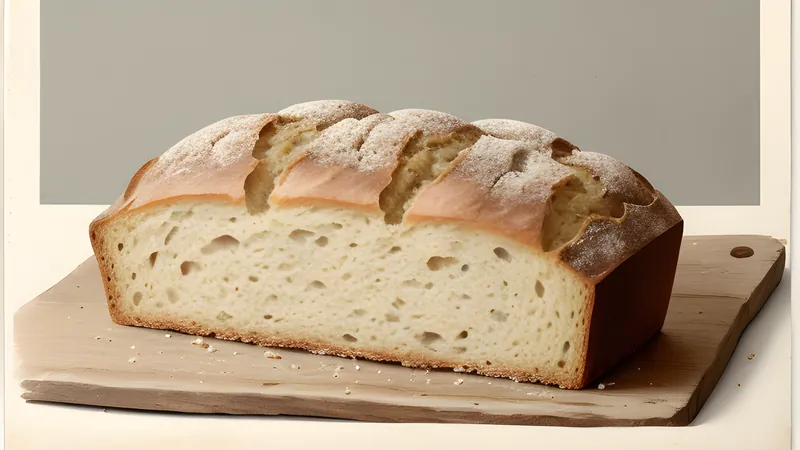
National Sourdough Bread Day is an American observance held annually on 1 April, set aside for the loaf that depends on a starter rather than commercial yeast. A starter is simply flour and water left to ferment until it teems with wild yeasts and lactic-acid bacteria; spoon some into a fresh dough and it both leavens the bread and sours it, producing the open, chewy crumb and lacquered crust that distinguish the style. The date is an unofficial food holiday with no governing body behind it, which suits a bread that has always been more folk practice than industry. It falls, perhaps fittingly, on the same day as April Fools’, though there is nothing of the joke about a properly proved loaf.
Origins
Long before anyone could name a single microbe, bakers stumbled into fermentation by leaving ground grain and water exposed to warm air. The earliest reliable evidence of intentionally raised bread comes from ancient Egypt, somewhere between roughly 4500 and 3500 BCE, where dough left to sit in the heat by the Nile caught wild yeasts and began to bubble. Tomb paintings show the resulting loaves and the bakeries that turned them out in quantity. The Egyptians did not understand why their bread rose, only that it did, and the Greeks later borrowed and refined the method. For most of the history that followed, every leavened loaf was, by definition, a sourdough, because the airborne culture was the only leaven anyone had. The depth of that lineage is genuinely strange to hold in mind: a slice of San Francisco sourdough and a loaf from a pharaoh’s kitchen are raised by the same biological process.
History
The sharpest chapter in the story belongs to California. When gold was discovered at Sutter’s Mill, the miners who poured into the Sierra foothills from 1849 onwards carried starters with them, often kept warm against the body or slept beside on cold nights, because a dead culture meant no bread. The leaven became so bound up with their lives that “sourdough” stopped meaning the bread and started meaning the man: a seasoned prospector was a sourdough, and the word travelled north with them into the Klondike and Alaska during later rushes. Isidore Boudin, who founded his bakery in San Francisco in 1849, formalised what the miners had been doing roughly. His descendants and successors still feed that original mother dough with flour and water every day, which makes Boudin Bakery the oldest continuously operating business in the city.
For a long time nobody knew what made the San Francisco loaf taste the way it did. That changed in 1971, when researchers Frank Sugihara and Leo Kline isolated the dominant bacterium from local starters and described it formally. They named it Lactobacillus sanfranciscensis after the city whose sourdoughs had been propagated continuously for over a century. The bug has since been reclassified as Fructilactobacillus sanfranciscensis, but the name still tips its hat to the foggy peninsula where it was first pinned down, even though the same species turns up in traditional starters far beyond California.
Sourdough’s near-disappearance as the everyday standard has an equally precise cause. In 1868, the brothers Charles and Maximilian Fleischmann, who had learned compressed-yeast production in Vienna and Prague, founded Gaff, Fleischmann & Company in the Riverside district of Cincinnati. They patented a stable cake of commercial baker’s yeast and, at the 1876 Centennial Exposition in Philadelphia, demonstrated a working Vienna bakery that turned their product into a household name. Reliable, fast and consistent, packaged yeast pushed the slow and temperamental starter out of most kitchens within a generation. Sourdough survived in pockets and as a regional emblem rather than the default, until the artisan-baking movement of recent decades, and a conspicuous lockdown-era surge in 2020, pulled it back into ordinary homes.
Why It Matters
The appeal of sourdough runs deeper than nostalgia. The long fermentation does measurable work: the lactic-acid bacteria lower the dough’s pH and begin breaking down starches and proteins before the loaf ever reaches the oven, which is why many bakers find a true sourdough sits more easily than a quick white loaf. It also demands almost nothing in the way of ingredients. Flour, water, salt and time make the whole thing, with no additives required, which is part of why the bread has become a touchstone for people sceptical of long ingredient lists. And keeping a starter is a small ongoing discipline rather than a one-off purchase, a daily or weekly act of feeding that ties the baker to the loaf in a way a sachet of yeast never could.
How It Is Celebrated
The day is, unsurprisingly, observed mostly in kitchens. Home bakers time a bake to land on 1 April, photograph the cross-section of crumb and post it for the approval of others who understand exactly how hard an open, well-aerated interior is to achieve. Beginners often pick the date to start a fresh culture from scratch, mixing flour and water and committing to the week or so of feeding it takes before the thing is lively enough to raise a loaf. Bakeries lean in with limited loaves and tasting offers. Online, the conversation turns technical fast, with arguments about hydration percentages, the merits of a Dutch oven for trapping steam, and the precise window at which a starter is at its peak. If you would rather mark the day with a related bake, the same patience that builds a starter rewards a slow homemade bread of any kind.
Variations Across Cultures
San Francisco may own the most famous tang, but wild fermentation is genuinely global, and each tradition carries its own character. German and Eastern European bakers have long built dense, dark rye breads on sour ryestarters, where the acidity is not a quirk but a necessity, since rye’s chemistry makes it difficult to raise well without it. In the Levant and across the Mediterranean, flatbreads were leavened with retained scraps of yesterday’s dough. Ethiopian injera, the spongy fermented flatbread made from teff, belongs to the same broad family of soured grain. Even within the world of bread there is a wider holiday landscape worth knowing: World Bread Day on 16 October casts the net over every loaf, while the sweet, quick-bread end of the spectrum gets its own dates entirely, such as National Banana Bread Day, which leans on chemical raising agents rather than a living culture.
Symbols and Traditions
The defining object of sourdough culture is the starter itself, and the rituals around it are oddly tender. Bakers name their starters, will them to friends, post them across the country in padded envelopes, and speak of “feeding” and “discarding” as though tending livestock. Some cultures are claimed to be decades old and are kept as genuine heirlooms. The most striking institution built on this devotion sits in the small town of Saint-Vith in eastern Belgium, where the food company Puratos runs the world’s only sourdough library. Karl De Smedt, its keeper and self-styled sourdough librarian, has gathered well over a hundred starters from across many countries since the collection opened in 2013, each kept in a refrigerated jar and fed on a schedule so that, should a baker’s home culture ever die, a sample of theirs can be revived from the archive.
Fun Facts
- Boudin Bakery in San Francisco has folded a piece of its original 1849 mother dough into every loaf for more than 175 years, making it the oldest continuously operating business in the city.
- The word “sourdough” came to mean the prospector, not just his bread: Gold Rush and Klondike miners kept their starters so close that the leaven became their nickname.
- The bacterium most associated with the style, Lactobacillus sanfranciscensis, was only isolated and named in 1971, by Frank Sugihara and Leo Kline, after the city where it was found.
- There is a refrigerated library of living sourdough starters in Saint-Vith, Belgium, run by Puratos and curated by a man whose actual job title is sourdough librarian.
- In 2019 the physicist Seamus Blackley baked a loaf using yeast he and colleagues coaxed from the residue inside roughly 4,500-year-old Egyptian pottery.
A Closing Reflection
There is a quiet provocation in keeping a starter alive. Almost everything else in a modern kitchen is designed to be bought once and consumed, but a sourdough culture refuses that logic; it is the one ingredient you cannot finish, only continue. A jar of bubbling flour and water is, in the plainest terms, a colony you have agreed to host, and the loaf is rent paid back to you in crust and crumb. The fact that a baker in Belgium thought such cultures worth cataloguing in a refrigerated archive, and that a strain first described in 1971 still answers to the name of a Gold Rush city, suggests the bread carries more memory than most of what we eat. Marking 1 April with a loaf is really an acknowledgement that some foods are less a product than a relationship, handed forward, fed daily, and never quite finished.
Related Content