National Selfie Day
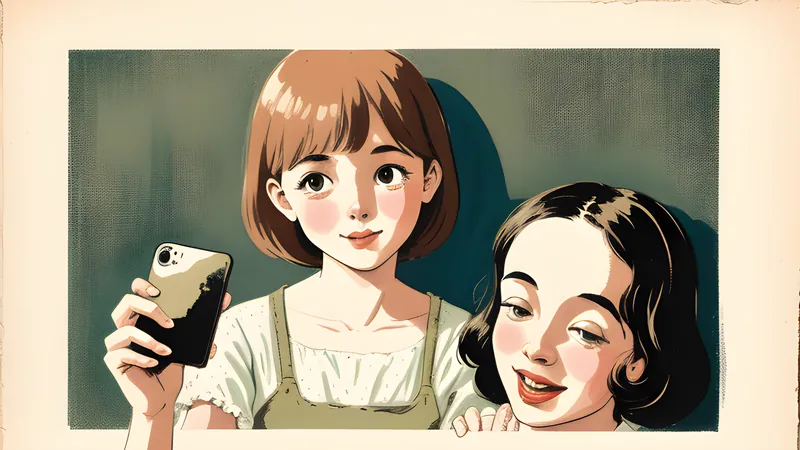
On 13 September 2002, a young man posted to an Australian online forum a photograph of a split lip he had sustained at a friend’s twenty-first birthday, apologising for the focus: “sorry about the focus, it was a selfie.” It is, as far as anyone has traced, the first recorded use of the word — coined offhand, in a drunken moment, to describe an undignified picture. Eleven years later that same word had become so ubiquitous that Oxford Dictionaries named it word of the year. National Selfie Day, marked each 21 June, celebrates the self-portrait in the smartphone age, and behind its lightness sits a genuinely strange story about how a slang term and a piece of camera hardware reshaped how a generation pictures itself.
A DJ, a solstice and a made-up holiday
The day itself has a known and refreshingly specific origin. It was created in 2014 by Rick McNeely, a radio DJ from the Fort Worth and Arlington area of Texas, who chose 21 June because that year the date fell on the summer solstice — the longest day of sunlight, and therefore, by his reasoning, the best lit. McNeely is responsible for a small clutch of invented “national days”, and this one took. Within a few years it was being marked by ordinary users, celebrities and brands alike, which is roughly the trajectory of the selfie itself: a private, slightly silly act that went thoroughly public.
A much older impulse than the word
Although the selfie feels born of the smartphone, the urge behind it is centuries old. Painters have made self-portraits since the Renaissance, studying their own reflections to fix their likeness — Albrecht Dürer, Rembrandt and Vincent van Gogh each turned the act into a sustained body of work. The photographic version arrived almost as soon as the medium did. In 1839, an amateur chemist named Robert Cornelius set up a camera in the yard behind his family’s lamp shop in Philadelphia, removed the lens cap, sprinted into frame, sat still for a long exposure and ran back to cover it again. The resulting image — a slightly tousled young man looking warily into the lens — is, by the reckoning of the Library of Congress that now holds it, the first photographic self-portrait, and on the back Cornelius wrote, with unintentional foresight, “the first light picture ever taken.”
What the smartphone changed was not the desire but the friction. Cornelius needed chemistry, daylight and a sprint. By the early twentieth century a self-portrait still meant a mirror, a tripod or a steady arm and a great deal of guesswork. There is even a celebrated early example of the group selfie: in December 1920, a handful of staff at the Marceau studio in New York crowded onto a rooftop and held a bulky bellows camera at arm’s length to photograph all five of themselves at once — an image that would not look out of place, in spirit, on any phone today. The selfie is simply the latest and easiest chapter in a very long human habit of looking at oneself and wanting to keep the result.
The two technologies that lit the fuse
The modern selfie required two things to arrive together. The first was the front-facing camera. Once a phone could show you your own face on screen as you composed the shot, the guesswork vanished — Apple’s iPhone 4 in 2010 brought a front camera to a mass-market device, and competitors followed. The second was the social network. A self-portrait you cannot share is a curiosity; a self-portrait you can post instantly to hundreds of people is a form of communication. Platforms built around the image gave the selfie a purpose and an audience, and the two innovations together turned an occasional novelty into a daily reflex.
The numbers capture how fast it happened. When Oxford Dictionaries chose “selfie” as its 2013 word of the year, it noted that the term’s frequency in English had risen by around 17,000 per cent over the previous twelve months — one of the steepest climbs the lexicographers had recorded. A word that had loitered unnoticed on the internet for a decade became, almost overnight, indispensable.
Confidence, anxiety and the front-facing self
Few small technologies have provoked as much hand-wringing as the selfie, and the argument cuts genuinely both ways. On one side, the self-portrait is plainly an instrument of agency: for the first time, ordinary people control how they are seen, rather than relying on whoever happens to be holding the camera. Communities long under-represented in mainstream imagery — by age, body, disability or background — have used the form to picture themselves on their own terms, and there is a real democratising logic to a tool that needs nothing but a phone and a willingness to face it.
On the other side sit the documented anxieties. Researchers have linked heavy self-image posting to appetite for approval through likes and comments, and to a feedback loop in which the edited, filtered self begins to crowd out the unedited one. The arrival of beautifying filters and, more recently, AI-driven retouching has sharpened the worry that the face we present and the face we own are quietly drifting apart. The selfie did not invent vanity or self-consciousness; it simply gave them a frictionless outlet and an audience that responds in real time, which is a combination human psychology was never quite designed for.
The accessory that briefly conquered the world
No account of the selfie is complete without the selfie stick, which has a longer and odder history than its mid-2010s ubiquity suggests. A version was patented in Japan by Hiroshi Ueda and Yujiro Mima as early as 1984, marketed as an “extender stick” and largely ignored; the Canadian inventor Wayne Fromm patented his “Quik Pod” in 2005. Only when smartphones and front cameras met did the idea finally find its moment, and around 2014 the telescoping stick became briefly inescapable on every tourist promenade — before museums, galleries and concert venues started banning it and the novelty curdled into a cliché. Time magazine named the selfie stick one of the best inventions of 2014; within two years it had become shorthand for everything irritating about modern tourism, which is about as steep a reputational fall as any gadget has managed. Its trajectory is the selfie’s own arc in miniature: a clever solution to a real problem, embraced with enormous enthusiasm, then quietly resented once everyone had one.
The serious footnote
For all its silliness, the selfie has a genuinely grim statistic attached. A study of media-reported cases found that 75 people died worldwide while attempting selfies between 2014 and mid-2016, with the average victim aged just 23 and the great majority male; cliff edges, water and trains recurred as the settings. The figures are a sobering counterweight to the cheerfulness of the day and a reminder that the impulse to capture a striking image can override ordinary caution — the worst selfies, in the most literal sense, are the ones taken with no awareness of the drop behind you. The same studies found India, the United States and Russia recording the most incidents, and the pattern has been pronounced enough that some authorities now designate “no-selfie zones” at cliff tops, waterfalls and railway lines, an oddly modern category of public warning sign.
The selfie’s place in modern fun puts it alongside the other small, knowing rituals of online life and shared humour, such as the playful performance of adopting a daft persona for a day, and it has become as much a fixture of how friends document time together as the gatherings celebrated on days devoted to friendship itself.
Fun facts
- The first known use of the word “selfie” appeared in 2002 on an Australian online forum, used by a man photographing his own split lip after a party.
- “Selfie” was named Oxford Dictionaries Word of the Year for 2013, when its usage frequency had jumped by roughly 17,000 per cent in a single year.
- The first photographic self-portrait was taken in 1839 by Robert Cornelius in Philadelphia, who had to run into the frame and hold still for several minutes.
- National Selfie Day exists because a Texas radio DJ, Rick McNeely, picked 21 June in 2014 specifically because it fell on the well-lit summer solstice.
- The selfie stick was patented in Japan in 1984, decades before there was any practical use for it, and was nicknamed a “useless invention” before the smartphone era vindicated it.
A closing reflection
It is tempting to read the selfie as evidence of a uniquely modern self-regard, but the longer view complicates that. Cornelius wanted his own face on a plate in 1839; Rembrandt painted his ageing self for forty years. The desire to make a record of oneself, to say I was here, this is what I looked like, is one of the oldest things people do with whatever image-making tools they have. What the phone added was speed and an audience, and those two things together changed the act from private reckoning to public performance. The interesting question the day quietly raises is not whether we take too many pictures of ourselves, but who, exactly, we imagine is looking.
Related Content