National Sardines Day
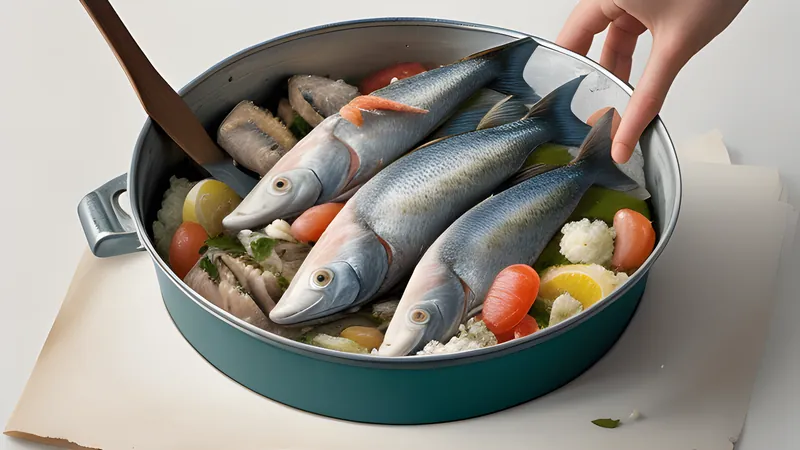
In 1824, a confectioner named Pierre-Joseph Colin opened a cannery in Nantes and began sealing sardines in oil inside soldered tin boxes. It was a modest enterprise with enormous consequences. Within a few decades the canned sardine had become one of the first industrially preserved foods to travel the globe, stocked on ships, hoarded in larders and rationed to soldiers. National Sardines Day, observed each 24 November, honours that small, silver, faintly old-fashioned fish — and makes the case, against its dowdy reputation, that few foods deliver so much nourishment at so little cost or environmental harm.
A name borrowed from an island
The word sardine is usually traced to Sardinia, the Mediterranean island around whose waters the fish were once abundantly caught and from which they were exported; the term reached English in the early fifteenth century. The link is plausible but not certain. An alternative theory connects it to the Greek sardion, the reddish gemstone sard or sardonyx, on the grounds that some pilchards have flesh of a similar russet colour. Either way, “sardine” is a loose label rather than a precise species. It covers several small, oily fish of the herring family, the best known being the European pilchard, Sardina pilchardus. The distinction between a sardine and a pilchard is often nothing more than size: the smaller, younger fish are sold as sardines, the larger ones as pilchards.
Where the day comes from
National Sardines Day is a modern observance with no documented founder, of the kind that proliferated through online calendars in the 2000s and 2010s. It was not decreed by any institution and carries no ceremony. Better to treat it as a prompt — an annual nudge to reconsider a food that has been quietly out of fashion for a century.
The tin that changed everything
Humans have eaten sardines since antiquity, and the fish appears in the diets of the ancient Mediterranean. But the sardine’s modern history is really the history of canning. The technique was invented by Nicolas Appert, a French confectioner and brewer, who in 1809 worked out that food sealed in glass jars and heated would keep — a discovery prompted partly by a prize offered for a way to preserve provisions for the Napoleonic armies. The following year the Englishman Peter Durand patented a version using tin cans, which were sturdier and far easier to ship than glass.
The sardine proved an ideal candidate. Colin’s 1824 Nantes cannery, often credited as the first of its kind for sardines, was followed by a wave of factories along the French Atlantic coast, especially around Douarnenez and the Breton ports, and then in Portugal, Spain and beyond. Coastal towns built whole economies on the little tin. The sardine, once a perishable catch that had to be eaten or salted within hours of landing, became a durable, transportable staple — a food that could sit in a cupboard for years and a reliable wartime ration. That dependability cemented the sardine’s reputation as humble, cheap and faintly utilitarian, a reputation it has never entirely shaken.
Why the sardine deserves a second look
By almost any measure the sardine is an exemplary food. It is rich in omega-3 fatty acids, protein, calcium and vitamin D, and because it is small and short-lived it accumulates far less of the mercury and other heavy metals that build up in long-lived predators such as tuna and swordfish. Eaten whole, as it usually is, the soft bones add a substantial dose of calcium that you simply do not get from a fillet of larger fish.
The environmental argument is just as strong. Sardines sit low on the food chain, feeding largely on plankton, so eating them is far closer to eating at the base of the marine food web than eating a predator that has spent years accumulating the energy — and the contaminants — of everything beneath it. They breed fast and gather in vast numbers, which makes well-managed sardine fisheries among the more sustainable sources of animal protein available, and they require none of the feed inputs that make farmed salmon a more complicated proposition. There is a quiet logic to the sardine that the modern table has largely ignored: it is the cheap option, the healthy option and the responsible option at the same time, which is a rare alignment. A day for sardines, if it argues anything worth arguing, argues that thrift and good sense have been undervalued.
The reputation problem is largely one of perception rather than fact. Generations who grew up on poorly drained tinned sardines mashed onto bread associate the fish with wartime austerity and a strong, fishy smell. But a good tin of sardines — packed in olive oil, sometimes aged like wine by the better Portuguese and Spanish producers, who print the year on the label and stock cellars of vintage tins — is a delicacy, not a ration. The gap between the sardine’s image and its merits may be the widest of any food in the everyday larder.
How it is eaten
The celebration is firmly at the table and refreshingly unfussy. At its simplest it is a tin opened and tipped onto buttered toast, dressed with lemon, black pepper and perhaps a little chilli. At its best it is fresh sardines grilled hard over charcoal until the skin chars and blisters — the method beloved across the Mediterranean, where the smell of sardines on a grill is the smell of summer. Cooks share recipes, fishmongers push the fresh catch, and sardine enthusiasts use the occasion to win over the sceptical, which is most of the work.
A fish woven into national life
In Portugal the grilled sardine is close to a national emblem. During the Festas de Lisboa each June, and above all on the feast of Santo António on 13 June, the streets of the Alfama district fill with smoke as countless sardines are grilled over open coals and eaten on bread. In Spain, along the Málaga coast, sardines are threaded onto canes and roasted beside the embers of a beach fire as espetos, the skewers angled toward the heat by the espetero who tends them. The same fish, treated with the same reverence, anchors the food culture of much of the Mediterranean basin, North Africa and the Middle East, while in Britain and the United States it survives mainly as the tinned pantry standby of an older generation.
The sardine has even crossed into art and design. The decorative tins of the great Portuguese and French canneries, with their lithographed labels and rolled-back lids, have become collectable objects in their own right, and the fish recurs in folk carving, festival imagery and the painted azulejo tiles of Lisbon. Few foods so cheap have inspired so much that is not strictly edible — a measure of how deeply the little fish is woven into the daily life of the places that catch it.
The sardine’s modesty places it among the great honest staples of the sea, the foods valued for being plentiful and good rather than rare and showy — a quality it shares with the oils and preserved foods of the Mediterranean larder. And as an emblem of cheap, nourishing everyday eating, it belongs in the same conversation as the humble apple kept in the bowl for whoever wants it, the plain, healthful food that needs no occasion at all.
Fun facts
- The great sardine run off the south-east coast of South Africa, when billions of Sardinops sagax migrate north along the coast between May and July, is one of the largest marine migrations on Earth, drawing dolphins, sharks, whales and seabirds into a feeding frenzy visible from the air.
- Scientists have shown that the famous run is, in evolutionary terms, something of a trap: the sardines follow a band of cold water into subtropical seas that are ultimately too warm for them.
- Canning was invented to feed Napoleon’s armies — Nicolas Appert developed the method partly in pursuit of a French government prize for preserving food for the military.
- A sardine and a pilchard are frequently the very same species at different ages; the smaller fish gets the prettier name.
- Eaten whole with their soft bones, sardines are one of the best dietary sources of calcium going, which a boneless fish fillet cannot match.
A closing reflection
There is a small irony in the sardine’s fall from favour. The very qualities that made it seem unglamorous — cheapness, abundance, the tin in the back of the cupboard — are exactly the qualities a thoughtful eater might now prize most. The sardine asks us to value what is plentiful rather than what is scarce, which runs against almost every instinct that modern food marketing has trained into us. Open a tin, or better still grill a few over coals, and the case makes itself. The fish that fed armies and stocked ships has nothing to prove; it is simply waiting for us to notice it again.
Related Content