National Pumpkin Day
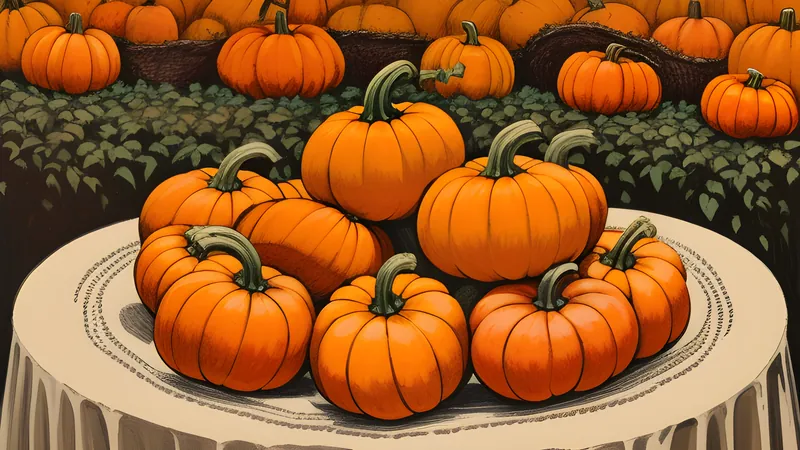
On 9 October 2023, at the World Championship Pumpkin Weigh-Off in Half Moon Bay, California, a Minnesota horticulture teacher named Travis Gienger watched the scales settle on a single pumpkin he had grown: 2,749 pounds, nearly 1,247 kilograms, a new world record and roughly the weight of a small car. The fruit had begun the season as a seed and finished it as a leviathan, the product of obsessive feeding, watering and shade. It is a useful image to hold on National Pumpkin Day, observed each year on 26 October, because it captures the strange double life of the pumpkin: at once a humble kitchen staple simmered into soup across the northern hemisphere, and an object of extravagant competitive ambition. The day, falling at autumn’s colourful peak in the run-up to Halloween, honours both.
Where the day comes from
National Pumpkin Day has no documented founder and no official charter. It belongs to the broad category of food and seasonal days that have grown up informally, embraced by growers, cooks and the wider public rather than instituted by decree. Its placement in late October is entirely fitting all the same. This is the moment when pumpkins are freshly harvested and most abundant, heaped on roadside stalls and farm shops, and when their association with Halloween and the harvest is at its strongest. The date gives a natural focus to appreciation of the gourd in every form, from the cooking pot to the carved doorstep lantern.
A history rooted in the Americas
The pumpkin is native to the Americas, where indigenous peoples domesticated it at least seven thousand years ago, making it one of the oldest cultivated crops in the world. For those early growers it was a staple rather than a decoration: the dense flesh was roasted or dried, the seeds eaten, and the whole fruit valued for keeping through the lean months. When European colonists arrived, they adopted the gourd quickly, and after the Columbian exchange it spread back across the Atlantic into the cuisines of Europe, Africa and Asia, adapting to local tastes as it travelled.
The pumpkin’s most famous role, the carved Halloween lantern, came by a more roundabout route. The tradition descends from an Irish folk tale about a trickster called Stingy Jack, who outwitted the Devil and was condemned to wander the earth after death with only a hollowed turnip, lit by an ember, to guide him. In Ireland and Scotland people carved frightening faces into turnips, beets and other root vegetables to ward off Jack and other roaming spirits. When Irish immigrants brought the custom to North America in the nineteenth century, they found the native pumpkin far larger, softer and easier to hollow than any turnip, with a naturally cavernous interior and a vivid orange skin. The jack-o’-lantern as we know it is the result of an Old World legend meeting a New World fruit. Anyone who has tried to carve a turnip will appreciate the upgrade: the dense, woody root resists a knife and yields a small, grimacing lantern, whereas a pumpkin gives way easily and offers a broad, glowing canvas. The switch was less a tradition than a sensible piece of improvisation, and it stuck so thoroughly that the turnip original has been almost entirely forgotten outside Ireland and Scotland, where carved turnip lanterns survive as a folk curiosity.
Why it matters
Pumpkin earns its day on two counts. As food it is genuinely valuable: rich in vitamins and fibre, endlessly adaptable, and capable of feeding a household cheaply through a long winter, which is exactly why indigenous growers prized it for millennia. As a cultural object it anchors a whole season of festivity, from harvest fairs to Halloween, drawing communities together around carving tables and pumpkin patches. The day recognises both roles at once, and it quietly honours the growers who raise the crop, including the small fraternity of giant-pumpkin specialists like Travis Gienger who turn cultivation into a competitive sport. That blend of nourishment and seasonal ritual links the gourd to the desserts feted on National Pumpkin Cheesecake Day and the classic autumn pie of US National Pumpkin Pie Day.
How it is used in the kitchen
Few foods are as versatile as the pumpkin. Its sweet, dense flesh is roasted, puréed into soups, baked into pies and breads, simmered into curries and stews, and folded into both savoury and sweet dishes across many cuisines. The seeds, roasted and salted, make a nourishing snack, and pumpkin-spice flavours pervade autumn drinks and treats, even though that spice blend usually contains no pumpkin at all. Almost nothing of the fruit need be wasted: the flowers can be stuffed and fried, the flesh frozen or dried for the lean months, and the seeds saved to plant the following spring, a thriftiness that made the gourd so valuable to the growers who first domesticated it. A point worth knowing in the kitchen, though, is that variety matters enormously: the small, sweet, dense types bred for cooking, such as the sugar pumpkin, are a different proposition from the large, watery field pumpkins grown for carving, which are stringy and bland on the plate. The colossal show specimens are barely edible at all. Choosing the wrong pumpkin is the most common autumn cooking mistake.
A genuinely global gourd
While the pumpkin’s strongest cultural associations lie in North America, squash and gourds are cherished far beyond it. South Asian cuisines turn pumpkin into spiced curries and sweets, such as the sweet-sour Bengali dishes that pair it with mustard and panch phoron; across Italy it fills the pumpkin tortelli of Mantua and the gnocchi of the north; and in parts of Africa both the flesh and the nutritious leaves are eaten, the latter cooked as a green in their own right. Japan prizes the dense, sweet kabocha, and across the Americas the gourd remains central to harvest cooking from Mexican calabaza en tacha, candied in raw sugar for the Day of the Dead, to the soups and pies of the north. Giant-pumpkin growing, meanwhile, has become an international pursuit, with enthusiasts in Europe and North America competing each autumn to push the weight record higher, a quest that has seen champions balloon from a few hundred pounds in the late twentieth century to well over a tonne today. Wherever it grows, the pumpkin bends to local tastes, which is part of what makes it one of the most genuinely global of seasonal foods.
The race to grow a giant
The competitive growing that produced Travis Gienger’s record is a discipline in its own right, and a relatively young one. The pursuit of the giant pumpkin owes much to a single cultivar, the Atlantic Giant, developed in the late twentieth century by a Canadian grower named Howard Dill of Nova Scotia, who patented his seed line and turned the hobby into something approaching a science. Before Dill’s work, a thousand-pound pumpkin was a fantasy; today champions routinely exceed twice that, and the world record has climbed almost every season as growers refine their methods. Producing a giant is brutally demanding: a single fruit is chosen on each plant and every other one removed, so the whole vine pours its energy into one specimen, which at its peak can gain forty or more pounds in a day. Growers shade the fruit from the sun to stop the skin hardening too soon, bury the vines to encourage extra rooting, and guard obsessively against the splits and rots that can destroy a season’s work overnight. The result is a curious inversion of the pumpkin’s humble origins: a crop first prized for feeding families through winter, now cultivated purely to break a number, weighed once on a stage and never eaten.
Fun facts
- The pumpkin is botanically a fruit, a type of winter squash, despite being cooked and treated almost universally as a vegetable.
- The world-record pumpkin, grown by Travis Gienger and weighed in California in October 2023, tipped the scales at 2,749 pounds, around 1,247 kilograms.
- The jack-o’-lantern began not with pumpkins but with carved turnips and beets, part of an Irish and Scottish custom rooted in the legend of Stingy Jack.
- Indigenous peoples of the Americas domesticated pumpkin at least seven thousand years ago, long before maize and beans completed the famous “three sisters” planting.
- The very pumpkins best for carving, large, soft and watery, are among the worst for eating, while the small sweet varieties prized in the kitchen make disappointing lanterns.
A closing reflection
It is hard to think of another plant that lives so comfortably at both ends of human ambition. The same fruit that fed families through the winters of the pre-Columbian Americas now headlines competitions where growers pour a season of obsessive care into a single specimen the size of a boulder. Between those extremes sits everything we do with the pumpkin: carve it, eat it, decorate with it, mark the year by it. On 26 October the gourd is worth pausing over not because it is exotic but because it is so thoroughly woven into the season, a marker of the harvest gathered in and the long evenings beginning, generous in the kitchen and on the doorstep alike.
Related Content