National Pound Cake Day
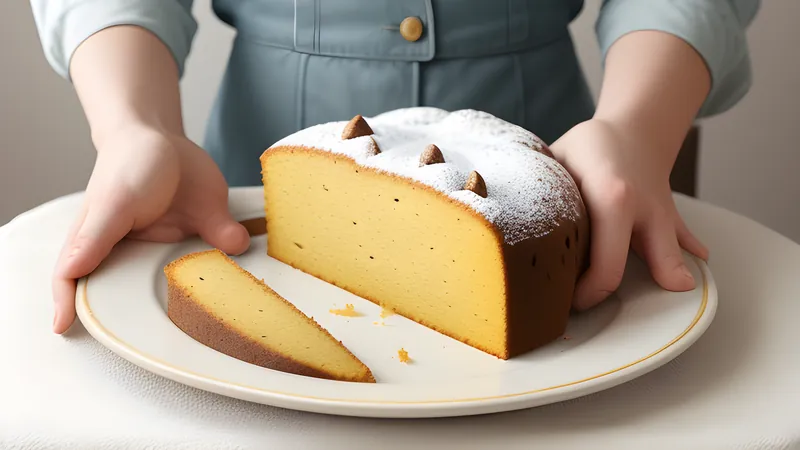
In 1747 a London writer named Hannah Glasse published The Art of Cookery Made Plain and Easy, a book aimed squarely at servants rather than professional chefs, and tucked among its recipes was an instruction for “a pound cake” that named no quantities in cups or spoonfuls at all. It did not need to. The cake was defined by the scales: a pound of butter, a pound of sugar, a pound of flour and a pound of eggs, beaten together and baked. That single, self-explaining formula is the reason the cake still carries its name nearly three centuries later, and it is what National Pound Cake Day, observed each 4 March, sets out to celebrate. Dense, golden and faintly perfumed with butter, the pound cake is a triumph of plainness, and its day honours the quiet excellence of getting four ingredients exactly right.
Where the day comes from
National Pound Cake Day is an American food observance, and like most of its kind it has no founding charter, no decree and no committee behind it. It belongs to the loose calendar of single-food days that publishers, bakeries and the home-baking community have accumulated over recent decades, and its specific originator is not recorded. What can be said honestly is that the date sits in early March, a thin stretch of the year for festive baking, when a reliable, undemanding cake has obvious appeal. The day asks nothing elaborate of anyone: it simply nudges bakers towards a recipe that has survived precisely because it never needed improving.
A history written in weights
The cake’s logic predates the printed recipe. In an age before standardised measuring cups, before reliable ovens and widespread literacy, a formula you could remember by heart and execute with a balance scale was worth more than any written method. A baker needed only to keep the four weights equal, and the recipe scaled itself: a pound of each fed a household, half a pound of each fed a few, and the proportions never failed.
Hannah Glasse’s 1747 version is the earliest English-language recipe usually cited, though food historians place the cake’s emergence a little earlier still, somewhere in northern Europe around the turn of the eighteenth century. Glasse’s instruction is striking for its confidence in the ratio alone; she trusted her readers to know that equal weights were the whole point. As the cake travelled, bakers loosened the strict formula. Once chemical raising agents such as baking powder became available in the nineteenth century, lighter versions appeared, and additions of milk, sour cream, lemon and almond brought variety to what had been a deliberately austere recipe.
The cake crossed the Atlantic with British settlers and took particularly deep root in the American South, where it became a fixture of church suppers, family reunions and Sunday tables. Baked in a fluted tube or bundt tin, kept moist by its sheer richness, the Southern pound cake earned a reputation for keeping well and travelling without complaint, qualities that mattered in rural communities long before the era of convenience baking. A spirit of plainness done well links it to other unfussy bakes such as the cake honoured on US National Cake Day.
The French cousin
Across the Channel, the same idea grew up under a different name. In Brittany, bakers made a cake they called quatre-quarts, meaning “four quarters”, so named because it too used equal parts of butter, sugar, eggs and flour. Dating to the eighteenth century, the quatre-quarts is the pound cake in all but language, its title preserving the same arithmetic that “pound” preserves in English. Traditionally the Breton version takes no fruit and no flourish, relying entirely on the quality of its butter, which in that dairy-rich region is no small thing. That two cultures independently named the same cake after its proportions tells you how irresistible the equal-weight idea really was.
The British relations
The pound cake also has a clutch of close British relatives, and the family resemblance runs deep. The Madeira cake, a firm, lemon-scented sponge with a characteristic crack down its top, took its name in the early nineteenth century not from any Portuguese island but from the habit, fashionable among the English upper classes, of serving a slice alongside a glass of Madeira wine in the late morning. It is built on much the same principle as the pound cake: butter, sugar, eggs and flour beaten to a rich, close crumb, with only a little leavening. The seed cake, flavoured with caraway, was another Victorian favourite, a plain nursery and tea-table cake that appears in novels of the period as a marker of unhurried domestic comfort. Across the Atlantic, the same lineage threw up something stranger still: the Southern soda cakes of the twentieth century, including the famous 7-Up pound cake, which leans on the carbonation in lemon-lime soda to lighten a batter that would otherwise be dense. The cold-oven pound cake, popular in the 1930s, started the cake in an unheated oven to save fuel and, as a happy accident, produced an especially tender crumb and a thick, crackled crust. Each is a variation on a single durable idea, much like the fruit-laced bakes celebrated on US National Applesauce Cake Day.
Why it endures
The pound cake’s appeal is the appeal of honest construction. There is nowhere to hide in a cake of four ingredients: poor butter tastes of poor butter, under-creamed sugar leaves a heavy crumb, and an overbaked loaf turns dry without a glaze or filling to disguise it. To bake one well is to demonstrate technique rather than decoration, which is why the pound cake remains a favourite first project for new bakers and a quiet test for experienced ones. In a culinary landscape that increasingly prizes spectacle, a cake that asks only for good ingredients and patient creaming stands for a different value entirely. That same respect for the well-made plain thing runs through the recipes celebrated on US National Chocolate Cake Day, where richness, rather than ornament, does the work.
How it is celebrated
The day is kept, fittingly, in the kitchen. Home bakers make a pound cake from scratch, some holding strictly to the historic equal weights, others reaching for a modern recipe lightened with leavening. Many use the day as licence to experiment: a marbled chocolate swirl folded through the batter, a lemon glaze trickled over the top, a handful of poppy seeds, or fresh berries and cream alongside. Bakeries and cafés sometimes feature pound cake on 4 March, and online the day fills with photographs of golden, crackle-topped loaves and the inevitable debate over whether a “true” pound cake may contain baking powder at all. The most traditional finish remains the simplest: a dusting of icing sugar, or nothing at all.
How it is made
A classic pound cake rests entirely on physics rather than chemistry. With no baking powder, the only leavening is air, beaten first into the butter and sugar during the long creaming stage and then carried in by the eggs, which is why bakers labour over the creaming far longer than seems necessary: each minute of beating traps more air in a web of fat and sugar crystals, and that air expands in the oven to lift the cake. The eggs do the rest of the work, and the standard advice is to beat them loosely first and add them a spoonful at a time, so the batter never curdles and the emulsion that holds all those air bubbles stays intact. Flour goes in last and is folded gently, since over-mixing develops gluten and toughens the crumb. The loaf is baked low and slow until a fine, even, slightly domed top emerges with the characteristic crack along its length, the seam where the rising batter split its own setting crust. Patience is the only truly difficult ingredient: rush the creaming and the cake turns leaden, no matter how good the butter.
Fun facts
- The cake is named after a measuring method, not a place or a person: the “pound” refers to weighing out a pound of each of the four ingredients.
- A strictly traditional pound cake uses no baking powder or bicarbonate of soda at all, relying solely on air beaten into the butter and eggs to give it lift.
- Hannah Glasse, whose 1747 book carries one of the earliest printed recipes, wrote for domestic servants and famously disdained fussy French cookery, calling some of it “the blind leading the blind”.
- The French quatre-quarts encodes the very same recipe in its name, “four quarters”, arriving at equal proportions by a different route in a different language.
- Because the formula scales by simple multiplication, a baker could double or halve a pound cake without any recipe at all, an enormous advantage in kitchens without printed instructions.
A closing reflection
There is something quietly reassuring about a recipe you cannot lose. Burn the cookbook, forget the method, and a pound cake survives intact, carried in three words and a set of scales. Most of what we cook depends on the fragile chain of written instruction; the pound cake depends only on the memory of a ratio. On 4 March it is worth baking one not for novelty but for the opposite reason: to taste something that has stayed almost exactly itself across three hundred years, and to be reminded that the plainest things, done with care, rarely need improving.
Related Content