National Potato Chip Day
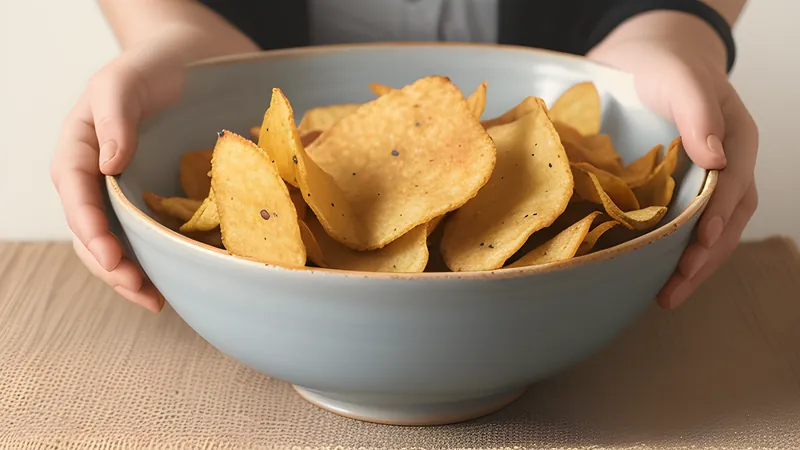
In the summer of 1853, at a lakeside resort near Saratoga Springs in upstate New York, a cook named George Speck was, according to the most repeated story in snack history, having a difficult evening with a fussy diner. The customer kept sending back his fried potatoes for being too thick and too soft; Speck, the tale runs, retaliated by slicing them so thin and frying them so hard that they could not be speared with a fork, only to find that the diner loved them. Whether or not it happened quite like that, the snack at the centre of the legend now has its own day. National Potato Chip Day, marked each 14 March, celebrates the thin, salted, fried slice of potato known as a crisp in Britain and a chip in North America: a food of almost insolent simplicity that has grown into one of the largest snack categories on the planet.
The Saratoga legend, and what really happened
George Speck, later better known as George Crum, was a real man, born on 15 July 1824 in Saratoga County to an African American father, Abraham Speck, and a mother of Native American descent. He genuinely worked as a cook at Moon’s Lake House on Saratoga Lake, a fashionable resort patronised by wealthy New Yorkers. So far, so verifiable. The trouble begins with the rest of the story.
Historians who have dug into the “Saratoga chip” myth point out several awkward facts. The Moon family did not buy the Lake House until 1854, a year after the supposed 1853 invention. Crum’s own sister, Catherine “Aunt Kate” Wicks, later claimed she had been the first to fry the thin slices. And, most damaging of all, crisp fried potatoes were already a known dish in Saratoga before Crum: a New York Herald correspondent writing from the Lake House in July 1849 praised “Eliza, the cook”, whose “potato frying reputation is one of the prominent matters of remark at Saratoga”. Recipes for paper-thin fried potatoes appear in cookbooks earlier still, including in Britain. At least five different people have been credited with the invention over the years. The honest verdict is that nobody invented the potato chip in a single flash of pique; it emerged gradually, and Crum’s restaurant simply made it famous.
From restaurant garnish to packaged snack
For decades the crisp remained a restaurant and grocery item, fried fresh and sold loose from barrels or tins, where it quickly went limp and stale on exposure to air. The leap from local delicacy to industrial snack required two things: a way to keep crisps fresh, and someone determined to sell them everywhere.
For a while the snack travelled under its own legend. Crum’s chips, popularised at the Lake House, spread across the United States as “Saratoga Chips”, and by 1895 a Cleveland entrepreneur, William Tappendon, was manufacturing them for grocery sale rather than serving them fresh — the first move out of the restaurant and into the shop. The deeper freshness problem, though, was solved by packaging. In 1926 a Californian businesswoman named Laura Scudder, running her family’s chip business in Monterey Park, began having her workers iron sheets of waxed paper into bags, fill them with crisps and seal the tops with a warm iron, an innovation that kept the contents crisp, clean and uncrushed and made the snack genuinely portable. The selling was done, most famously, by Herman Lay. Lay began as a travelling salesman in the American South, distributing crisps out of the boot of his car around Nashville from 1932; in 1938 he bought the Atlanta-based Barrett Food Company and put his own name on the bags. Lay’s merged with the Frito Company in 1961 to form Frito-Lay, which in turn joined Pepsi-Cola in 1965 to create PepsiCo, the corporate engine behind much of the modern snack aisle.
Competition sharpened the product. In 1968 Procter and Gamble launched Pringles, the uniform saddle-shaped crisps stacked in a cardboard tube, reconstituted from dried potato rather than sliced from whole ones, the first serious challenge to Frito-Lay’s dominance. The argument over whether such a thing even counts as a “potato chip” has rumbled on ever since, occasionally reaching the courts over tax classifications. As with the wider celebration of the potato itself, the crisp’s history is really the history of an ordinary tuber turned into something extraordinary by industry and ingenuity.
Why a humble snack earns a day
A day for the potato chip honours the snack at its most democratic. Few foods cross so many boundaries of age, class and country with so little fuss, or attach themselves so naturally to the small pleasures of ordinary life: the film at home, the pint at the pub, the packed lunch, the picnic. The crisp asks nothing of the eater except the opening of a bag. It is cheap, it is universal, and it carries no pretension whatsoever, which is precisely why marking it feels like a celebration of everyday contentment rather than of luxury.
There is also craft worth appreciating beneath the simplicity. Getting a crisp right means controlling the potato’s sugar content, the oil temperature and the slice thickness so that the result browns evenly and shatters cleanly rather than turning greasy or burnt. The plainest food can still be done well or badly.
How the day is kept
Celebration is gloriously low effort. People mark 14 March by buying a favourite bag, hunting down an outlandish limited-edition flavour, or frying their own at home by slicing potatoes wafer-thin, soaking out the starch and crisping them in hot oil. Online, the day becomes an excuse for the perennial argument over which flavour reigns supreme and whether ridged or smooth is superior. Brands, unsurprisingly, lean into it with promotions and new releases timed to the date.
A crisp by any other name
Travel changes the crisp aisle entirely. What is ordinary in one country looks bizarre in the next: prawn cocktail and roast chicken crisps are staples in Britain, while Japan offers seaweed and wasabi varieties and parts of Asia favour intensely savoury or sweet seasonings. The basic object, a thin fried slice of potato, stays instantly recognisable everywhere, but the flavour shelf is one of the quickest tours you can take of a nation’s palate. The crisp also has close relatives worth distinguishing from it — the maize-based crunch celebrated on Tortilla Chip Day shares the snack-bowl but not the spud, a reminder that “chip” is doing a great deal of work across cuisines.
Flavoured crisps are younger than you might think. For their first century, crisps came plain and salted, and the salt was an afterthought: British eaters remember the little twist of blue paper holding loose salt that came inside each bag, to be shaken on by hand, before seasoning was dusted on at the factory. The breakthrough came in Dublin in 1954, when Joseph “Spud” Murphy of the Tayto company set an employee, Seamus Burke, the problem of how to season a crisp during manufacture. Burke cracked it, and the cheese-and-onion crisp Tayto produced still dominates Irish and British shelves today. Britain’s other great flavour, salt and vinegar, was the rival Smith’s company’s answer: first trialled by its north-east England subsidiary Tudor and then launched nationally in 1967, it touched off a flavour war that ran for two decades and never really ended.
Britain has built its own peculiar customs around the snack. Salt and vinegar remains a national obsession, and then there is the crisp sandwich — crisps pressed between two slices of buttered bread — a combination that baffles outsiders and delights Britons, elevated in the Republic of Ireland to the near-sacramental status of the “Tayto sandwich”.
Fun facts
- The transatlantic vocabulary is a minefield: in Britain a “chip” is a thick chunk of fried potato (the American “French fry”), while the thin fried slice is a “crisp”; in America those words are reversed.
- George Crum, so often called the inventor, almost certainly was not, and his sister Catherine Wicks publicly claimed the credit for herself.
- Pringles, launched by Procter and Gamble in 1968, are pressed from dehydrated potato dough rather than sliced from whole potatoes, which is why the law has repeatedly had to decide whether they are legally crisps at all.
- The ridged or “rippled” cut was not invented for looks but for strength: the corrugations make a thin crisp far less likely to snap when scooped into a dip.
- The “can’t eat just one” effect is a genuine, much-studied phenomenon, driven by the combination of salt, fat, carbohydrate and the satisfying acoustic crunch, which together blunt the brain’s usual signals of fullness.
A closing reflection
There is something quietly telling in the fact that the world’s most argued-over invention story belongs not to a machine or a medicine but to a fried slice of potato. We want the crisp to have a hero, a single clever cook in a moment of inspiration, and the truth, that it crept into being through many hands over many years, is somehow less satisfying than the legend. Perhaps that is the real lesson of 14 March: the things we love most casually often have the most tangled histories, and a snack so simple a child can make it took an entire century of small refinements to reach the bag in your hand.
Related Content