National Picnic Day
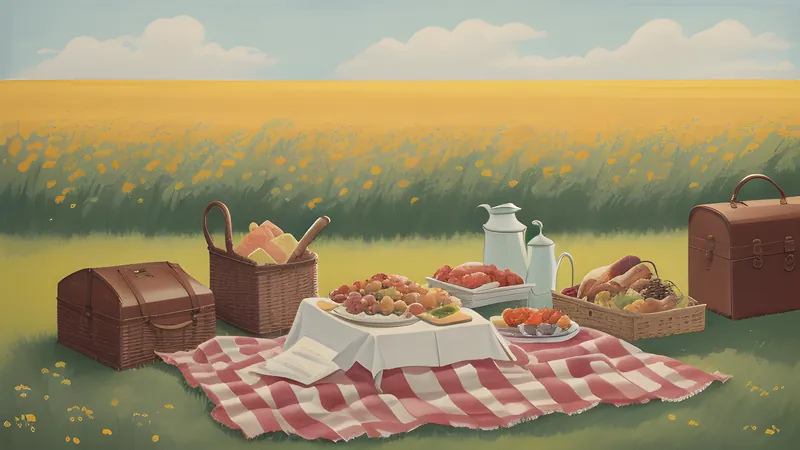
The word “picnic” first surfaces in print in 1649, in an anonymous French broadside of burlesque verse with the gleeful title Les Charmans effects des barricades, where it appears in the name of a fictitious drinking society, the “Frères bachiques de pique-nique”. There is not a blade of grass in sight. For its first century and a half the pique-nique was an indoor affair — a shared meal to which each guest brought a dish or paid a share — and it took an Englishman’s habit, after about 1806, to drag the whole idea out onto the lawn. National Picnic Day, marked each year on 23 April, celebrates the outdoor meal that resulted: a blanket, a basket, a patch of green and no agenda beyond food, company and the gamble of the weather.
Where the day comes from
The observance itself has no recorded founder or founding date, having grown by popular agreement rather than decree, but it sits on top of one of the better-documented etymologies in English. The French verb piquer means to pick, peck or nab, and nique was a word for a thing of no importance, a trifle; stitched together and rhymed, pique-nique described the casual, everyone-chips-in meal. By 1694 the term had been recorded in Gilles Ménage’s Dictionnaire étymologique, ou Origines de la langue françoise, defined as a shared meal where each guest pays his own way — and still, pointedly, with no suggestion of eating outdoors. The open air came later, and it came from across the Channel.
History
Eating in the open is, of course, far older than any word for it. Hunting parties, harvest gangs and travellers have always taken food in the field; what the eighteenth and nineteenth centuries invented was the outdoor meal as deliberate leisure rather than necessity. The English borrowed the French term remarkably early: the first English citation is from 1748, when Lord Chesterfield — Philip Stanhope, the 4th Earl — used “pic-nic” in a letter, associating it not with grass at all but with card-playing, drinking and conversation. The decisive shift happened around 1806, when the English began applying “picnic” to almost any meal eaten outdoors. The French, in one of the better ironies of culinary history, only acknowledged that a pique-nique might happen outdoors after the English had effectively taken the word over and pointed it at the sky.
The most colourful staging post on that journey was thoroughly indoors. In 1801 Lieutenant Colonel Henry Francis Greville hosted a bring-a-dish supper laced with amateur dramatics, and the combination proved so popular that by 1802 he had turned it into the Pic Nic Society, a fashionable London club of more than two hundred members who met in hired rooms off Tottenham Street. Each member drew a dish by lot and was expected to supply six bottles of wine, the whole affair running to theatricals, lavish food and gambling. It scandalised the establishment: Richard Brinsley Sheridan, master of Drury Lane, saw the amateur theatricals as a threat to his professional stage and orchestrated a press campaign against the “Pic Nics”, which the caricaturist James Gillray then skewered mercilessly. The society did not last, but it fixed the word firmly in the English mind just before the meaning drifted outdoors for good.
From there the picnic became a fixture of a changing society. As industrial cities grew crowded and the railways put the countryside within a day’s reach of ordinary people, the deliberate outdoor meal turned into a genteel escape, celebrated in novels and paintings and ritualised in the new public parks of the Victorian age. Elaborate wicker hampers, fitted with crockery and cutlery, and whole codes of etiquette grew up around what remained, at heart, an informal pleasure. That tension — between the picnic’s essential casualness and the human urge to dress it up — runs right through its history and survives intact today.
Why it matters
A picnic is a quietly democratic thing, and that is much of its value. It needs no reservation, no dress code and no particular money: a sandwich on a park bench counts as fully as a spread on a tartan rug. The day matters because it nudges people towards two things a scheduled, screen-lit life tends to crowd out — time spent outdoors and unhurried company. Sharing food on the grass slows the tempo of a meal, loosens conversation, and quietly reconnects the eater with weather, season and place in a way a dining table never can. There is even a modern public-health echo to it, since the same instinct that gets a family onto a riverbank for lunch also gets them walking, moving and out from under a roof for an afternoon.
How it is celebrated
Celebration could hardly be lower effort. People decamp to parks, beaches, riverbanks, gardens and meadows, blanket and basket in hand. Some keep it austere — bread, cheese, fruit, a flask — while others assemble considerable spreads of cold pies, salads, quiches, cakes and chilled drinks. Communities sometimes mount larger gatherings with shared food, games and music; children chase footballs and frisbees while the adults graze and talk. The only genuine requirement is a willingness to sit on the ground and tolerate the small intrusions that come with it: the curious dog, the opportunistic wasp, the gust that lifts a corner of the cloth and tips over the lemonade. Classic picnic fare is chosen precisely for the conditions — food that travels well, survives a few hours unrefrigerated and needs no cutlery, from sausage rolls and hard-boiled eggs to scotch eggs, sandwiches and slices of cake.
Global variations
Eating outdoors is close to universal, but it dresses differently from place to place. In France the pique-nique keeps an air of relaxed sophistication — good bread, cheese, wine and unhurried conversation. Around the Mediterranean it tends to merge with the tradition of the long, shaded family lunch that drifts well into the afternoon. Japan has perhaps the most poetic version in hanami, the spring gatherings beneath cherry blossom, where friends and colleagues spread mats to eat and drink under the falling petals, the meal frankly secondary to the spectacle overhead. Sweden’s fika carries the same companionable spirit into the open in warmer months, and across the Anglosphere the barbecue is the picnic’s louder, hotter cousin. The underlying impulse is constant: to braid a meal together with open air and changing light, and so turn ordinary eating into a small celebration of being outside.
Symbols and traditions
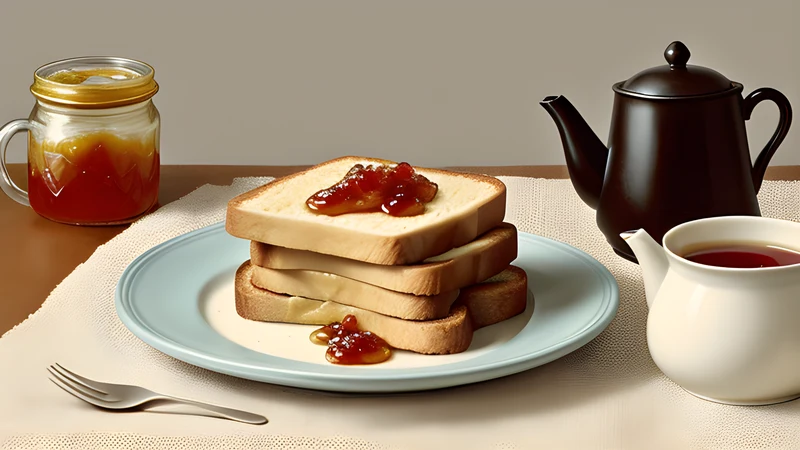
The wicker hamper, the chequered rug and the cool drink are the picnic’s enduring emblems, and so, half-affectionately, are its small hazards — ants advancing on the jam, bread gone warm, the perpetual war against napkins that blow away. The act of unpacking the basket, item by item, has its own modest ceremony, a slow unveiling that signals the meal has begun. The picnic has also lodged itself firmly in art: Édouard Manet’s Le Déjeuner sur l’herbe of 1863 made a scandal of an outdoor meal, and Georges Seurat’s A Sunday Afternoon on the Island of La Grande Jatte turned a riverside park crowded with leisurely picnickers into one of the defining images of modern painting. The picnic shares its open-air, faintly anarchic spirit of fun with other low-stakes celebrations on the calendar, from the playful nonsense of International Talk Like a Pirate Day to the deliberate companionship at the heart of National Best Friends Day.
Fun facts
- The earliest picnics in the modern sense were indoor affairs — fashionable bring-a-dish gatherings — and only moved decisively onto the grass after about 1806, thanks largely to English usage.
- The word first appears in 1649 in a French burlesque poem, and Lord Chesterfield’s 1748 English “pic-nic” referred to card games and drink, not to eating outdoors at all.
- The French only accepted that a pique-nique could happen outdoors after the English had taken the word over and made the open-air meaning their own.
- Manet’s 1863 Le Déjeuner sur l’herbe caused a public scandal — the outrage was less the picnic than the nude woman lunching beside fully dressed men.
- Seasoned picnickers know the day’s true wildcard is never the food but the sky; many a carefully packed hamper has ended up eaten hopefully in a parked car while rain drums on the roof.
A closing reflection
There is something telling in the fact that a word coined for an indoor party became, in English hands, the name for getting out from under the roof entirely. The picnic’s history is a small lesson in how meanings drift towards what people actually want, and what people seem to want is the simplest version of pleasure imaginable: to sit on the ground, share food, and let an afternoon go by. It asks almost no preparation and not much money, only the decision to make the time — which may be exactly why, three and a half centuries after that first printed pique-nique, we still bother to give it a day.
Related Content