National Mutt Day
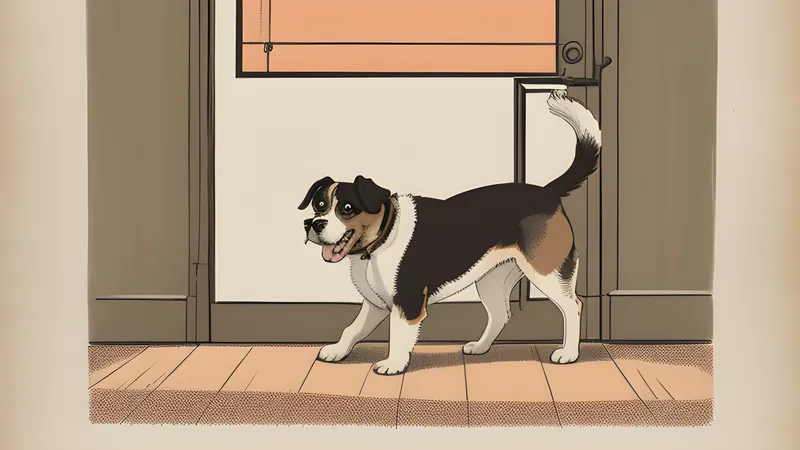
In a shelter kennel somewhere this morning there is a dog whose paperwork reads, in the space marked “breed”, something hopeful and unverifiable: “shepherd mix”, perhaps, or “terrier cross”, or the blunt admission “unknown”. Her ears do not match. Her legs are slightly too long for her body, or slightly too short, and her coat is a colour no breed standard would recognise. She has been passed over twice by visitors looking for a particular look, and she is, by almost any measure that matters, a wonderful dog. National Mutt Day, observed each year on 2 December, is for her.
The day is a deliberate counterweight to the rosette-and-bloodline world of canine culture. Where the show ring rewards conformity to a written ideal, this gentle observance turns towards the animal whose ancestry is a happy guess, whose markings belong to no studbook, and whose worth has nothing whatever to do with the tidiness of its lineage. It is a day for the rescues, the strays and the gloriously unpredictable mongrels who make up the great majority of the world’s dogs.
Who Started It
National Mutt Day was founded in 2005 by Colleen Paige, an American celebrity pet and home lifestyle expert and animal welfare advocate who has a particular gift for inventing observances that stick. She is also the creator of National Dog Day, marked on 26 August, and of several other pet-focused days that have since spread far beyond the United States. Her motive with the mutt day was unambiguous: to shine a light on the abandonment of mixed-breed dogs and to push back against the strong adopter preference for recognisable purebreds.
From the outset her intention was practical rather than merely sentimental. The point was to move dogs out of kennels and into homes, to celebrate the distinct character of mongrels, and to remind the public of an inconvenient truth — that the dogs most likely to be euthanised in overcrowded shelters are precisely the ordinary, unglamorous mixed-breeds nobody can quite name. Paige later added a second date, 31 July, so that the message would land twice a year and give shelters more than one moment in the calendar’s spotlight. The two dates, high summer and early winter, neatly bracket the year.
The Long History Behind a Young Day
The observance is new; the thing it celebrates is among the oldest relationships humans have. Dogs were domesticated from wolves many thousands of years ago, and for almost all of that history a dog was simply a dog — shaped by local need, climate and chance rather than by any deliberate programme of breeding. The herding dog, the ratter, the watchdog and the hearth companion were defined by what they did, not by a written description of how they should look.
The “purebred” is, by comparison, a very modern invention. The codification of distinct breeds with closed studbooks belongs largely to the nineteenth century. Britain’s Kennel Club, the oldest such body in the world, was founded in 1873, and the American Kennel Club followed in 1884. Only then did the idea take hold that a dog’s value could be measured against a fixed standard of points, and that breeding within a sealed gene pool was something to aspire to. The mutt represents the older, broader river of canine life from which all those pedigree breeds were eventually drawn off into narrower channels. Seen this way, National Mutt Day is a recent name for a very ancient appreciation: the dog as it existed before anyone thought to standardise it.
Why the Day Matters
The welfare argument is plain. In the United States alone, animal shelters take in millions of dogs each year, and mixed-breeds make up a large share of them — and, crucially, a disproportionate share of those never adopted. A first-time visitor to a shelter often arrives with a breed already in mind, drawn by a film, a celebrity’s dog or simple familiarity, and the nameless brown dog in the corner kennel loses out through no fault of its own.
There is also a quieter health story. Heavily line-bred pedigree dogs can carry a burden of inherited disorders: hip dysplasia in some large breeds, breathing difficulties in the flat-faced types, heart and spinal conditions concentrated by a narrow gene pool. Mixed ancestry tends to widen that pool, and while a mutt is no guarantee of perfect health, the phenomenon known as hybrid vigour means many of them sidestep the specific ailments that trouble their pedigree cousins. Beyond the statistics, the day matters because it quietly reframes how a person chooses a companion — nudging the decision away from appearance and towards temperament, energy and the simple click of connection that no breed standard can predict.
How People Mark It
Most celebrations are humble and hands-on. Shelters and rescue organisations use the occasion to spotlight adoptable dogs, sometimes waiving or reducing adoption fees, and to tell the stories of long-term residents who have watched dozens of kennel-mates leave before them. Owners post photographs of their own one-of-a-kind companions, usually with fond, baseless speculation about what mysterious cocktail of breeds produced such a face. Others donate food, blankets or money to local rescues, or volunteer to walk and socialise dogs awaiting homes — the unglamorous work that keeps a kennel dog sane and adoptable. Even fostering a single dog for a few weeks, easing the pressure on a full shelter, fits the spirit of the day exactly.
If this sort of practical, animal-centred kindness appeals, it sits alongside other observances in the same family. The playful Dress Up Your Pet Day channels the same affection in a lighter key, while National Cook for Your Pets Day turns the focus to the everyday business of caring for the animals already curled up at our feet.
Symbols and Traditions
The mutt itself is the symbol, in all its variety: the wiry terrier-cross, the lanky hound mix, the soulful shepherd blend whose ears never quite agree on a single direction. A modern tradition has grown up around the DNA-test reveal, in which an owner pays for a cheek swab and discovers, often to delighted astonishment, that the dog they assumed was “mostly Labrador” is in fact a five-way blend including breeds they have never heard of. The shelter blanket, the donation tin and the adoption-day photograph — that first picture of a dog in its new home, ears up, uncertain, hopeful — have all become informal emblems of the occasion.
The Same Dog, Everywhere
Although the day began in the United States, its message needs no translation, because every country has its mixed-breed dogs and its crowded shelters. Across much of South America, Africa and Asia the village dog or street dog is the default — a robust, medium-sized, sandy-coated generalist superbly adapted to scavenging and survival, and remarkably consistent in type wherever it appears. Geneticists have even identified populations of these “pariah” dogs as among the oldest and least altered by deliberate breeding. India’s free-roaming Indian pariah dog and the Carolina dog of the American Southeast are two such examples. The look recurs because it works. The underlying appeal of National Mutt Day — that a loving home should not depend on a pedigree — is one that rescue communities everywhere recognise instantly.
Fun Facts
- Mixed-breed dogs are affectionately called “Heinz 57” dogs, after the old condiment slogan, the implication being a cheerful blend of fifty-seven different ingredients in one happy animal.
- The two best-loved canine film stars of the silent and early sound eras took opposite approaches to pedigree: Rin Tin Tin was a German Shepherd, but countless screen and rescue dogs since have been deliberately cast mutts, chosen for trainability and expressive faces rather than breed.
- Commercial dog DNA tests routinely confound owners — a coat colour or build often hides a parentage with no visible trace of the dominant breed, because canine genetics shuffle appearance and ancestry far more loosely than people assume.
- The word “mongrel”, a faint insult since at least the 15th century, has been so thoroughly reclaimed by mutt-lovers that it now functions almost as a boast — a badge of individuality rather than a slur.
A Closing Reflection
There is a particular kind of arrogance in the assumption that a thing is only valuable once it has been catalogued, standardised and certified. The mutt quietly refuses that logic. It cannot be ordered to specification, cannot be bred true, cannot be reduced to a list of points, and is loved anyway — perhaps more easily for it, since there is nothing to live up to and nothing to disappoint. To choose the dog nobody can categorise is to make a small bet on character over appearance, and it is a bet that the millions of devoted mutt owners would tell you almost always pays off. Whether 2 December prompts an adoption, a donation or simply a longer scratch behind the ears of the scruffy creature already asleep on the sofa, the day does its modest work, honouring the dogs that ask for nothing grander than a name, a bowl and somewhere to belong.
Related Content