National Mojito Day
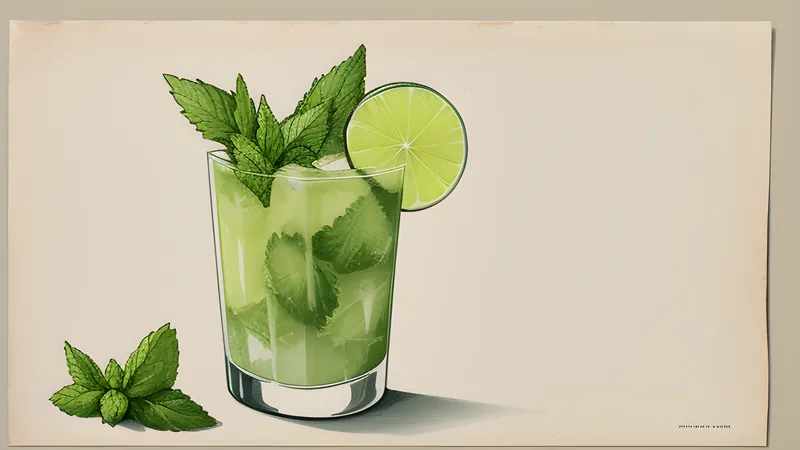
According to the legend most often told, the mojito’s distant ancestor was mixed in 1586 off the coast of Havana, when the English privateer Sir Francis Drake’s crew fell sick and a remedy was concocted from local ingredients: mint to settle the stomach, lime against scurvy, sugar to mask the bitterness, and a rough cane spirit called aguardiente to bind it together. That drink, named El Draque after Drake himself, is sometimes claimed as the world’s first cocktail. The story is far too neat to take entirely at face value, but it points to a genuine truth — the mojito grew out of Caribbean cane spirit, Cuban mint and the simple medicinal logic of the age. National Mojito Day, observed each 11 July, raises a frosted, mint-crowned glass to the descendant of that elixir: white rum, lime, sugar, fresh mint and soda water, a cocktail whose plainness is exactly its genius.
From medicine to cocktail
The mojito is unmistakably Cuban, and Havana is its home, but its early history is wrapped in agreeable myth rather than firm record. The thread running through the legends is the gradual refinement of El Draque from a rough, medicinal cane-spirit drink into something deliberately pleasurable. The crucial change was the spirit itself. Through much of the nineteenth century Cuban rum was harsh stuff, but when Don Facundo Bacardí Massó established his distillery in Santiago de Cuba in 1862 and began producing a lighter, smoother, charcoal-filtered rum, the older fiery aguardiente could be replaced with something a modern drinker would recognise. As that swap took hold, the drink shed its medicinal character and its name, and the mojito as we know it began to emerge. As for the dedicated 11 July date, its founding is undocumented, in keeping with most single-food and single-drink observances; it grew up informally as a cheerful summer pretext.
Havana’s golden age
The mojito’s fame was made in Havana’s cocktail heyday in the first half of the twentieth century, and one bar above all is bound up with its rise: La Bodeguita del Medio, which opened in 1942 and advertises its mojito connection with great enthusiasm. The bar is also the source of the cocktail’s most famous endorsement — a framed, handwritten note reading “My mojito in La Bodeguita, my daiquiri in El Floridita,” attributed to Ernest Hemingway, who lived in Cuba for years and is endlessly associated with both drinks. It makes a wonderful story, and the bar has dined out on it for decades. The trouble is that historians have never found the line in any of Hemingway’s books, letters or papers, and the attribution is widely regarded as an enterprising piece of marketing rather than verified fact. The mojito wears the myth lightly, which is rather to its credit. What is beyond doubt is that the cocktail became a Havana fixture and, from there, travelled the world.
Through the twentieth century the drink spread well beyond Cuba, and it enjoyed a particularly sharp revival in the late 1990s and 2000s, when classic cocktails came back into fashion and bartenders rediscovered the appeal of fresh ingredients. The mojito became a fixture of summer menus everywhere, valued for being light, herbaceous and far less heavy than the spirit-forward drinks it shared the list with.
The right mint, the right rum
Purists will tell you that a Cuban mojito is not built with the spearmint most kitchens keep. The traditional herb is hierbabuena, a particular Cuban mint with broad, soft leaves and a milder, almost cooling sweetness, less sharply menthol than the spearmint and peppermint common elsewhere. The distinction matters because mint is the drink’s defining note rather than a garnish, and a coarser, more aggressive variety can tip the balance toward bitterness. The rum matters just as much. The mojito is built on light, white, column-distilled rum — clean and faintly sweet — rather than the heavy, dark, aged rums of Jamaica or the spiced varieties, because the point is to let the mint and lime sing over a gentle spirit rather than to be dominated by it. These are the choices that make a Havana mojito taste subtly different from the one served in a chain bar three thousand miles away, and they explain why the cocktail has resisted being fully standardised into a single industrial recipe.
Why it earns a day
The mojito has come to stand for a particular idea of summer ease — tropical, unhurried and unpretentious. Its appeal rests entirely on balance: the sweetness of sugar, the sharp acidity of lime, the cool aromatic lift of mint and the gentle warmth of rum, all lengthened with soda over plenty of ice. None of those parts is expensive or exotic, yet the whole is greater than the sum, and getting the proportions right takes a small amount of genuine attention. To honour it is to honour not just one cocktail but a whole mood, and a recognisable slice of Cuban culture carried in a tall glass.
There is a wider point in the mojito’s success, too. For much of the twentieth century the most fashionable cocktails leaned heavily on spirits, bitters and fortified wines — drinks designed around the bottle rather than the garden. The mojito’s revival in the late 1990s helped lead a swing back toward fresh produce behind the bar: muddled herbs, hand-squeezed citrus, ingredients that wilt and bruise and demand to be used the same day. That shift, which bartenders sometimes call the fresh or craft-cocktail movement, owes a real debt to drinks like the mojito and the caipirinha, which proved that customers would happily pay for, and wait a little longer for, something assembled from raw ingredients in front of them. A drink that began as a sailor’s rough tonic ended up nudging an entire industry back toward the herb garden.
How people keep it
The day is kept simply, by drinking mojitos at home or ordering them at a bar running a mojito special. Making one well is a small ritual that rewards patience: the fresh mint is gently muddled with sugar and lime — pressed just enough to release its fragrant oils, never pounded, because bruised leaves turn bitter and shed unpleasant chlorophyll into the drink. White rum follows, the glass is packed with ice, and chilled soda water is poured over to finish, the whole crowned with a fresh sprig of mint and a wedge of lime. The single most common mistake is over-muddling; the second is skimping on ice, which leaves the drink warm and flat within minutes. Done with care, a mojito tastes vividly of the moment it was made.
Variations from a single template
While the classic recipe holds its ground, the mojito’s clean framework invites endless reworking. Fruit mojitos fold in muddled strawberry, raspberry, mango or passion fruit; non-alcoholic versions — virgin mojitos, or nojitos — drop the rum for extra soda and lime; and bartenders swap in other herbs and spirits, from basil to gin, while keeping the mint-and-citrus backbone. The drink belongs to a wider family of tall, refreshing, herb-and-citrus coolers favoured in hot climates, yet its Cuban identity keeps it distinct from its relatives. That same sour-sweet-cold logic underpins the broader run of warm-weather refreshers on the calendar, from the frozen relief of National Ice Cream Day to the spirit-led indulgence marked on National Vodka Day.
Mint, lime and a name
Fresh mint is the mojito’s signature, its aroma as much a part of the experience as its taste, which is why a bartender will slap a final sprig between the palms before garnishing — a trick that releases the scent without bruising the leaves. Lime and ice signal coolness and refreshment; white rum anchors the drink to its Cuban roots. The tall, frosted glass with its mint crown and beads of condensation is the cocktail’s visual emblem. Even the name carries a hint of the recipe: “mojito” is widely thought to derive from mojo, a Cuban lime-based seasoning, itself rooted in a word meaning to dampen or wet — an apt label for something built on lime and water.
Fun facts
- The mojito’s claimed ancestor, El Draque, is named after Sir Francis Drake, the Elizabethan privateer the Spanish viewed as a pirate — meaning one of the world’s most relaxing summer drinks is supposedly named for a sixteenth-century raider of the Caribbean.
- The famous Hemingway endorsement scrawled on La Bodeguita’s wall has never been traced to anything the writer actually wrote, and is generally considered a brilliant marketing invention rather than genuine testimony.
- The switch from rough aguardiente to the lighter, charcoal-filtered rum that Don Facundo Bacardí began producing in 1862 was what turned a medicinal tonic into a drink worth ordering for pleasure.
- The mojito is one of relatively few classic cocktails that depend on fresh herbs rather than spirits and syrups alone, which is precisely why a stale, machine-made version tastes so flat next to one built from a freshly picked sprig.
A closing reflection
The mojito is a drink that punishes shortcuts and rewards small acts of care, and there is something instructive in that. It has no rare ingredient, no secret, no aged component to lean on — only mint, lime, sugar, rum, soda and ice, the same five things available to anyone. What separates a memorable mojito from a disappointing one is entirely a matter of attention: the gentleness of the muddle, the freshness of the leaf, the generosity of the ice. On a July afternoon that is a quietly democratic pleasure, and a reminder that the simplest things are often the ones most worth getting right.
Related Content