National Llama Day
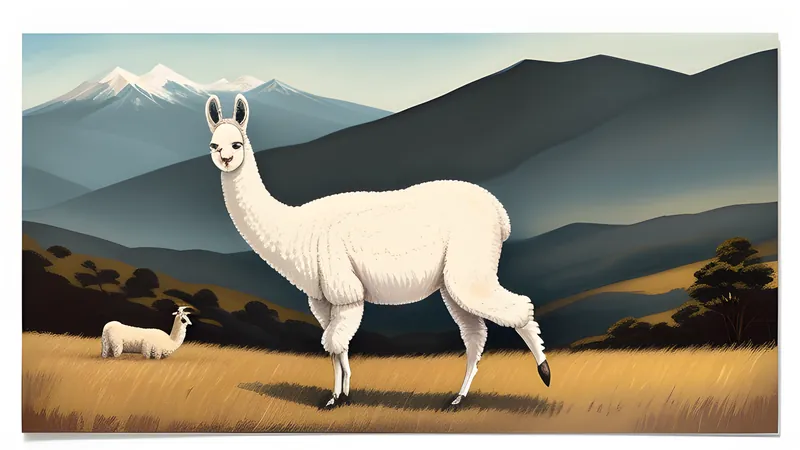
A llama hums. Not a tuneful sound, more a low, resonant mmm that a mother makes to her newborn cria within minutes of its birth so the pair can recognise one another by voice on a crowded hillside. That single detail captures something about the animal celebrated on 9 December: behind the comic ears and the supercilious stare sits a creature of real intelligence and surprising tenderness, one that carried an entire Andean empire on its back for centuries before it ever reached a petting farm. National Llama Day is a light affair on the surface, but the animal it honours has one of the longest and most consequential working histories of any domesticated species in the Americas.
Where the day comes from
National Llama Day’s exact origin is not documented, which is the usual story with these single-species observances — they tend to bubble up from breeders, sanctuaries and online enthusiast communities rather than from any official proclamation. A few accounts claim a Canadian origin in the 1930s, supposedly honouring the llama’s hardiness during drought, but no reliable record supports that, and it reads more like a tidy backstory than a verifiable fact. The likelier truth is that the day gathered momentum through the mid-2010s as camelids became social-media favourites, with farms and rescue groups adopting 9 December as a hook for awareness and fundraising. Rather than invent a founder, it is fairer to say the day reflects a genuine, growing fondness for an animal that rewards close acquaintance.
A working animal older than the Inca
The llama itself has a history measured in millennia. It was domesticated in the Peruvian and Bolivian highlands roughly 4,000 to 5,000 years ago from the wild guanaco, making it one of the oldest domesticated animals in the Americas and the only large beast of burden the continent possessed before Europeans arrived with horses, donkeys and oxen. DNA analysis has settled the lineage cleanly: the guanaco is the wild ancestor of the llama, while the smaller, finer-fleeced alpaca descends chiefly from the vicuña.
By the time the Inca empire rose to dominance in the fifteenth century, the llama had already been central to Andean life for thousands of years, and the Inca built much of their logistics around it. Llama caravans hauled maize, textiles and silver along the vast network of stone roads that stitched the empire together across terrain where wheeled transport was useless and horses would have foundered. A llama can carry roughly a quarter to a third of its body weight — typically around 25 to 30 kilograms — and will simply refuse to move, or lie down, if overloaded, a built-in safeguard that made it a dependable partner rather than a beast to be flogged. The animals also supplied wool for clothing, meat, hides, and dung that was dried and burned as fuel or spread as fertiliser in a landscape short of trees. The Inca sacrificed llamas to their gods, with the colour of the animal often matched to the deity being honoured, and herds were counted among the empire’s most carefully managed forms of wealth.
Why the llama still matters
The llama’s usefulness did not end with the Spanish conquest, even though imported European livestock pushed it to the margins for centuries. In its Andean homeland it remains woven into rural livelihoods, and beyond South America it has found a clutch of new vocations. Its fleece — warm, lightweight and naturally low in the greasy lanolin that makes sheep’s wool prickly and harder to process — is prized by hand-spinners and small fibre mills. Its calm temperament has made it a popular therapy and companion animal, patient enough to be walked through hospitals and care homes. Most unexpectedly, it has become a livestock guardian: a single llama turned out with a flock of sheep will bond with them and drive off foxes and loose dogs, using its considerable size and a hard kick from powerful hind legs to see off threats that would scatter the sheep. A day given over to the llama is partly a way for the small farms and sanctuaries that keep them to share this knowledge and draw a little support.
Built for thin air
Much of what makes the llama remarkable is invisible until you understand the altitude it evolved to handle. The Andean altiplano sits at three to four thousand metres and higher, where the air holds far less oxygen than at sea level, and the llama’s body is engineered for it. Its red blood cells are smaller and more numerous than those of most mammals and carry a form of haemoglobin with an unusually strong grip on oxygen, letting the animal work hard where an unacclimatised human would gasp. Its padded, two-toed feet — soft leathery soles rather than hard hooves — grip rocky ground and tread lightly enough to do far less damage to fragile high-altitude pasture than a horse or a goat. And unlike true ruminants, the llama makes do with three stomach compartments yet digests sparse, fibrous mountain grasses with notable efficiency, drinking little and tolerating cold, sun and wind that would defeat softer livestock. The result is an animal that is not merely tolerant of harsh highlands but genuinely suited to them, which is why no imported European beast ever fully displaced it in its homeland.
How people mark it
Celebrations are cheerful and informal. Llama farms and sanctuaries open their gates, letting visitors meet the animals, learn about their care, and sometimes join a guided llama trek — a slow, scenic walk in which the unflappable animals carry the packs. Online, 9 December fills with photographs of llamas mid-yawn or staring down a camera with magnificent disdain. Crafters spin and knit with llama fibre, schools and nature groups use the date to teach children about Andean wildlife, and rescue organisations run donation drives to rehome animals that have outgrown a hobby farm. The barrier to taking part is low: you can mark the day simply by reading about the species or supporting a sanctuary.
A South American family with global reach
Llamas are most at home in Peru, Bolivia, Ecuador, Chile and Argentina, where they remain part of highland farming and, increasingly, of tourism. From the nineteenth century onward they were exported to farms and estates across North America, Europe and Australasia, valued first as curiosities and later for fibre, guarding and companionship. They belong to a family of four South American camelids — the domesticated llama and alpaca, and the wild guanaco and vicuña — whose collective appeal has made llama trekking and alpaca farming small but growing enterprises far from the Andes. Their popularity slots neatly alongside the broader human habit of celebrating animals we live with, the same impulse behind Dress Up Your Pet Day and National Cat Day, though the llama earns its place through utility as much as charm.
The image and its meanings
The enduring symbol of the day is the llama’s own face: that serene, slightly aloof expression that has sold a great many greetings cards and novelty jumpers. Behind it sit the bold geometric textiles of the Andes, woven from llama and alpaca fibre and dyed in patterns that carry regional and ceremonial meaning. And then there is the spitting, which has become an affectionate part of the llama’s folklore. The reputation is largely unearned where humans are concerned: a well-reared llama rarely spits at people, reserving the habit for squabbles within the herd, where a dominant animal disciplines a subordinate. When a llama is truly annoyed it draws the projectile from deeper in its digestive tract — an unpleasant, half-fermented payload that is as much a threat display as an attack.
Fun facts
- Llamas have three stomach compartments rather than the four of true ruminants like cows and sheep, yet they extract nutrients efficiently enough to thrive on sparse, high-altitude grazing where other livestock would starve.
- A mother llama hums to her newborn cria so the two can identify each other by sound, and humming more broadly is one of the animal’s main forms of communication, signalling everything from contentment to mild anxiety.
- A llama will not be overloaded: give it too much to carry and it will sit down, lie flat or simply refuse to walk, an instinctive limit that made it a trustworthy pack animal for Andean caravans.
- The vicuña, the llama’s wild cousin, grows one of the finest and most expensive natural fibres on Earth, historically reserved for Inca royalty and still sold today at prices that rival the costliest cashmere.
A closing reflection
It is tempting to keep the llama in the box marked “amusing”, all banana ears and theatrical disdain, and the day does nothing to discourage a smile. But the animal that makes us laugh is also the one that made the high Andes habitable on a grand scale, carrying the freight of an empire across mountains no wheel could cross. There is a lesson in that pairing of comedy and competence: the creatures we find most endearing are often the ones that have quietly done the most work. To mark 9 December is to notice both halves of the llama at once — the clown and the cornerstone — and to give the dependable old beast of burden its due.
Related Content