National Kimchi Day
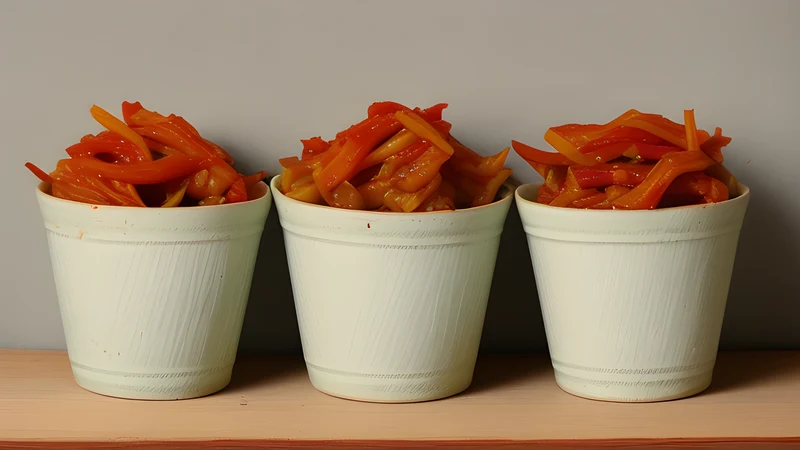
In February 2020, South Korea’s National Assembly amended the Kimchi Industry Promotion Act to give the country’s most famous food its own annual date, and 22 November became Kimchi Day. First observed that same year, it has since been adopted far beyond Korea, with several American states, the United Kingdom, Brazil and Argentina all proclaiming their own versions. The choice of date is a small piece of numerical poetry: the eleventh month and the twenty-second day were picked because each of the eleven or more core ingredients is said to combine into twenty-two health benefits, a tidy “11 plus 22” written into the calendar.
What kimchi actually is
Kimchi is a broad family of fermented vegetable dishes rather than a single recipe, and Korean tradition counts well over two hundred distinct types. The version most of the world pictures, red and pungent, is baechu-kimchi, made from napa cabbage. The cabbage is salted to draw out water, then coated in a paste of gochugaru chilli flakes, garlic, ginger, spring onion and jeotgal, a salted, fermented seafood such as anchovy or tiny shrimp that gives the finished kimchi its savoury depth. Packed tight and left to ferment, lactic-acid bacteria go to work, souring the vegetables, building carbon dioxide and producing the sharp, fizzy tang that defines a good batch.
Fermentation is the whole point. Kimchi is a living food, its flavour shifting from fresh and crisp in its first days to deeply sour after weeks, at which stage older, funkier kimchi is prized for cooking into stews and pancakes rather than eaten raw. Traditionally it matured in onggi, breathable earthenware crocks buried up to their necks in the ground so the surrounding soil held a cool, stable temperature through winter.
A history of chilli and cabbage
Kimchi is far older than its familiar red colour. References to fermented vegetables in Korea reach back well over a thousand years, with mentions in texts from the Goryeo dynasty and earlier. The word itself descends from chimchae, meaning “submerged vegetables”, a nod to the brining at the heart of the process. For most of that long history, kimchi was pale. It was salted, brined and sometimes seasoned with ingredients like garlic and ginger, but it had no heat, because there were no chillies in Asia at all.
Chilli peppers are native to the Americas and only reached Korea after Portuguese and Japanese trade routes carried them across the world in the sixteenth and seventeenth centuries. Korean cooks gradually took to the pepper, and by the eighteenth century the fiery red kimchi we now think of as definitively Korean had taken shape. The older white style survives today as baek-kimchi, a milder, chilli-free version still made for children and for those who prefer a gentler dish, and it is a direct edible link to how kimchi tasted for most of its existence.
The dish was, above all, a technology of winter. In a country with harsh, cold months and a short growing season, fermenting an enormous quantity of autumn cabbage was the way a household kept eating vegetables until spring. That practical need produced one of Korea’s most important social traditions.
Kimjang, and why the day matters
The communal making of winter kimchi is called kimjang, and it is serious business. In late November, families, neighbours and whole villages once gathered to process hundreds of cabbages at once, an exhausting, festive collective labour that shared both the work and the resulting food. The tradition was considered significant enough that UNESCO inscribed kimjang, “making and sharing kimchi”, on its Representative List of the Intangible Cultural Heritage of Humanity in 2013, praising it as a practice that reinforces Korean identity and community solidarity.
Kimchi Day exists to protect and promote all of this at a moment when it is under pressure. Fewer urban families make their own kimchi, cheap imports have squeezed domestic producers, and the tradition risks fading into something bought in a jar. The date is both a celebration and a piece of cultural and economic diplomacy, framing kimchi as a national treasure worth defending and exporting.
How it is celebrated
In Korea, the period around 22 November coincides with the real kimjang season, so the day blends naturally into a wave of communal kimchi-making, often organised now as charity events where volunteers prepare thousands of portions for elderly and low-income neighbours. Food companies and government bodies run festivals, cooking demonstrations and export promotions. Abroad, Korean cultural centres and restaurants use the date for tastings and workshops, and the growing list of countries with their own official Kimchi Day, led by California, which became the first American state to adopt it in 2021, turn the occasion into a showcase for Korean food culture within their own communities.
Variations and cousins
Kimchi’s diversity is regional and seasonal. Kkakdugi is made from cubes of radish, crunchy and slightly sweet. Oi-sobagi stuffs cucumbers with seasoning for a fresh summer version. Dongchimi is a watery radish kimchi in cool brine, almost a drink. Coastal regions fold in more seafood, while inland areas lean on salt and fermented pastes. Beyond Korea, the wider world of fermented cabbage offers obvious relatives, from German sauerkraut to the fermented mustard greens of southern China, all solving the same ancient problem of preserving the harvest through the acidifying work of friendly bacteria.
Fun facts worth savouring
Kimchi has been to space. When the Korean astronaut Yi So-yeon flew to the International Space Station in 2008, researchers spent years and a considerable budget developing a special “space kimchi”, treated to reduce its bacteria and radiation sensitivity so it could safely accompany her into orbit.
Many Korean homes own a dedicated appliance for the dish. The kimchi naengjgo, or kimchi refrigerator, holds precise low temperatures that mimic the old buried onggi crocks, and it is a standard fixture in Korean kitchens.
The health claims baked into the date have real substance. Kimchi is rich in probiotic Lactobacillus bacteria, fibre and vitamins, and it has been the subject of numerous studies into gut health, though the enthusiastic “twenty-two benefits” framing is more marketing than clinical certainty.
Kimchi is deeply tied to national feeling. Koreans traditionally say “kimchi!” instead of “cheese” when posing for photographs, and per-person consumption of the dish in South Korea is measured in tens of kilograms a year.
The making, step by step
Watching a traditional kimjang is watching an assembly line built from muscle memory. Whole napa cabbages are split lengthwise and packed with coarse sea salt between every leaf, then left for hours to wilt and soften as the salt pulls water out of the cells. This step matters more than any other: too little salt and the cabbage rots rather than ferments, too much and it turns inedibly briny. The limp, drained cabbages are rinsed and squeezed, then each leaf is painted with the red seasoning paste, worked in by gloved hand so the mixture reaches deep into the folds.
From there the packed cabbage goes into its crock and the waiting begins. For the first day or two the kimchi ferments at room temperature, kick-starting the bacteria, before being moved somewhere cold to slow the process and let flavour develop over weeks. A cook can read the stage of a kimchi by ear and eye, the faint hiss of escaping gas, the pinkening of the brine, the softening crunch of the cabbage. This is why kimchi is never really “finished”. A jar opened in December tastes bright and sharp; the same jar in March is sour and soft, destined for a bubbling pot of kimchi-jjigae rather than the side of a plate.
Kimchi at the Korean table
Kimchi is rarely the star of a meal and almost never absent from one. It belongs to the constellation of small side dishes called banchan that surround a bowl of rice, and a Korean table without at least one kind of kimchi feels incomplete. Beyond the plate, older and more sour batches become ingredients in their own right, cooked into stews, folded into savoury pancakes called kimchijeon, stirred through fried rice, or simmered with pork and tofu. Nothing is wasted; kimchi that has passed its prime as a fresh side simply graduates to the stove, its accumulated sourness now an asset. That whole-life usefulness, fresh then aged then cooked, is part of why the dish sits so deep in the culture that a nation reaches for its name instead of “cheese” in front of a camera.
A closing reflection
Kimchi carries an unusual amount of meaning for something made of salted cabbage. It is a preservation method, a health food, a diplomatic ambassador and, through kimjang, a reason for a community to gather and work side by side before the cold sets in. The decision to write it into the calendar on 22 November was a way of insisting that a food born of necessity, of getting through winter, still deserves attention now that winters are warm indoors and vegetables arrive year-round. Alongside other fermented and preserved staples honoured on days like National Cheese Lovers Day and the wider world of comforting bowls marked on World Porridge Day, kimchi is a reminder that some of the most cherished foods began as clever answers to hunger. The best way to observe the day is to open a jar, taste how the sourness has deepened, and perhaps make a batch to share.
Related Content