National Hot Pastrami Sandwich Day
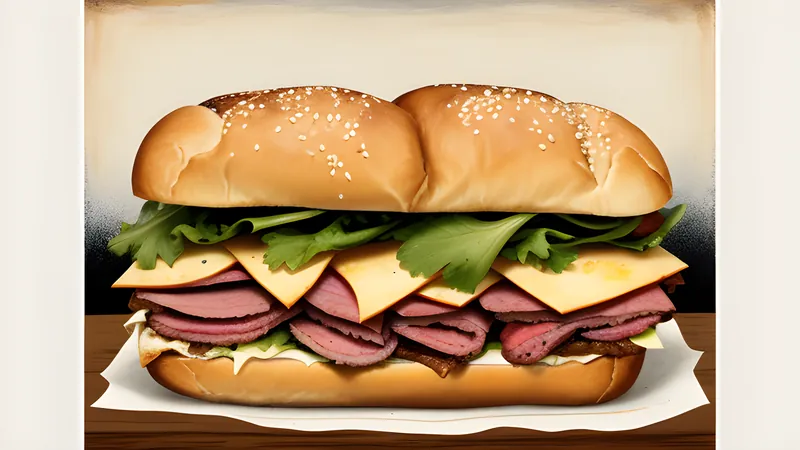
In 1887, on Delancey Street on Manhattan’s Lower East Side, a Lithuanian kosher butcher named Sussman Volk is said to have received a recipe for spiced, cured beef from a Romanian friend, handed over in gratitude for the use of Volk’s icebox. Volk cured a piece of meat to those instructions, sliced it warm, laid it on rye bread, and in doing so produced what is widely cited as the first hot pastrami sandwich sold in America. It was such a success that he reportedly took over the shop next door at 88 Delancey Street and turned it into one of New York’s earliest delicatessens. National Hot Pastrami Sandwich Day, observed on 14 January, salutes the descendant of that improvised lunch: tender, peppery beef piled high on rye, warm from the steamer and dressed with mustard. Falling in the cold heart of January, it is a day built for a food that is all about warmth, richness and being well fed in defiance of the weather.
Where the day comes from
The dedicated observance on 14 January has no documented founder, which is the usual state of affairs for the great sprawl of unofficial food days. Nobody signed a proclamation; no committee voted. It accreted, as these dates tend to, through repetition on calendars and in deli marketing until it became fixed by custom. What the day lacks in paperwork it makes up for in subject, because the hot pastrami sandwich has a history far more traceable than its anniversary. The sandwich did not need a day to be loved; the day exists because the sandwich was already an institution.
A history written in cured beef
Pastrami’s lineage runs back through the preserving traditions of Eastern Europe and the Ottoman world. Its closest ancestors are the Romanian pastramă and the Turkish pastırma, salted and air-dried meats designed to survive without refrigeration. The name itself descends from the Romanian verb a păstra, meaning to keep or preserve, and beyond that from Turkish roots tied to pressing meat. Jewish immigrants from Romania and the wider region carried the technique to North America in the late nineteenth century, and there it changed: instead of the goose or mutton sometimes used in the old country, the new makers turned to beef, especially the fatty navel cut and the brisket, which were cheap and plentiful.
After Volk’s Delancey Street experiment, the sandwich found its true home in the delicatessen. Katz’s Delicatessen, founded in 1888 just streets away, became one of the establishments that fixed pastrami in the popular imagination, and it still carves the meat by hand to order behind its busy counter. The deli flourished as a hub of immigrant city life through the first half of the twentieth century, and pastrami was among its crowning glories. The method that produces it is unhurried: the beef is brined in salt and spice for days, coated in a crust of cracked black pepper and coriander, smoked, and finally steamed until it surrenders into tenderness. That last stage, the steaming, is the secret that separates a great sandwich from a tough one, and it is the step most often skipped by imitators.
The twentieth-century rise of the New York deli gave pastrami its stage. By the 1930s the city counted well over a thousand kosher delicatessens, and a sandwich that had begun as a way to use cheap, tough cuts became one of the most ordered items at the counter. The pastrami of the great delis is made from beef navel, the fatty plate cut below the ribs, though brisket is now widely substituted; the choice of cut is itself a point of argument between purists. The meat’s transformation from a hard, salty slab into something tender enough to fall apart is a feat of chemistry as much as cookery, the long brine breaking down the muscle and the final steaming finishing the job.
Why it matters
The hot pastrami sandwich is a monument to immigrant ingenuity, a dish born of thrift and craft that became a byword for abundance. A preserving method invented to stretch scarce, cheap meat across lean months ended up producing one of the most generous things you can order at a counter. It also keeps alive skills that might otherwise have faded entirely, the patient arts of brining, spicing and smoking that no factory shortcut truly replicates. And it stands for a communal idea of eating: the deli counter as a meeting place, the shared pleasure of a meal too large to finish neatly, the napkins pressed into service. To mark a day for it is to honour both the technique and the world that produced it, much as other deli-counter classics such as the Monte Cristo and the grilled cheese carry their own small histories of working-city food.
How it is celebrated
Celebration is gloriously simple: find a proper hot pastrami sandwich, or build one at home. Devotees insist on warm, hand-carved meat, fresh caraway-flecked rye, and the right amount of mustard, which is to say not very much. Some make a pilgrimage to a beloved deli and join the queue; others recreate the experience in their own kitchen, steaming shop-bought pastrami until it yields. The day rewards those who do not stint. Ordering it “lean” or “fatty” is itself a small ritual of preference, and regulars hold their positions with the conviction of football supporters.
Global variations
The sandwich’s relatives are scattered across continents. Romanian pastramă leans on garlic and is often made from pork or mutton; Turkish pastırma is pressed under a thick paste of garlic, fenugreek and paprika called çemen and sliced thin. In Montreal, a related cured beef known as smoked meat is brined and smoked to a recipe that locals will tell you is entirely distinct from New York pastrami, and the argument between the two cities is conducted with genuine feeling. The American version, with its steamed tenderness and towering build, is the one that travelled furthest, carried abroad by films, television and the spread of deli-style eateries to cities far from the Lower East Side.
Pastrami in the wider culture
Few sandwiches have a comparable hold on popular imagination. Katz’s became a place of pilgrimage in part because of the cinema: the deli’s tables appear in films and television to the point where a particular corner table now carries a small sign, and a hot pastrami order has become a kind of cinematic shorthand for authentic New York. The “2 for 1” wartime habit at Katz’s — sending salami and pastrami to soldiers serving abroad — even left the slogan “Send a salami to your boy in the army” hanging in the shop for decades. Beyond New York, the rise of deli-style chains and the spread of pastrami onto menus far from the Lower East Side carried the sandwich into cities that had no Jewish immigrant deli tradition of their own, so that a food invented to survive a Romanian winter now turns up, in various states of faithfulness, on three continents.
Symbols and traditions
The visual grammar of the sandwich is precise. There is the rye, scattered with caraway seeds; the vivid stripe of mustard, yellow or grainy but never, to a purist, sweet; the dark, peppery bark of the meat itself; and the crisp dill pickle that arrives alongside almost by law. Above all there is the proportion: the meat heaped so high that the bread can barely close over it, a deliberate signal of generosity rather than a mistake of measurement. A pastrami sandwich that you could comfortably eat with one hand would, in many delis, be regarded as an admission of defeat.
Fun facts
- The first hot pastrami sandwich in America is credited to Sussman Volk in 1887, after a Romanian friend gave him the recipe in exchange for the use of his icebox on Delancey Street.
- The word “pastrami” comes from the Romanian a păstra, “to keep” or “preserve” — the same impulse that gave us pickles and smoked fish on the same deli menu.
- The dark crust is not just flavour: the heavy coat of cracked black pepper and coriander forms during smoking and seals the meat.
- Katz’s Delicatessen, one of the institutions that made pastrami famous, has operated on the Lower East Side since 1888 and still slices its pastrami by hand rather than by machine.
- The final steaming, often forgotten by home cooks, is what turns a firm cured slab into the meltingly soft meat that defines a truly great sandwich.
A closing reflection
There is something fitting in the fact that a food invented to outlast hardship became a symbol of plenty. The whole apparatus of pastrami, the salt and smoke and patience, exists because someone once needed meat to survive a winter without spoiling, and the towering, juice-dripping sandwich on a January counter is what that necessity grew into once it found a city generous enough to indulge it. Eaten on the fourteenth, it tastes of more than spiced beef. It tastes of an icebox favour repaid on Delancey Street, and of every immigrant who decided that the answer to a cold, hard month was simply to feed people very, very well.
Related Content