National Hard Candy Day
Around 1670, the choirmaster of Cologne Cathedral, exasperated by fidgeting children during the long Christmas services, is said to have asked a local sweet-maker to bend straight sticks of white boiled sugar into a crook, the better to keep small hands and mouths occupied. That crooked sugar stick was the ancestor of the candy cane, and it is one small, datable episode in the very long story of hard candy. National Hard Candy Day, observed each year on 19 December, honours that whole glassy genre: the lozenges, drops, lollipops, humbugs and barley sugars that have outlasted almost every fashion in confectionery.
There is a particular pleasure in the slow dissolve of a boiled sweet, the way a jewel of hardened sugar surrenders its flavour over long, unhurried minutes. Falling just before the festive rush, the day lands in the season when hard candy is at its most visible, and it celebrates a category defined less by any single flavour than by a method: sugar boiled to the edge of burning, then cooled into something close to glass.
A word, and a sweet, much older than the day
The thing itself is far older and far better documented than its dedicated date. The very word “candy” traces back through Old French and Arabic to the Sanskrit khanda, the name for the crystallised lumps left behind when sugarcane juice was boiled down, a usage rooted in early India where sugar was first refined. By the early ninth century, writers in the Islamic world were describing rock candy, made by allowing crystals to form slowly from a saturated sugar solution as it cooled. Sugar at this point was rare and costly, closer to a spice or a medicine than a treat.
Hard candy in the European sense grew up alongside the apothecary’s trade. By the seventeenth and eighteenth centuries, druggists in Europe and North America were boiling sugar with medicinal herbs into lozenges meant to soothe sore throats and settle stomachs, so that many early “sweets” were sold as remedies. The line between confectioner and chemist was genuinely blurred, and several enduring British classics, barley sugar chief among them, began life with a medicinal or restorative reputation before becoming pure indulgence.
The history: how boiled sweets became everyday
What turned hard candy from luxury and medicine into a penny pleasure was the collapse in the price of sugar. As Caribbean and later beet-sugar production drove costs down through the eighteenth and nineteenth centuries, and as mechanised candy-making spread in the Victorian era, the boiled sweet became something a child could buy with a coin. The British seaside rock trade, with its lettered sticks that carry a resort’s name all the way through, grew up in this period as a mass-produced novelty; pear drops, acid drops, humbugs and aniseed balls became the standard stock of the corner shop.
The candy cane, meanwhile, travelled from that crooked Cologne original to its familiar modern form. For most of its early life it stayed plain white; the red stripes and peppermint flavour that now define it became widespread only later, and in the United States a Georgia confectioner named Bob McCormack helped turn the cane into a mass-market Christmas staple in the twentieth century, his brother-in-law Gregory Keller inventing a machine to bend the canes automatically. A sweet born to quiet children in a cathedral became, in time, an industrial icon of the season.
Why it matters
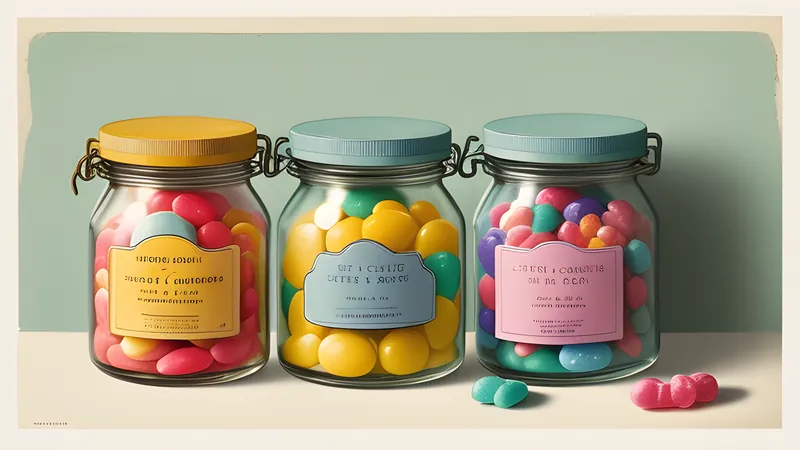
Hard candy occupies a nostalgic corner of memory for anyone who grew up near a sweet shop: pocket money spent at the corner shop, a striped humbug produced from a grandparent’s coat, the row of glass jars behind a confectioner’s counter. The day offers an excuse to revisit that and to notice the craft behind a deceptively simple object. There is also a small philosophical charm to it. A boiled sweet cannot be gulped; it must be either sucked patiently or crunched in defiance, and it imposes its own unhurried pace on the eater, a quality increasingly rare in food designed to be consumed at speed.
How it is celebrated
People mark the day by treating themselves to favourite hard sweets, sharing tins and assortments, or visiting traditional confectioners where sweets are still weighed by hand from rows of jars. The more ambitious try boiling sugar at home, heating syrup to the brittle stage, stirring in flavour and colour, and pouring it into moulds or cracking it into shards once set. Sweet shops and confectionery brands use the date to highlight their ranges, and its position in late December means it folds easily into the season’s gifting, when tins of boiled sweets and boxes of candy canes are already changing hands.
The day also sits comfortably within the wider calendar of confectionery observances. The same boiling craft underlies the festive favourites marked on US National Candy Day, while the slow, deliberate eating that hard candy demands stands in cheerful contrast to the quick, chewy bite celebrated on US National Candy Corn Day, reminding us that “sweet” covers a remarkably wide range of pleasures and textures.
The science in the jar
The making of hard candy is a small piece of edible physics. Sugar, water and glucose syrup are boiled until almost all the water has driven off and the temperature climbs to the “hard crack” stage, roughly 150 degrees Celsius, at which point the cooled mixture becomes brittle, translucent and glass-like. The glucose syrup matters more than it looks: it interferes with the sugar’s tendency to recrystallise, and getting that balance right is the difference between a smooth, clear sweet and a cloudy, grainy one. Flavours and colours, which would scorch at such heat, go in late, and the still-pliable mass can then be pulled, twisted, striped or moulded before it sets.
The lollipop and the named classics
Several of the genre’s most familiar forms have their own traceable stories. The lollipop, hard candy mounted on a stick, was popularised in the United States in the early twentieth century: the confectioner George Smith of New Haven, Connecticut, began making and selling his “Lolly Pop” in 1908, reputedly naming it after a racehorse he had seen at a local fair, though the trademark itself was not finally registered until 1931 because the word already existed. Automated lollipop machinery soon followed to meet the demand his sweets created. The barley sugar twist, a translucent amber stick once genuinely made with barley water, became a fixture of British nurseries and railway journeys. The humbug, hard-boiled, mint-flavoured and striped, lent its name to a whole class of stern, old-fashioned characters, Dickens’s Scrooge included.
What unites these is a shared inheritance: the same boiling, the same brink-of-burning chemistry, dressed up in countless local shapes and flavours. The technique stayed remarkably constant while the marketing, the moulds and the names changed around it, which is part of why a Victorian sweet-maker would recognise most of today’s boiled sweets on sight.
Around the world
Nearly every culture has built its own hard sweets on the same chemistry. Britain has its boiled sweets and lettered seaside rock; the Netherlands its menthol and salty-liquorice drops; India its rose- and cardamom-scented sugar confections; Japan its delicate, fruit-flavoured amezaiku and the rounded konpeitō studded with tiny points, a sweet introduced by Portuguese traders in the sixteenth century. The technique is close to universal, but the flavourings are stubbornly local, drawn from each region’s own spices, fruits and tastes, which makes a tin of assorted hard sweets a small, edible map of where it was made.
Fun facts
- The English word “candy” descends from the Sanskrit khanda, meaning a piece of crystallised sugar, a reminder that India refined sugar long before Europe did.
- Rock candy was being described in the Islamic world by the early ninth century, made by letting sugar crystals grow slowly on a string or stick.
- The first candy canes, made around 1670 in Cologne, were plain white; the red stripes and peppermint we treat as essential came centuries later.
- The “hard crack” stage that names these sweets, near 150 degrees Celsius, is the very top of the sugar-boiling scale, the same point used for spun sugar and brittle.
- Because a properly boiled sweet holds well under two per cent moisture, it can keep for years if stored dry, since there is too little water in it to support spoilage.
Hard candy as medicine, then and now
The genre never fully left its apothecary roots. The throat lozenge and the cough drop are hard candies in everything but name, sugar boiled hard and carrying menthol, eucalyptus, honey or herbal extracts meant to soothe an irritated throat, and several famous brands began life squarely as remedies rather than sweets. The mechanism is partly real and partly comfort: sucking any boiled sweet stimulates saliva, which genuinely eases a dry, scratchy throat, while the slow dissolve keeps a soothing coating in place far longer than a quick swallow ever could. That overlap between treat and treatment is why the same shop counter has long sold both pear drops and pastilles, and why the line between the two was never as firm as the packaging suggests.
A closing reflection
A hard sweet is one of the few foods that physically refuses to be hurried, and there is something quietly subversive in that. It cannot be wolfed; it insists on its own pace, dissolving slowly while the world rushes past. Perhaps the real charm of marking it in the dark, busy days before midwinter is the small invitation it carries: to let one thing, at least, take exactly as long as it wants to.
Related Content