National Gummy Worm Day
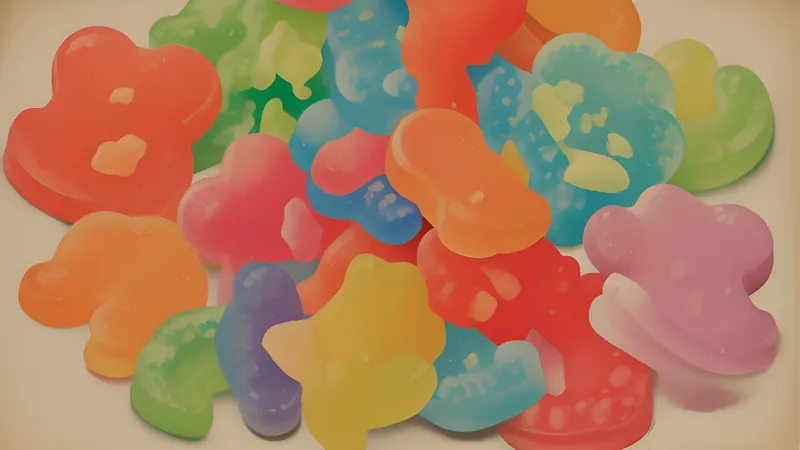
In 1981, a German confectioner called Trolli looked at the gummy bear, an established and entirely respectable sweet, and decided what the world really needed was the same chewy gelatine reshaped into something a child could dangle in front of a squeamish parent. The gummy worm was the result, and it was an immediate hit precisely because it was a little bit revolting. National Gummy Worm Day, observed each year on 15 July, is the calendar’s nod to that cheerful provocation: a celebration of a confection that turned mild disgust into one of the most successful sweets of the late twentieth century.
It is a day with no solemn purpose, and that is rather the point. The gummy worm asks nothing of the eater except a willingness to enjoy something gleefully silly. On 15 July, sweet shops, parents packing lunchboxes, and grown adults who never quite outgrew the pick-and-mix counter all find an excuse to reach for a handful of these wriggling, two-toned creatures.
From dancing bear to wriggling worm
The worm has a precise ancestor. In 1920 a confectioner named Hans Riegel founded his company in Bonn and named it Haribo, a contraction of Hans Riegel Bonn. Two years later, in 1922, working with little more than a copper pot and a marble slab, he produced a small fruit-gum bear he called the Tanzbär, or “dancing bear”, inspired by the trained bears that performed at German festivals and fairs. Those first bears were larger and chewier than today’s version, set with gum arabic rather than the gelatine that would later become standard, and they launched an entire genre of soft, moulded fruit gums.
The worm arrived almost six decades later. Trolli, a younger German manufacturer, introduced its gummy worm in 1981, around the same time it was pushing into the American market. The reasoning was shrewdly aimed at children: a longer, squirmier, deliberately off-putting shape would appeal to exactly the audience that delighted in unsettling the adults around them. A bear is endearing; a worm is faintly transgressive, and that small frisson of the gross-out was the whole commercial point. The gamble paid off handsomely, and the worm now sits alongside the bear as one of the two definitive gummy shapes.
The day’s hazy origins
The sweet is far better documented than the day that honours it. The precise origin of National Gummy Worm Day is undocumented, and it would be dishonest to invent a founder or an inaugural year. Like a great many single-subject food days, it appears to have emerged from the loose ecosystem of online calendars and confectionery promotion rather than from any proclamation or charter. What can be said with confidence is that the date has settled firmly on 15 July and is now widely repeated by retailers and sweet-lovers alike, which is rather how these observances earn their reality: by being marked often enough that they stick.
That uncertainty is worth being honest about, because it is the opposite of the gummy worm’s own well-traced lineage. Where the sweet has a manufacturer, a country and a year, the day has only a date and a habit.
Why a silly day is worth keeping
It would be easy to dismiss a day devoted to sugary worms as pure frivolity, and in truth there is no great cause attached to it. Yet there is a quiet value in observances that ask nothing of us but a moment of unselfconscious enjoyment. The gummy worm is a small piece of shared childhood for anyone who grew up after 1981, a sweet that crosses borders with remarkable ease and needs no translation. Marking it is a way of acknowledging that not every celebration needs gravity to be worthwhile, and that the deliberately childish can be a small, deliberate relief.
There is also something to admire in the craft hidden inside such an unserious object, which is where the manufacturing turns out to be more interesting than the sweet’s reputation suggests.
How it is made
The two-tone worm is a genuine feat of small-scale engineering. The sweets are cast in trays of moulded cornstarch, an old confectionery technique called the Mogul process, in which a stamp presses worm-shaped impressions into a bed of dry starch. The starch both shapes the sweet and draws moisture from its surface as it sets. To achieve the characteristic two colours fused along a single worm, two batches of differently flavoured and coloured gelatine syrup are deposited in sequence, one half then the other, so the finished sweet might run from green to red or from orange to yellow along its length.
The chewy body comes chiefly from gelatine, with sugar and glucose syrup for sweetness and texture, though vegetarian and vegan versions set with pectin or starch are now common. The sour variety, which for many eaters has overtaken the original, is rolled in a coating that looks like plain sugar but is in fact a tuned blend of edible acids, often citric and malic, designed to deliver a sharp first bite that softens as the sweet is chewed.
How it is celebrated
Celebration is mercifully simple. The most obvious observance is to eat gummy worms, ideally the long, sour-dusted variety that have become a fixture of cinema foyers and long car journeys. Sweet shops and supermarkets lean into the date with small displays or discounts. Home cooks sometimes use the occasion to bake, suspending worms in clear jelly to mimic mud, or building “dirt pudding” from crushed chocolate biscuits so the worms appear to crawl from the soil. Among families it is often simply an afternoon for letting children make something deliberately silly in the kitchen, which is about as fitting a tribute as the sweet could ask for.
The worm also sits naturally within the wider calendar of confectionery days. Anyone fond of its tart, acid-dusted version will recognise the same instinct for sharpness celebrated on the older US Gummi Worm Day, while a bowl of worms makes an easy, crowd-pleasing companion to the indulgence marked on National Ice Cream Day, the two sweets sharing a fondness for bright colour and uncomplicated pleasure.
The texture engineers obsess over
The reason a good gummy worm satisfies is bite, and that bite is the product of careful chemistry. Gelatine, a protein extracted from collagen, forms a mesh that traps water and gives the sweet its springy, yielding chew; the ratio of gelatine to sugar syrup sets how firm or soft the worm turns out, and confectioners adjust it deliberately. The sweets are also “cured” for a day or two in those starch trays, slowly losing moisture until they reach the exact tackiness that lets them hold a shape without sticking to one another in the bag. A worm that is too wet slumps and clumps; one that is too dry turns tough and waxy. The narrow window between is where the whole pleasure lives.
That dependence on gelatine is also why the worm has a quiet dietary dimension. Standard gelatine comes from pork or beef, which puts conventional gummy worms off-limits for many vegetarians and for several religious diets, and it has driven a genuine market in pectin- and starch-set alternatives that try, with varying success, to mimic that signature springy bite without any animal product at all.
Around the world
Although the framing of “national” days is most associated with the United States, the gummy worm is thoroughly international, and was a European sweet long before it was an American one. Haribo, Trolli and their competitors distribute worms across dozens of countries. In Britain the worm has slotted neatly into the traditional pick-and-mix counter; in parts of East Asia and Latin America local manufacturers produce their own flavours, including chilli-dusted and tamarind-spiced variants that lean into sourness and heat rather than fruit. The day, where it is noticed at all, tends to travel through social media rather than through any formal institution, spreading much as the sweet itself did.
Fun facts
- The gummy worm is the younger cousin of the gummy bear by almost sixty years: the bear debuted in 1922, the worm only in 1981.
- The very first gummy bears were set with gum arabic, a tree sap, rather than gelatine, which made them noticeably tougher and chewier than the modern sweet.
- Gummy worms are cast in beds of dry cornstarch using the Mogul process, the same starch-mould method long used for jelly beans and fruit gums.
- The sour coating that looks like ordinary sugar is mostly edible acid, blended to hit hard on the first bite and fade as you chew.
- Novelty “world’s largest” gummy worms sold as gag gifts can weigh well over a kilogram and stretch the length of a forearm, packing thousands of calories into a single sweet.
A closing reflection
There is a particular honesty in a sweet that admits, by its very shape, that it exists only to amuse. The gummy worm does not pretend to be wholesome or refined; it leans into the small, harmless transgression of looking like something you would flinch at in the garden, and in doing so it has charmed several generations. Perhaps that is the worm’s quiet lesson on its midsummer day: that delight and disgust sit closer together than we like to admit, and that a sweet brave enough to play in the gap between them can outlast far more dignified confections.
Related Content