National Frozen Food Day
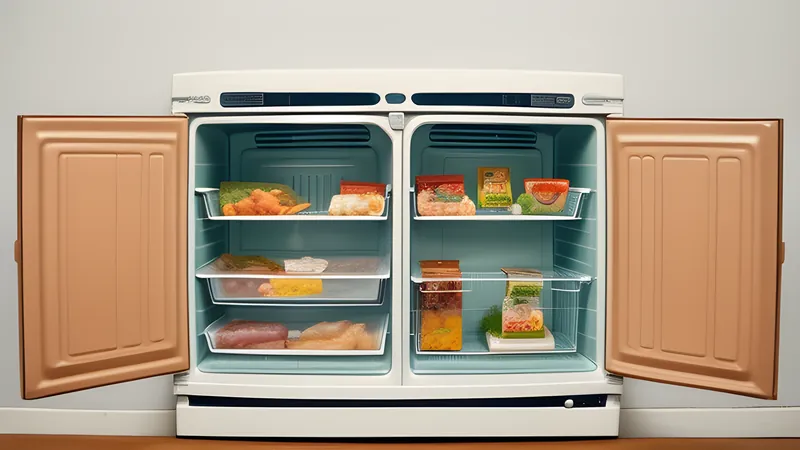
Sometime between 1912 and 1915, an American naturalist named Clarence Birdseye stood on the frozen flats of Labrador and watched Inuit fishermen pull fish from holes in the ice. In the brutal subzero air, the catch froze almost the instant it was hauled out. Weeks later, thawed and cooked, that fish tasted as though it had been caught that morning. Birdseye, a curious man with a habit of poking at the world until it gave up its secrets, could not stop thinking about why. The answer he eventually worked out, and the industry he built on it, is the reason that on 6 March each year people across the United States pause, however briefly, to celebrate National Frozen Food Day.
It is a day for the most unglamorous corner of the kitchen: the freezer drawer, the bag of peas, the stack of ready meals that quietly saves a weeknight. Yet behind that ordinariness sits one of the genuine triumphs of twentieth-century food science, and a story with a precise founder, a clear breakthrough, and even a presidential signature.
The man who watched fish freeze
Birdseye’s insight was about speed. He realised that the fish frozen in the Labrador winter froze so fast because the air was so cold, and that this speed was the whole secret. When food freezes slowly, the water inside it forms large ice crystals that puncture and rupture cell walls; when the food thaws, it leaks, sags and loses its texture, turning firm flesh to mush. When food freezes very quickly, the crystals stay tiny and do little damage, so the thawed result is close to what went in.
Through the 1920s Birdseye threw himself at the engineering problem of doing artificially what the Arctic did for free. He developed a system that pressed packaged food between refrigerated metal plates, freezing it rapidly and in commercial quantities. In 1930 his frozen products went on sale to the public in Springfield, Massachusetts, sold under the brand that still carries a respelled version of his name. The launch was cautious, sold in just a handful of shops, because almost nobody had a freezer at home in which to keep the stuff.
From novelty to weeknight staple
The slow climb out of novelty took decades and a great deal of infrastructure. Shops needed cold cabinets, lorries needed refrigeration, and households needed somewhere colder than a larder to store what they bought. The Second World War helped in an unexpected way: with tin in short supply for canning and a need to feed troops efficiently, frozen food gained both industrial backing and a wider audience. Post-war prosperity in the 1950s, and the spread of domestic refrigerators with a freezer compartment, finally turned frozen food from curiosity into routine.
When Birdseye’s frozen products first went on sale in 1930, the launch was deliberately modest: twenty-six products sold through eighteen retail shops in and around Springfield, Massachusetts, a careful test rather than a national rollout. That cautious start is exactly why 6 March was later chosen as the day’s date, to commemorate the 1930 Springfield launch that opened the commercial frozen-food aisle.
By the early 1980s the industry was a serious economic force, and it secured the kind of recognition that fixes a date in the calendar. President Ronald Reagan signed Proclamation 5157, formally proclaiming 6 March 1984 as Frozen Food Day and calling on Americans to observe it “with appropriate ceremonies and activities”, marking what was billed as roughly the fifty-fourth anniversary of the industry. That signature is what gives this observance a documented origin, the sort of named, dated, traceable founding that most so-called food days entirely lack. Birdseye himself did not live to see it; he died in 1956, by which point the industry he founded was already transforming how the country ate.
Why a freezer changed the kitchen
The freezer did something quietly radical: it severed the link between when food was harvested and when it could be eaten well. Before reliable freezing, eating peas in February meant eating them dried, tinned, or not at all. Flash freezing meant peas could be picked, blanched and frozen within hours of leaving the field, locking in a sweetness that fresh peas lose within a day of harvest as their sugars turn to starch. This is the small heresy at the heart of the day: frozen vegetables, far from being a poor substitute, can be more nutritious than the “fresh” produce that has spent a week in transit and on a shelf.
For households it also meant less waste and less labour. A glut could be saved rather than thrown out; a batch of stew could be doubled and half kept for a future evening of no cooking at all. For the wider world it underpinned the cold chain, the unbroken sequence of refrigerated storage and transport that now lets a fish caught off Norway be sold in Tokyo or a punnet of berries reach a northern winter table. That logistical web is one of the unsung systems holding modern food supply together.
How the day is marked
There is nothing solemn about National Frozen Food Day. Supermarket chains and frozen-food brands tend to run promotions, and food writers use the date to argue, persuasively, that the freezer aisle deserves more respect than it gets. At home, the most fitting observance is practical: take stock of what has migrated to the back of the freezer, rescue something forgotten, or cook a double batch of soup and freeze half against a busy week ahead. The day rewards a small act of domestic foresight more than any grand gesture.
It also pairs naturally with the wider calendar of food observances, the cheerful clutter of single-subject days that turn the year into an excuse to appreciate one thing at a time. A frozen tub of homemade ice cream, for instance, links this day neatly to the indulgence celebrated on National Ice Cream Day, since commercial ice cream is itself a triumph of controlled freezing. The freezer aisle also has a more complicated relationship with the food culture marked on US National Junk Food Day: frozen pizzas, breaded everything and ready meals make up a large part of it, even as bagged peas and flash-frozen fish make the same aisle one of the healthiest in the shop.
Around the world
Although the named day is American, frozen food is a global staple shaped to local tastes. Frozen seafood is central to Japanese and wider East Asian cooking, where rapid freezing at sea is treated as a craft rather than a compromise. Frozen dumplings are a kitchen mainstay across China and much of Asia, and frozen ready meals anchor weeknight cooking across Europe. In countries with long, hard winters the freezer functions as a second pantry; in hot climates it makes a far wider range of produce reliably available than the local growing season ever could. The technology is universal; the contents reveal where you are.
The cold chain, the system you never see
What Birdseye really started was bigger than any single product: an unbroken sequence of refrigeration, the so-called cold chain, that now stretches from the field or the fishing boat all the way to the freezer drawer. Every link must hold. A bag of peas that thaws on a loading dock and is refrozen will be safe but mealy, its texture wrecked by the very large ice crystals that fast freezing was meant to prevent. This is why industrial freezing aims for speed and very low temperatures, and why distributors guard the chain so jealously; the technology’s whole promise collapses the moment the temperature drifts.
That same logistical web is one of the unsung systems holding modern food supply together. It lets a fish caught off Norway be sold in Tokyo, a punnet of berries reach a northern winter table, and a vaccine travel intact across a continent, since the cold chain that moves frozen peas also moves medicine. Birdseye’s curiosity about Labrador fish, in the end, helped build infrastructure that does far more than fill a freezer aisle.
Fun facts
- Birdseye did not invent freezing food, which is ancient; he invented freezing it fast, and patented the double-belt freezer that made small ice crystals the industry standard.
- The man was a relentless inventor with hundreds of patents to his name, covering everything from a recoilless harpoon gun to an infrared heat lamp and a light bulb for lighthouses.
- Properly stored at a steady temperature, frozen food stays safe to eat almost indefinitely; what degrades is quality and texture, not safety.
- Many vegetables are blanched in boiling water for a minute or two before freezing, not to cook them but to halt the enzymes that would otherwise dull their colour and flavour in the freezer.
- “Freezer burn”, the dry, leathery patch on neglected food, is not contamination but dehydration: moisture has sublimated straight from ice to vapour where the packaging failed to seal it in.
A closing reflection
There is a particular kind of cleverness that becomes invisible the moment it succeeds, and frozen food is one of its purest examples. We open the drawer without a thought, never picturing a curious naturalist on a Labrador ice sheet or a president’s signature on a proclamation. To freeze food is, in a sense, to argue with time, to hold the harvest steady against the turning of the seasons. The marvel is not that we can do it, but that we have made it so ordinary that we forget it was ever a marvel at all.
Related Content