National French Fry Day
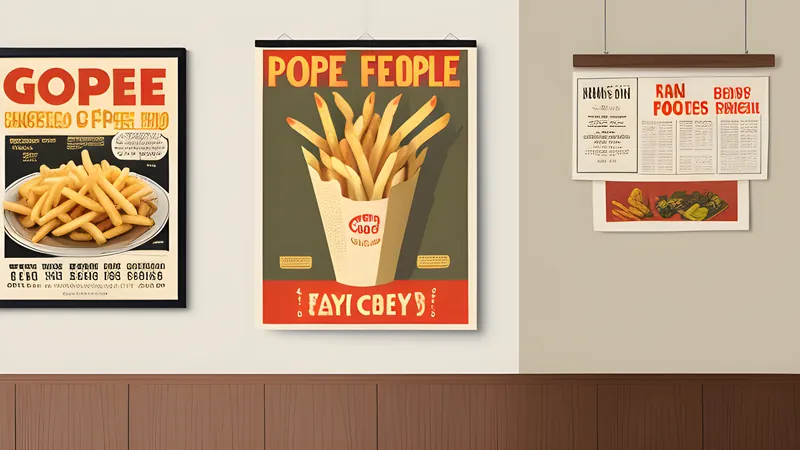
In March 2003, the cafeterias of the United States House of Representatives quietly struck the word “French” from their menus. Bob Ney, the Republican chairman of the Committee on House Administration, ordered that french fries be sold as “freedom fries” and french toast as “freedom toast”, a protest against France’s refusal to back the invasion of Iraq. The gesture was small, theatrical and short-lived — the menus reverted in August 2006, after Ney resigned in a corruption scandal — but it confirmed something odd about a deep-fried strip of potato: people are willing to fight over its name. National French Fry Day, observed each 13 July, is a day for the food at the centre of that quarrel, the crisp-edged, soft-centred fried potato known to half the world as a chip and to the other half as a fry.
A holiday with no birth certificate
The day itself has murky beginnings, which is fitting for a food whose own history nobody can agree on. There is no founding decree, no campaigning chef, no charity behind it. The likeliest explanation is the dullest: it grew out of restaurant marketing and the appetite of social media for an excuse to post a photograph of something golden and salted. The date drifted, too. For years 13 July was the fixed anniversary, until in 2022 the fast-food chains Checkers and Rally’s petitioned the National Day Calendar to move it to the second Friday in July, presumably so the promotions could land on a day when people actually go out to eat. Many calendars still print 13 July, and that older, firmer date is the one this entry keeps.
What gives the day its substance is not its provenance but its subject. The fried potato is one of the few dishes that turns up in a Brussels chip stand, an Idaho processing plant, a Quebec diner and a London chippy, recognisably itself in each and yet never quite the same. To celebrate it is to step straight into one of the longest-running disputes in food.
Belgian or French?
The most heated claim concerns where the dish was born, and the contest is chiefly between Belgium and France. The Belgian version is the most charming. Along the River Meuse, in the towns of Namur, Andenne and Dinant, villagers are said to have fried small fish pulled from the water, and when the river froze in winter they cut potatoes into fish-sized strips and fried those instead. A family manuscript, supposedly dating the practice to around 1680, has long been cited as proof.
The trouble is that the manuscript has never actually been produced, and the chronology fights back. The historian Pierre Leclercq has pointed out that the potato did not reach the Meuse valley until roughly the 1730s, half a century after the story claims fries were invented, and that poor villagers were unlikely to have owned enough fat to deep-fry anything, fat being expensive and precious. The romantic 1680 tale, in other words, is almost certainly too early to be true, however much Belgians cherish it.
The name itself has a separate, more plausible story. American and British soldiers stationed in French-speaking Belgium during the First World War ate the local fried potatoes, heard French spoken around them, and carried home the label “french fries” — a culinary insult that Belgians have resented ever since. France, for its part, points to the fried potatoes sold by street vendors on the Pont Neuf in Paris from the late eighteenth century. The honest verdict is that no single inventor exists, and that the dish emerged wherever cheap potatoes met hot fat.
How the fry conquered the world
Whoever first dropped a raw strip of potato into oil, the dish spread the moment the potato became a European staple. In Britain it married fried fish, and by the 1860s fish-and-chip shops were feeding the industrial working class a hot, cheap, filling supper wrapped in paper. In Belgium the friterie or frietkot became a fixed point of national life, serving thick-cut frites fried twice — once gently to cook the potato through, once fiercely to lacquer the outside — and dressed with a thick spoonful of mayonnaise.
The dish also crossed the Atlantic earlier than most people assume. At a White House dinner in 1802, Thomas Jefferson served “potatoes served in the French manner”, a recipe his enslaved chef James Hemings had likely learned during their years in Paris in the 1780s. Jefferson’s version was probably closer to thin fried rounds than to the long strips we picture today, but the printed phrase “french fried potatoes” was in American cookbooks by the late 1850s, and the form was set.
The twentieth century turned the fry into an industrial product. McDonald’s introduced its fries in 1949, cooked in a blend of about 93 per cent beef tallow and 7 per cent cottonseed oil, and Ray Kroc obsessed over them — curing the potatoes to convert their sugars to starch so the fries would crisp rather than brown. In 1967 he contracted the Idaho entrepreneur J.R. Simplot, who had pioneered frozen-food technology during the Second World War, to supply frozen fries in place of fresh-cut potatoes. That single decision standardised the fry across thousands of outlets and, eventually, the planet. When a health campaign led by the businessman Phil Sokolof pushed McDonald’s to abandon beef tallow in 1990, the company’s share price dropped more than eight per cent — a measure of how much a nation cared about how its fries were cooked.
Why a fried potato earns a day
It is tempting to dismiss the fry as junk, but its hold on people is worth taking seriously. The fried potato is the most democratic food going: cheap to make, eaten with the fingers, sold from a van or a Michelin kitchen, demanding no cutlery, no table manners and no occasion. It is the food of football terraces and seaside promenades, of a child’s first restaurant order and an adult’s two-in-the-morning regret. A dish that asks so little and pleases so reliably has quietly become a fixed reference point in dozens of cuisines.
There is also genuine craft hidden in its plainness. Anyone who has tried to make proper chips at home knows the gulf between a soggy, pale failure and the real thing. The double fry is not folklore but chemistry — the first, lower-temperature bath cooks the interior to a fluffy mash, the second, hotter one drives off surface moisture and sets a glassy crust. Getting it right depends on the variety of potato, its sugar content, the temperature of the oil and the patience of the cook. A day in the fry’s honour is, among other things, an invitation to respect a dish that is far harder to make well than it looks.
How the day is marked
The celebration is gloriously literal: people eat fries. Chains and chip shops run promotions and giveaways, and 13 July reliably produces a small spike in sales. Home cooks attempt the double fry and argue about it afterwards. Beyond the eating, the day tends to reignite the eternal arguments — over cut and thickness, over the right potato, and above all over what to put on top. The mayonnaise camp and the ketchup camp regard each other with suspicion; the British insist on salt and malt vinegar; nobody is ever fully persuaded by anybody else.
The same chip, a hundred costumes
Travel even a short distance and the fried potato changes its clothes. Britain has its chunky chips beside battered cod and its curry-sauce-drenched portions from the takeaway. Belgium has its twice-fried frites in a paper cone, and the Low Countries serve patatje oorlog — “war chips” — heaped with mayonnaise, satay sauce and raw onion. France keeps its slim pommes frites beside a steak. North America favours the thin, salty fry born of the fast-food chains. The most famous variation of all comes from the Centre-du-Québec region of Canada in the late 1950s, where the restaurateur Fernand Lachance, asked to tip cheese curds into a bag of fries, is said to have grumbled “ça va faire une maudite poutine” — “that’ll make a damned mess.” Poutine appears on his 1957 menu; the hot gravy that defines it today was added around 1962. From there the dish has gone on to wear curry, chilli, melted cheese and masala spicing wherever it travels.
These variations also connect the fry to its neighbours on the calendar. The same impulse that gives the potato its day extends across the menu to the National French-Fried Clam Day, another deep-fried favourite of American seaside towns, and to the breakfast staple honoured on National French Toast Day — a reminder that the word “French”, attached to so many comfort foods, often says more about marketing than geography. The fry even has a near-twin observance in the American National French Fries Day, the plural cousin of this very entry.
Symbols worth knowing
- Belgium takes its frites so seriously that it has lobbied for the frietkot and its frying culture to be recognised as part of the country’s heritage — a campaign to enshrine a chip stand as a national treasure.
- The “freedom fries” episode of 2003 was not the first time the word “French” was scrubbed from American menus during a war with French overtones; “liberty cabbage” replaced sauerkraut during the First World War in much the same spirit of edible patriotism.
- McDonald’s fries owed their famous flavour to beef fat, not potato — which is why, when the company switched to vegetable oil in 1990, it quietly added beef flavouring to keep customers from noticing the difference.
- The fried potato Thomas Jefferson served in 1802 was almost certainly the work of James Hemings, an enslaved cook trained in French technique in Paris, whose name was long left out of the story he helped begin.
- Poutine’s inventor reportedly thought the combination looked like a mess and only later put it on a plate; the gravy that now seems essential was a delay tactic to stop the curds going cold.
A closing thought
There is a quiet lesson in the fact that nobody can own the fried potato. Belgium and France will go on disputing its birthplace, the United States renamed it during a war, and Quebec, Britain and the Low Countries each insist their version is the proper one — and yet the dish belongs equally to all of them and fully to none. Foods that try to be grand often calcify into tradition, guarded and rule-bound. The fry stayed humble enough to be reinvented by anyone with hot oil and an idea, which is precisely why it turns up everywhere. Its 13 July date is less a tribute to a single national triumph than an admission that the best everyday pleasures rarely have a clean pedigree, and are all the better for it.
Related Content