National Fettuccine Alfredo Day
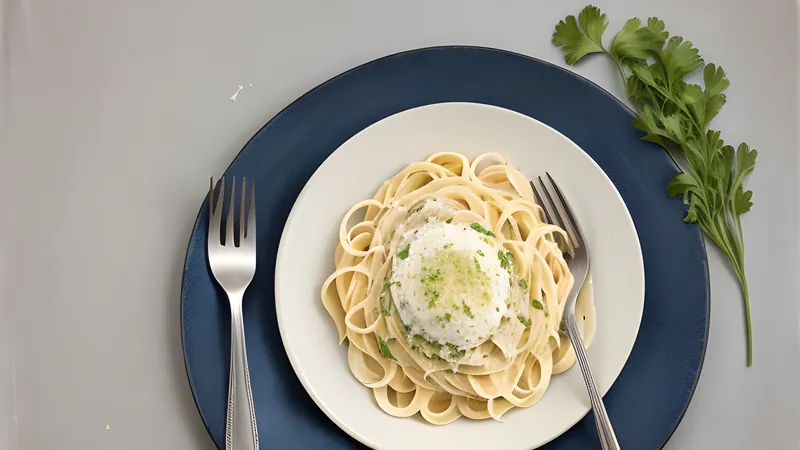
In 1908, in a small restaurant off the Piazza Rosa in Rome, a cook named Alfredo di Lelio watched his wife refuse to eat. Ines had just given birth to their first son, Armando, and in the exhausted days that followed she had no appetite. So Alfredo did the only thing he knew how to do: he cooked. He boiled fresh fettuccine, drained it while it still held a little of its starchy water, and tossed it with an almost reckless quantity of butter and grated young Parmigiano, working the pan until the three plain things became one glossy sauce. She ate. That bowl, born of a husband’s worry rather than any culinary ambition, is the dish the world now marks every 7 February as National Fettuccine Alfredo Day — a quiet American observance for an Italian accident that escaped its kitchen and never came back.
Where the day comes from
The day itself is an American invention, one of the many unofficial “national food days” that have settled onto the calendar without an act of legislation or a single traceable founder. No proclamation establishes it, and no committee owns it; it simply circulates through restaurant promotions, recipe columns and social feeds each February. That vagueness is fitting, because the dish it honours has spent a century shedding its precise origins too. What can be pinned down is the food, and on that front the record is unusually rich for something so humble.
The name belongs unambiguously to Alfredo di Lelio. He learned to cook in a restaurant on the Piazza Rosa run by his mother, Angelina, and it was there, around 1907 or 1908, that he first made the fettuccine al triplo burro — “with triple butter” — that would carry his name. When the Piazza Rosa was demolished around 1910 to make room for the Galleria Colonna, Angelina’s restaurant closed with it, and in about 1914 Alfredo opened his own place on the Via della Scrofa. There the dish acquired its theatre: tossed at the table, lifted high on the fork, a performance as much as a plate.
History
For the first decade of its life, Alfredo’s fettuccine was a local Roman pleasure, a refined version of the fettuccine al burro that home cooks had been making for generations. What launched it across an ocean was Hollywood. In 1920, the silent-film stars Douglas Fairbanks and Mary Pickford — recently married, jointly the most famous couple in cinema — came to Rome on their honeymoon and ate at Alfredo alla Scrofa. They ordered the fettuccine al triplo burro, fell for it completely, asked for the recipe, and carried it home to Beverly Hills, where they served it to the actors and directors who passed through their orbit.
The couple’s gratitude took a more enduring form a few years later. By most accounts they returned and presented Alfredo with a gold-plated fork and spoon, engraved with their names and the inscription “To Alfredo the King of the Noodles” — utensils that became the centrepiece of the restaurant’s tableside ritual, still re-enacted today. That endorsement, from two people whose faces were known on every continent that had a cinema, did more for a butter-and-cheese pasta than any chef could have managed alone.
The dish’s later history splits into two streams that have never quite reconciled. The first stayed in Rome and grew thorny with rivalry. In 1943 Alfredo sold his Via della Scrofa restaurant to two of his waiters, then regretted it, and in 1950 opened a new establishment with his son near the Piazza Augusto Imperatore, calling it Il Vero Alfredo — “the real Alfredo.” Both restaurants survive, both claim paternity of the recipe, and both display a set of the Pickford–Fairbanks gold cutlery. The competing titles have escalated over the decades from “king of the fettuccine” to “the magician” and “the emperor.”
The second stream crossed the Atlantic and mutated. American kitchens could not easily lay hands on the very young, intensely flavourful Parmigiano that makes the original work, and few cooks had the patience for an emulsion that breaks if it is rushed. The shortcut was heavy cream, which thickens the sauce reliably and forgivingly. The result was a heavier, richer, more stable dish — and it is this creamy descendant, often crowned with grilled chicken or prawns, that most people now picture when they hear the word “Alfredo.”
Why it matters
The day is worth keeping because the dish is a small, perfect case study in how food travels and changes. Cross-reference it with the way a single export can come to define a place, the way Italy’s olive groves shaped a cuisine — a theme explored on Extra Virgin Olive Oil Day — and you start to see fettuccine Alfredo as part of a larger pattern: ingredients and recipes never stay put, and they rarely arrive at their destination unchanged.
There is a useful irony at the heart of it. In Rome, “Alfredo” is barely a category; ask for it in many trattorie and you will get a puzzled look, because to a Roman cook it is simply pasta with butter and cheese, hardly worth naming. In the English-speaking world it is a fixed menu item, a sauce sold in jars, a thing people have opinions about. The same word points at two different foods, and the gap between them is a quiet lesson in authenticity — not as a fixed truth to be defended, but as something that shifts with distance, scarcity and taste.
How it is celebrated
Observance is mercifully uncomplicated, which is part of the appeal. Restaurants put the dish on the specials board; supermarkets discount the cream and the Parmesan; home cooks make a batch for dinner and photograph the forkful before it cools. The cooking is the celebration, and it splits along the same line the dish’s history did.
Some treat 7 February as a dare to do it properly, the Roman way: nothing but butter, finely grated young Parmigiano, and a few spoonfuls of the starchy water the pasta cooked in, worked together off the heat until they emulsify into something silky and barely sauce-like. It is harder than it sounds, and a broken, greasy result is a rite of passage. Others lean unapologetically into the American version, building a glossy cream sauce and folding through chicken, mushrooms or prawns. The day is generous enough to accommodate both camps without anyone having to be wrong.
Cultural variations
Beyond Italy and the United States, the creamy version is the one that has colonised menus. Order fettuccine Alfredo in a hotel restaurant in Bangkok, Buenos Aires or Birmingham and you will almost certainly receive the cream-thickened descendant, frequently with a protein on top — a format that would baffle Alfredo di Lelio, who never used cream at all. In India the dish has been absorbed into the casual-dining repertoire and sometimes warmed with chilli or garam masala; in parts of Latin America it appears as a standard pasta sauce sold ready-made.
The reverse journey is the funnier one. Italian travellers and chefs are routinely bemused to find a “famous Italian dish” on foreign menus that scarcely exists at home, and Roman restaurateurs have at times responded with something close to indignation, insisting on the buttered original as the only legitimate article. Visitors who order it in Rome expecting the thick, creamy plate they grew up with are often the ones surprised, served instead a pale, glistening tangle that looks almost too plain to be the thing they asked for.
Symbols and the tableside ritual
If the day has an emblem, it is the long-handled fork and spoon and the act of tossing the pasta at the table. The ceremony Alfredo built — lifting the ribbons high so the butter and cheese cling and gleam under the light — turned a domestic comfort food into a piece of restaurant theatre, and the gold-plated utensils gifted by Pickford and Fairbanks made that theatre legendary. To this day, waiters at the rival Roman restaurants perform the toss with reverence, the cutlery itself a relic of the moment two film stars decided a bowl of pasta was worth a gift.
The other symbols are simpler: the pale, almost cream-coloured sheen of the finished dish, the scatter of cracked black pepper or parsley, the wedge of Parmigiano waiting on the side. They stand for the dish’s founding promise — that a very few good things, handled with attention, can outshine far more elaborate cooking.
Fun facts
- The authentic Roman recipe contains no cream whatsoever. Its silkiness comes entirely from emulsifying butter and young Parmigiano with the starchy water the pasta was boiled in.
- The gold fork and spoon from Mary Pickford and Douglas Fairbanks were engraved “To Alfredo the King of the Noodles” — and both rival Roman restaurants now display their own set of the gold-plated cutlery, each claiming to hold the true heirlooms.
- Alfredo named the dish for nobody famous and no marketing campaign: he created it in 1908 to coax his wife Ines to eat after she gave birth to their son Armando.
- A working cook would likely never recognise “Alfredo sauce” as Italian. In Rome it is just pasta al burro, and the jarred, cream-based product on supermarket shelves abroad is effectively an American invention wearing an Italian name.
- The split between the two Roman restaurants dates to 1943, when Alfredo sold the original Via della Scrofa premises, then opened Il Vero Alfredo seven years later — leaving the city with two “originals” that have been competing ever since.
A closing thought
What is striking about fettuccine Alfredo is how little of its fame the dish itself earned. The butter and the cheese were always going to be good; what made them immortal was a husband’s improvisation and a honeymooning couple’s enthusiasm, a chain of small human accidents that no recipe can contain. The food that travels furthest is rarely the most refined — it is the most generous, the easiest to love on first taste, the kind that makes a stranger want to take it home. There is a kinship here with the way other plain comforts become institutions; the same democratic appeal that turns a scoop into the centrepiece of National Ice Cream Day is what carried three Roman ingredients to every continent. Cook it on 7 February, in whichever camp you belong to, and you are repeating a gesture older than the day itself: feeding someone something simple, and watching them eat.
Related Content