National Dog Day
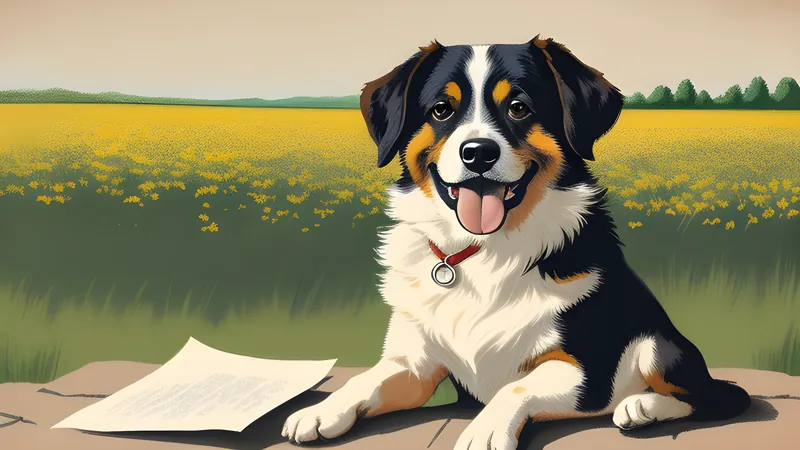
When Colleen Paige was ten years old, her family drove to a local animal shelter and brought home a Sheltie. Decades later, as a pet lifestyle expert and animal-rescue advocate, she chose the anniversary of that adoption, 26 August, as the date for a holiday she founded in 2004: National Dog Day. The choice tells you almost everything about the day’s character. It is not a marketing invention or a breed society’s promotion but one woman’s gratitude for one shelter dog, deliberately turned outward to draw attention to the millions still waiting in rescue centres. The day celebrates dogs in every form, from pampered house pets to the working animals that herd, guard, guide and search, while never letting you forget the ones without a home of their own.
Where the day comes from
National Dog Day has an unusually clear origin for a modern observance. Colleen Paige established it in 2004 and has since founded a string of related holidays, including National Puppy Day, National Mutt Day and National Cat Day, each built around the same advocacy: recognise the animals, encourage adoption rather than purchase, and press for better treatment of strays. From the outset she intended 26 August to be more than a celebration of pets. Its stated mission is to galvanise the public to recognise how many dogs need rescuing each year, and to honour the dogs that work selflessly to keep people safe. That dual character, affectionate and advocacy-minded, has shaped the day ever since, and explains why so much of its activity happens in and around shelters rather than only at home.
A partnership older than civilisation
The bond the day celebrates is staggeringly old. Dogs were the first species humans domesticated, well before any livestock or crop, descending from wild wolves that drew close to early human camps thousands of years before agriculture. That long shared history left its mark on both sides. Dogs evolved an unusual sensitivity to human gestures and expressions, reading a pointed finger or a glance in ways even our closest primate relatives do not, and humans came to rely on canine senses that still outstrip our machines. A dog’s sense of smell is orders of magnitude keener than ours, which is why no detector yet built reliably replaces a trained nose at an airport, a disaster site or a hospital ward screening for disease.
That deep partnership shows in the work dogs do today. They guide people who cannot see, alert those who cannot hear, steady people during seizures and panic attacks, and detect explosives, narcotics and contraband. They search collapsed buildings and avalanche fields, herd livestock across terrain a vehicle cannot reach, and sit quietly beside hospital and care-home patients as a comfort that needs no training to be felt. The breadth of that service is itself an argument for the day, and it overlaps closely with the recognition given to working dogs on Assistance Dog Day.
A thousand dogs from one wolf
One of the strangest facts about the animal the day honours is how much variety humans have wrung from a single domesticated species. Every dog alive, from a teacup Chihuahua to an Irish wolfhound that stands taller than a person on its hind legs, belongs to the same species and descends from the same wolf ancestry. No other domesticated animal spans such extremes of size, shape and temperament, and most of that diversity is startlingly recent: the majority of the breeds recognised today were fixed in the last two centuries, many during the Victorian enthusiasm for selective breeding and dog shows. For most of the partnership, dogs were sorted by job rather than by pedigree, bred to herd, hunt, guard, haul or sit in a lap, and the modern breed, with its written standard and closed studbook, is a comparatively new idea laid over a very old relationship.
That working inheritance still surfaces in behaviour. A border collie left without a task will invent one, often by herding children or shadows; a terrier bred to go to ground will dig up a garden with evident satisfaction; a retriever will carry things to people for no reward but the carrying. The day is a reasonable moment to remember that a dog’s quirks are usually not faults but instincts looking for the work they were shaped to do.
Why it matters
A holiday for dogs could easily slide into sentiment, but the practical edge keeps it honest. Shelters across the world run at or beyond capacity, and the day’s emphasis on rescue and adoption confronts that directly rather than papering over it. Celebrating dogs while ignoring the ones in cages would be a hollow exercise; the founder’s design ties the affection to a responsibility. The day asks not only that people enjoy the dogs they have but that they reckon with the cost of casual breeding, abandonment and impulse buying, and consider adoption as the first option rather than the last. It is, in that sense, a day about obligation as much as love. The point is sharpest after seasons of impulse acquisition, when shelters fill with the dogs of households that underestimated the work, and a holiday that channels public affection toward rescue rather than purchase does a small amount of real good against that tide.
How it is celebrated
Celebration is happily straightforward. Owners mark the day by spending extra time with their companions, taking longer walks, offering treats or simply giving more attention than usual. Shelters and rescue organisations use the occasion to push adoptions, holding open days and waiving or reducing fees, and many people respond by donating to animal charities or signing up to foster. Social media fills with photographs of dogs, which is gentle fun but also, when it nudges a follower toward a shelter rather than a breeder, a genuine extension of the day’s purpose. The most meaningful observance is the one that ends with an empty kennel.
Around the world
Though founded in the United States, National Dog Day has spread internationally, carried by social media and the universal appeal of its subject. It is now marked in many countries, frequently alongside local animal-welfare campaigns, and its message translates readily because the human attachment to dogs is so widely shared. In Britain the day overlaps with the work of long-established charities such as the Dogs Trust and Battersea, which use the late-summer attention to push rehoming; in countries with large free-roaming populations, the same date is often turned toward neutering drives and vaccination rather than the pampering that dominates wealthier markets. Attitudes do vary by region and tradition, and the emphasis on rescue resonates most strongly where strays and overcrowded shelters are a visible problem. The day rarely arrives alone, either: Colleen Paige’s calendar of animal holidays means a dog lover is never far from the next, including the companion observance of National Cat Day for households that keep a foot in both camps.
Traditions and symbols
The day has few formal rituals, which suits its informal warmth. Its recurring images are simple: a dog mid-leap in a park, a lead hanging by the door, a companion settled at its owner’s feet. The single act that has become its truest symbol is adoption itself, embodying the founder’s hope that the day would translate into real homes for real animals. Beyond that, the small kindnesses are the tradition: a donation, a foster placement, an extra measure of patience with an anxious rescue still learning to trust. None of it photographs as well as a dog mid-leap, but it is closer to what Colleen Paige had in mind when she fixed the date to a single shelter adoption.
Fun facts
- National Dog Day was founded in 2004 by Colleen Paige, who set the date as 26 August because that was the day her family adopted their first dog, a Sheltie, when she was ten.
- The same founder created a whole calendar of animal holidays, among them National Puppy Day, National Mutt Day and National Cat Day, all aimed at promoting adoption.
- Dogs were the first animals humans ever domesticated, descending from wolves that drew close to human camps thousands of years before farming began.
- A dog’s sense of smell is so much sharper than a human’s that no manufactured detector has yet fully replaced a trained dog for sniffing out explosives, drugs or even certain diseases.
- Dogs read human gestures, such as a pointed finger, more readily than chimpanzees do, a sensitivity that grew out of their long life alongside people.
A closing reflection
There is something fitting in a worldwide holiday that began with a single shelter visit and one child’s new dog. It suggests that the way to honour an ancient partnership is not with grand gestures but with the same small act repeated: a family choosing to take home the animal nobody else did. To mark 26 August with a longer walk, a donation or a foster bed is to keep faith with the loyalty dogs offer so freely, and to answer it in the one currency they understand, which is presence.
Related Content