National Custard Day
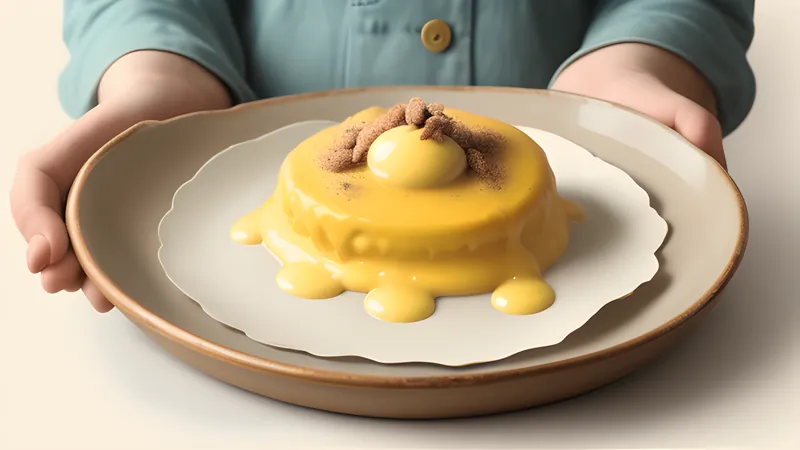
A recipe for daryols appears in The Forme of Cury, an English cookery roll compiled around 1390 by the master cooks of King Richard II: cream, eggs, sugar, saffron and salt, baked in a pastry case the medieval kitchen called a coffyn. That tart is one of the oldest written ancestors of the dish marked each 2 October. The very word “custard” descends from crustade, a tart with a crust, a clue that custard began its documented life not as the loose, pourable sauce of the modern pudding but as the filling of a pie. National Custard Day pays tribute to that long lineage: a smooth pour of eggs, milk and sugar, coaxed into silkiness over a low flame, and the quiet hero of the dessert table beneath crumbles, trifles and ice creams alike.
Where the day comes from
The observance itself is far younger and far murkier than the dish. No founder or founding year is reliably recorded for National Custard Day, and it appears to have arisen the way most single-food days do, through online food calendars and the culinary community rather than any proclamation. The date of 2 October carries no documented significance beyond its place on those lists. This is worth stating plainly, because the food it honours has a history stretching back more than six centuries, and that history needs no invention to make it interesting.
A dish older than the day
Cooks discovered very early that eggs, gently heated with a liquid, will thicken into a rich and stable cream, and recipes resembling custard appear in European cookery writing from the Middle Ages onward. The daryols of The Forme of Cury were baked custards set in pastry; across medieval and early-modern Europe the same idea branched in many directions, from the pouring custard of the British pudding tradition to the set baked custards of the French kitchen.
The single most influential branch may be the Portuguese one. The pastel de nata, the caramel-topped custard tart now eaten the world over, traces to the monks of the Jerónimos Monastery in Belém, west of Lisbon, who used egg whites to starch their habits and turned the leftover yolks into custard tarts. When religious orders were suppressed and the monastery’s bakery closed in 1834, the recipe passed to a nearby business that opened as the Fábrica de Pastéis de Belém in 1837, still selling the tarts today. Portuguese traders and missionaries carried the form to Macau and beyond, where it inspired the egg tarts now found across East Asia.
A second turning point came in the same decade, in Birmingham. In 1837 a chemist named Alfred Bird formulated a custard that contained no eggs at all, reportedly because his wife was both fond of custard and allergic to them. His cornflour-based custard powder removed the very risk that makes custard difficult, the curdling of egg, and made a passable version available to any household with milk and a saucepan. It remains a fixture of British kitchens nearly two centuries on.
The British institution
Nowhere did custard sink deeper into national life than in Britain, where it became less a dessert in its own right than the indispensable companion to others. Poured hot and thin over a steamed sponge, a treacle pudding, a fruit crumble or a slice of tart, custard is the sauce that finishes the British pudding, and the question “with custard?” needs no further explanation in any British kitchen. It is also the trembling middle layer of a trifle, set between sponge soaked in sherry and a cap of whipped cream. Much of this everyday custard is now made from Alfred Bird’s powder rather than fresh eggs, a substitution that began as a kindness to one egg-allergic wife in 1837 and ended as a fixture of school dinners, works canteens and home cupboards for the best part of two centuries. Few inventions have so thoroughly democratised a once-luxurious dish; the powder turned custard from something a careful cook produced into something anyone could stir up in minutes, and it shaped a whole country’s idea of what custard tastes like.
Why it matters
Custard occupies a tender place in culinary affection precisely because it is so unassuming, the food of nursery teas and Sunday lunches, of recovery and reassurance. Yet it is also a cornerstone of serious cookery, a foundation technique every pastry chef must master. The same handful of ingredients, handled with care, yields crème anglaise, the crème pâtissière that fills tarts and éclairs, the wobble of a crème caramel and the crackling glaze of a crème brûlée. To understand custard is to hold the key to a whole branch of the dessert arts, from the vanilla-scented pour celebrated on National Vanilla Custard Day to the frozen, egg-enriched churns that underpin much of what is feted on National Ice Cream Day.
How it is made
At heart, custard is a liquid thickened by the slow setting of egg proteins. Yolks are whisked with sugar, combined with warm milk or cream, often perfumed with vanilla, then heated gently and stirred without pause. The window is narrow: too much heat and the eggs scramble into sweet curds, too little and the mixture never thickens. Patience is everything, and a wooden spoon coated with a film that holds the trail of a finger is the classic test of readiness. Some custards are thickened on the stovetop for pouring; others set in the oven in a bain-marie, the water bath that moderates the heat for a firmer, sliceable result; pastry cream is stabilised with a little flour or cornflour so it can hold its shape. Alfred Bird’s powder sidesteps the danger entirely, which explains its long survival in households wary of curdling.
How it is celebrated
The day is marked, sensibly, by making and eating custard. Home cooks pour it generously over a hot crumble, fold it into a trifle, or attempt a crème caramel turned out to reveal its amber crown. Many take the occasion as a nudge to graduate from a packet to the genuine, stirred-from-scratch article, and to discover that the difference is not subtle. Bakeries and restaurants sometimes offer custard-laden specials, from tarts to filled doughnuts. It is, above all, an unpretentious celebration, an invitation to indulge in something warm and sweet without ceremony. The brave attempt a crème brûlée and the satisfying crack of its sugar crust; the cautious stick to a packet whisked into hot milk; both are entirely in the spirit of a day with no rules beyond enjoying the result.
Around the world
Custard’s variations span continents. Portugal gave the world the pastel de nata; France elevated custard into the foundations of haute pâtisserie; Britain made pouring custard a national institution. In the American Midwest, frozen custard, a churned dessert enriched with egg yolk and denser than ordinary ice cream, became a regional delicacy with its own roadside stands. Spanish flan, Italian zabaglione whipped warm with Marsala, and the egg tarts of Hong Kong all spring from the same family. China and Japan absorbed the Portuguese egg tart and reshaped it: the Hong Kong daan taat, with its smoother, less caramelised top, became a staple of the city’s tea houses and bakeries, while Macau kept a version closer to the scorched original. Each adaptation kept the essential trick, eggs setting a liquid into a soft, sliceable cream, and varied everything around it: the fat, the sugar, the spice, the vessel. Few dishes have proved so adaptable to local taste and ingredient, which is precisely why custard turns up, under a dozen different names, in cuisines that otherwise share almost nothing.
Fun facts
- The English word “custard” comes from crustade, meaning a tart with a crust, a reminder that custard was first a pie filling rather than a sauce.
- The pastel de nata owes its existence to laundry: monks at the Jerónimos Monastery starched their habits with egg whites and used the spare yolks to make custard tarts.
- Egg-free custard powder was invented in 1837 by Alfred Bird, a Birmingham chemist, because his wife loved custard but could not eat eggs.
- The skin that forms on cooling custard, the cause of strong opinions at the table, is simply surface proteins drying and setting as the liquid loses heat.
- Crème brûlée, custard’s most theatrical relative, is finished by scorching a layer of sugar into brittle glass, once with a hot branding iron and now usually with a small blowtorch.
A closing reflection
Custard is a dish that punishes haste and rewards attention, which may be why it has clung to the calendar for so long while flashier desserts come and go. The medieval cook stirring a pot of daryols, the Lisbon monk salvaging his egg yolks and the Birmingham chemist sparing his wife a stomach-ache were all solving the same small, stubborn problem in their own way. To make custard properly on 2 October is to repeat their patience, and to be reminded that some pleasures genuinely cannot be hurried, only coaxed.
Related Content