National Coconut Cream Pie Day
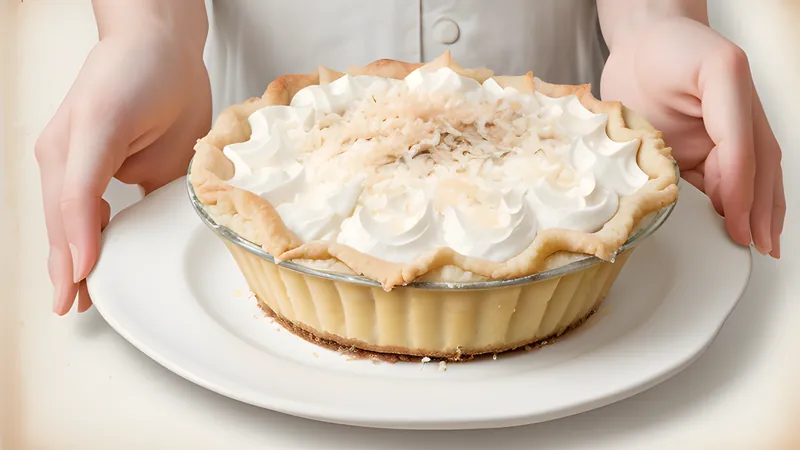
In 1895 a Philadelphia flour miller named Franklin Baker accepted an unusual settlement for a debt he was owed: a shipload of coconuts from Cuba. It was, on the face of it, a poor swap — whole coconuts were a nuisance to crack, scrape and dry, which is exactly why few American home cooks bothered with them. Baker, rather than write off the loss, built a factory to shred and dry the meat into a soft, sweet flake that any baker could spoon straight from a tin. Within two years the coconut side of his business had so outpaced the flour that he sold the mill and founded the Franklin Baker Company. National Coconut Cream Pie Day, kept on 8 May, celebrates one of the desserts that windfall made possible: a blind-baked shell holding a coconut-studded custard, sealed under whipped cream and a drift of toasted flakes.
How a luxury became a tin on the shelf
For most of the nineteenth century, coconut in a temperate kitchen meant labour. The fruit arrived whole, had to be pierced and drained, the hard shell split, the brown skin pared from the white meat, and the meat then grated by hand — all for a perishable result. It was an occasional, special-occasion ingredient, expensive in effort if not always in money.
Two developments in the 1890s changed that. In Ceylon, now Sri Lanka, a French export firm worked out how to shred and dry coconut commercially, producing the desiccated flake recognisable today. Almost simultaneously, Franklin Baker’s accidental cargo pushed him into doing the same thing in the United States, putting packaged sweetened coconut within reach of ordinary households. Once the ingredient sat ready on a grocery shelf, bakers folded it into everything — cakes, macaroons, frostings and, inevitably, the cream pie. The coconut cream pie is in a real sense a product of industrial convenience: it could not have become a staple while every cook had to butcher a coconut first.
A pie with murky parentage
Unlike a dish credited to a single chef or restaurant, the coconut cream pie has no founding recipe and no inventor’s name attached. It descends from the broad family of cream pies — a custard set in pastry and finished with cream or meringue — that flourished as American home baking and commercial bakeries expanded in the late nineteenth century. Recipes recognisably resembling the modern pie begin appearing in cookbooks around the mid-1890s, almost exactly tracking the moment shredded coconut became easy to buy, and the dessert was firmly established by the early 1900s, particularly across the Southern United States. It settled in beside its siblings, the banana cream and chocolate cream pies, as a fixture of the diner counter and the church bake sale. The same wave of cheap, shelf-stable tropical ingredients that built the coconut cream pie also built its cousins, the kind of overlap that links it to days like the National Strawberry Cream Pie Day and the meringue-topped National Lemon Cream Pie Day elsewhere in the calendar.
Why the small ritual is worth keeping
A pie day sounds frivolous, and in a sense it is, but it points at something genuine. Coconut cream pie is rarely a weeknight bake; it is the dessert produced for guests, for a holiday table, for the private satisfaction of having cooked a custard that did not split. It rewards patience and punishes shortcuts, and that makes it a small test of craft as much as a treat. Marking the day is really a nod to the home cook who still makes a thing properly when buying a slice would be easier — and to the generosity of handing that thing round.
There is also a quieter point about access hidden in the pie. The dessert exists at all because a tropical fruit was, within a single generation, turned from an exotic curiosity into a cheap pantry staple. The coconut cream pie is a small monument to the moment when the flavours of the far tropics stopped being the preserve of the wealthy and arrived, in a tin, on an ordinary kitchen shelf in Ohio or Georgia.
The making, layer by layer
The pie is built in three distinct stages, each with its own failure point. The base is usually a blind-baked shortcrust shell, weighted with beans so it holds its shape; some versions swap it for a buttery crumb crust. The heart is a stovetop custard — milk, often part coconut milk, with sugar, egg yolks and a starch such as cornflour — cooked slowly and stirred constantly, because the moment it overheats the yolks curdle and the smooth filling turns to scrambled sweetness. Shredded coconut and vanilla go in off the heat, and the custard is poured warm into the shell and chilled until set firm. The crown is softly whipped cream, spread or piped across the top, and then the detail bakers fuss over most: a generous shower of coconut toasted in a dry pan or low oven until it turns gold and gives off a warm, almost nutty scent. Skip the toasting and the pie tastes flat; do it well and it sings. The toasting is also where the most pies are lost, since shredded coconut goes from pale to scorched in the space of a minute under a grill and demands constant watching — the difference between a golden crown and a bitter, blackened one is measured in seconds, not minutes.
Cream or meringue, and other quarrels
Cream pies sit at the centre of one of baking’s quiet schisms. The cream pie proper is topped with sweetened whipped cream, kept cold and unbaked; its near-twin, the coconut custard pie, sets the coconut into a baked custard and may be crowned with meringue instead. The two are routinely confused, and a request for “coconut cream pie” at a Southern diner could once produce either, depending on the cook’s allegiance. The meringue camp argues that the browned, marshmallowy peaks add contrast and drama; the cream camp counters that meringue weeps and slumps within hours, while whipped cream holds. Both are right, which is why both versions persist.
The pie also earned an odd second life as a prop. The custard or cream pie hurled in a comedian’s face — a staple of silent film and circus clowning — was, in its filmable form, often a coconut or banana cream pie, chosen because the pale, billowing filling read clearly on camera and splattered satisfyingly. A dessert built for lingering over became, on screen, a thing thrown as fast as possible, which is a fate few other puddings have had to endure.
Coconut around the table
The coconut cream pie is the temperate world’s particular answer to a fruit that the tropics have built whole cuisines around. In Thailand and across South-East Asia, coconut milk thickens curries and sets into custards like the steamed sangkhaya; in the Philippines it sweetens bibingka and buko pie, the latter made with the soft, jelly-like meat of a young coconut. The Caribbean has coconut drops and tarts, Brazil its cocada sweets, and southern India its coconut-laced payasam. The American cream pie is one regional expression among dozens — distinguished by the cold custard, the dairy cream and the gratin of toasted flakes that mark it out as a product of a place where coconuts arrive in tins rather than off the tree.
Fun facts
- The coconut cream pie owes its existence to a defaulted debt: Franklin Baker took a shipload of Cuban coconuts in 1895 in lieu of payment, then built a coconut-shredding empire that made the ingredient a pantry staple.
- Baker was so successful at selling shredded coconut that within two years he abandoned flour milling entirely, the trade he had actually been owed money for.
- A coconut is a natural ocean voyager: its buoyant, water-resistant husk lets the seed float across open sea and sprout on distant beaches, which spread the palm around the tropics long before humans planted it deliberately.
- The “cream” in the name refers to the dairy custard and whipped topping, not to coconut cream — though many cooks reach for coconut milk in the custard to deepen the flavour, doubling up on the fruit.
- Bakers broadly agree that toasting the coconut for the topping is the single step that separates a memorable pie from a forgettable one, a rare point of near-consensus in dessert lore.
A closing reflection
It is a fine joke of culinary history that one of the most homely American desserts traces back to a businessman trying to salvage a bad deal. The coconut cream pie was not invented so much as enabled — by a tin of flakes that turned a day’s grating into a spoonful from a packet. What the cook brings is still the part that matters: the slow custard, the careful toasting, the willingness to make something a little finer than the occasion strictly demands. To bake one on 8 May is to take that small, deliberate trouble, and then, in the best tradition of the dessert, to cut it into wide slices and give most of it away.
Related Content