National Cocktail Day
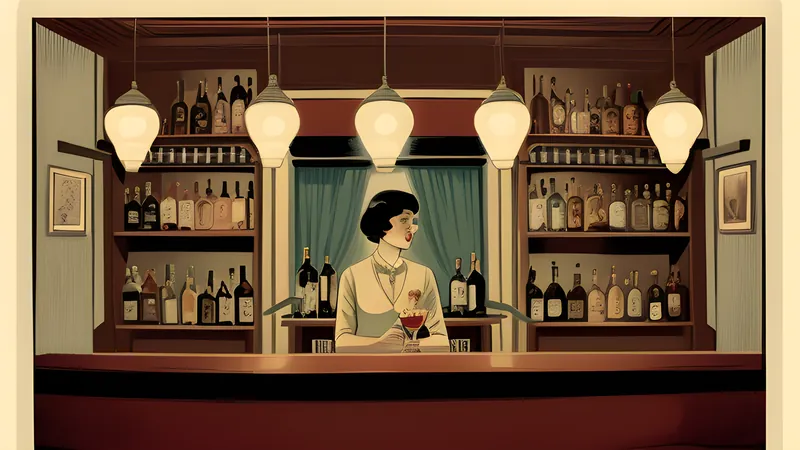
On 13 May 1806, a reader of The Balance and Columbian Repository, a newspaper published in Hudson, New York, wrote in to complain. The paper had referred to a politician settling his bar tab, which had included several “cock-tails”, and the reader wanted to know what on earth one was. The editor, Harry Croswell, obliged with what is now the oldest known printed definition of the word: a cocktail, he wrote, is “a stimulating liquor, composed of spirits of any kind, sugar, water, and bitters”, adding tartly that it was “vulgarly called bittered sling”. National Cocktail Day, observed on 27 March, celebrates everything that grew out of that small, sarcastic gloss — the rattle of ice in a tin, the click of a strainer, and two centuries of argument about what belongs in a glass.
A word before it had a meaning
Croswell’s 1806 entry was the first to explain the cocktail, but it was not the first to print the word. The term surfaces in London’s Morning Post and Gazetteer in 1798, and again in an American agricultural handbook, The Farmer’s Cabinet, in 1803, both times with no hint as to what it described. The etymology has never been settled and probably never will be: theories range from docked horses’ “cocked tails” to the dregs of a barrel (the “cock tailings”) to a mispronounced French egg-cup, the coquetier. What the 1806 definition did establish was a recipe with a spine — spirit, sugar, water, bitters — which is, give or take dilution, the bones of the drink we now call the Old Fashioned. Every cocktail that followed is in some sense a variation on that four-part theme.
The 27 March date that the United States observes as National Cocktail Day is distinct from the 13 May anniversary of Croswell’s definition, which the wider world keeps as World Cocktail Day. The two sit either side of the same history, one marking the modern enthusiasm and the other the founding document.
The man who wrote it down
For half a century after 1806, cocktail knowledge passed by word of mouth, bartender to bartender, with nothing written down. That changed in 1862, when Jeremiah “Jerry” Thomas (1830–1885), a flamboyant American bartender, published How to Mix Drinks; or, The Bon Vivant’s Companion. It was the first cocktail book ever printed in the United States, gathering more than five hundred recipes into a single volume and turning an oral craft into a profession with a canon. Thomas is remembered as the father of American mixology not because he invented the drinks but because he codified them, fixing in print what had been improvised behind a thousand bars. His manual is still consulted by serious bartenders today, which is a remarkable run for a book of drinks recipes.
Thomas was as much showman as technician, and he did more than any single figure to make the bartender a creative professional rather than a mere pourer. Nicknamed “the Professor”, he juggled bottles and cups while he worked, wore conspicuous jewellery, and toured Europe carrying a set of solid-silver bar tools studded with precious stones. His signature creation, developed at the El Dorado gambling saloon in Gold Rush San Francisco, was the Blue Blazer: blazing whisky poured in a long arc of blue flame between two metal mugs, mixed mid-air, then sweetened with sugar and lemon. It was theatre as much as a drink, and it fixed the idea that what happens behind the bar is worth watching. He also helped popularise the Tom and Jerry, a warm, frothy egg-and-spirit punch, though the drink predated him and he could not honestly claim its invention.
The decades around the turn of the twentieth century are often called the golden age of the cocktail, when the great classics were refined and named. Then, in January 1920, the United States went dry. Prohibition lasted until December 1933 and drove the whole business underground, but it did not kill the craft — it exported it. American bartenders decamped to London, Paris and Havana, taking their recipes with them, and thirsty Americans crossed oceans to drink legally. The need to mask the rough taste of bootleg spirit even encouraged inventive mixing at home, so that the law meant to end the cocktail arguably scattered its seeds abroad.
A count, a barman, and an orange
One of those seeds took root in Florence. The most widely reported account places the birth of the Negroni in 1919, at the Caffè Casoni on Via de’ Tornabuoni, where a barman named Fosco Scarselli served a regular called Count Camillo Negroni. The count, the story goes, asked for his usual Americano — sweet vermouth, Campari and soda — but with the soda swapped for gin, wanting something with more backbone. Scarselli obliged, and to mark that this was a different drink he garnished it with a slice of orange rather than the Americano’s customary lemon. That single substitution, a soldier’s request for a stronger glass, produced what has become one of the most ordered cocktails on the planet. It is a useful reminder that the canon was not handed down from on high; much of it began as someone fiddling with a drink they already liked.
The Negroni is not alone in having a contested birth. The Margarita, the Daiquiri, the Manhattan and the Martini all carry competing origin stories, multiple claimants and dates that refuse to be pinned down, precisely because they emerged from an oral craft that wrote nothing down until decades after the fact. The arguments are part of the pleasure: a drink with a disputed pedigree is a drink with a history worth disputing, and the disputes themselves keep the recipes alive in the conversation of bartenders who still care which version is correct.
The long decline and the revival
The cocktail did not glide smoothly from Jerry Thomas to the present. The repeal of Prohibition in 1933 returned legal drinking but not the old skill: a generation of American bartenders had either retired or emigrated, and the institutional memory of careful mixing went with them. The mid-twentieth century leaned increasingly on sweet, simple and pre-bottled mixers, and by the 1970s and 1980s much of what a bar served was a sugary approximation of the classics, built from sour mix and luminous liqueurs rather than fresh juice and balanced bitters. The four-part discipline of the 1806 definition had largely been forgotten.
The recovery came late and deliberately. From the 1990s a small group of bartenders in New York and London — figures such as Dale DeGroff at the Rainbow Room — went back to the nineteenth-century manuals, Jerry Thomas’s among them, and rebuilt the canon from the source: fresh-squeezed citrus, house-made syrups, proper ice, real bitters. The “craft cocktail” movement that followed is, in effect, a restoration project, and it explains why a book printed in 1862 should be a working document in a bar today. The day’s celebration of the cocktail is really a celebration of that recovered seriousness.
The discipline behind the glass
To make a cocktail for another person is a small act of hospitality, an offer of time and attention rather than a poured measure. But it is also a genuine craft, and the day is partly a salute to that. A good drink balances four forces — sweetness, acidity, strength and dilution — and getting them to sit in harmony is harder than it looks. The Martini alone has generated more than a century of argument over the ratio of gin to vermouth and whether it should be shaken or stirred, the purists insisting on stirring because shaking clouds the drink with ice shards and air. Whether the base spirit is gin, rum, whisky or, in the Martini’s vodka heresy that fills its own vodka day, the principle is the same: the skill lies in restraint, in knowing what to leave out.
Fun facts
- The first known printed definition of “cocktail”, from 1806, described it dismissively as “vulgarly called bittered sling” — the word arrived as something close to an insult.
- The first cocktail recipe book in history, Jerry Thomas’s 1862 Bon Vivant’s Companion, contained over five hundred drinks and is still used by bartenders more than 160 years later.
- The Negroni was reportedly born when Count Camillo Negroni asked a Florence barman in 1919 to fortify his Americano with gin; the orange garnish was added purely to signal it was a new drink.
- Prohibition (1920–1933) did not extinguish the cocktail so much as deport it — American bartenders fled to Europe and Cuba, spreading their recipes across the Atlantic.
- Bitters, the fourth pillar of the 1806 definition, were originally sold as medicine, which is why the surviving brands still carry old apothecary-style labels.
A closing reflection
It is worth remembering that the cocktail entered written history as a thing that needed explaining, a vulgar novelty a newspaper reader had never heard of. Two centuries later it has a literature, a canon and an argument for every drink in it. What changed was not the chemistry but the attention — the willingness to write things down, to fuss over a ratio, to garnish with an orange instead of a lemon and mean something by it. A measured pour on 27 March is a quiet vote for that kind of care, the conviction that a few ordinary ingredients deserve to be handled as if they mattered.
Related Content