National Chocolate Mousse Day
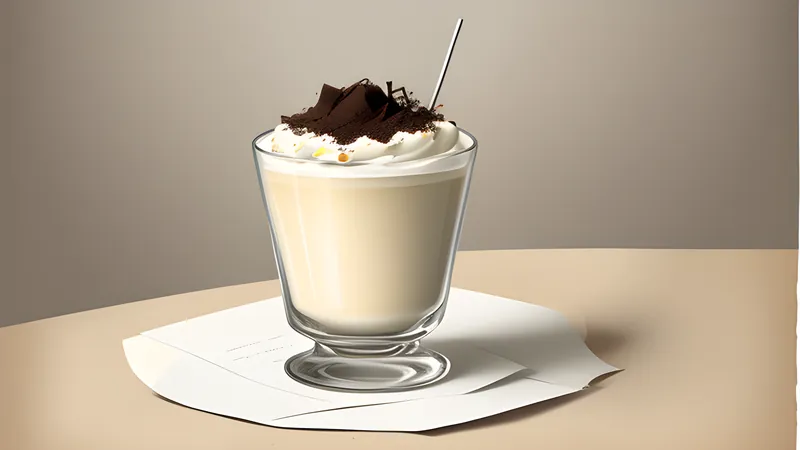
In 1750, a French author writing under the name Menon published La Science du Maître d’Hôtel Confiseur, a professional manual for confectioners, and tucked inside it sat one of the earliest written references to a whipped chocolate preparation that we would now recognise as mousse. Long before the dessert acquired its airy reputation in white-tablecloth restaurants, it lived in the working notebooks of pastry cooks who understood that chocolate, eggs and a great deal of trapped air could be persuaded into something that defied its own richness. National Chocolate Mousse Day, observed each year on 3 April, marks that small marvel of physics and patience: chocolate turned, quite literally, into foam.
Where the name came from
The word mousse simply means froth or foam in French, and the language is a clue to how cooks first thought about the dish. They were not chasing a cake or a custard; they were chasing lightness, the sensation of eating something that seems to weigh nothing while delivering the full weight of cocoa on the tongue. That ambition is older than the chocolate version. French cooking had savoury mousses of fish, fowl and vegetables well before sweet ones became fashionable, and the technique of folding air into a base was already familiar to anyone who had made a quenelle or a soufflé.
What is genuinely surprising is the dessert’s early alias. In nineteenth-century France, chocolate mousse was sometimes called mayonnaise au chocolat, chocolate mayonnaise. The name sounds absurd until you remember that mayonnaise is itself an emulsion built on egg yolk, and that a classic mousse leans on yolks for richness as much as on whipped whites for lift. Calling it chocolate mayonnaise was, in its way, an honest description of the chemistry rather than a joke.
A history with several authors
Printed recipes for mousse au chocolat survive from 1768, 1814 and 1827, which tells us the dish was circulating in French kitchens across the entire span of the period when chocolate itself was changing character. For most of its European life chocolate had been a drink, ground and whisked into hot liquid, an expensive luxury sipped at court. It was only as the eighteenth and nineteenth centuries advanced, and as processing made solid eating chocolate cheaper and more reliable, that cooks could treat it as an ingredient to be folded, melted and set rather than merely poured.
The most romantic origin story attaches the dessert to the painter Henri de Toulouse-Lautrec, the Montmartre artist of the 1890s who was, away from his canvases, a serious and adventurous cook. He is credited with popularising a version he reportedly called mayonnaise de chocolat. The dates make clear he cannot have invented it, since recipes predate his birth by more than a century, but the association is not pure invention either: he genuinely cooked, genuinely entertained, and genuinely helped fix the dish in the fashionable imagination of late-nineteenth-century Paris. The dessert, like many classics, has no single father, only a long line of cooks who each refined it a little.
How chocolate became something you could fold
The mousse could not exist until chocolate stopped being only a drink, and that change has a precise turning point. In 1828 the Dutch chemist Coenraad van Houten patented a press that squeezed much of the cocoa butter out of roasted cacao, leaving a cake that could be ground into a fine, easily dissolved powder. His process, soon known as “Dutching”, also treated the powder with alkali to mellow its bitterness and darken its colour. Within a couple of decades that breakthrough made solid eating chocolate practical, as confectioners learned to add cocoa butter back into the mix to create a bar that snapped and melted. A cook in 1768 working with crude ground cacao faced a far harder task than one in the 1850s holding a smooth, reliable block. The spread of mousse recipes through the nineteenth century tracks this industrial story closely: the dessert grew common precisely as the raw material grew dependable, which is why the romantic tales of a single inventor sit so awkwardly against the real, more interesting history of a slowly improving ingredient.
Why the technique matters
Everything good about a chocolate mousse comes from air, and everything that goes wrong comes from losing it. The base is melted chocolate, often enriched with egg yolks and sometimes a little butter; the lift comes from whipped egg whites, whipped cream, or both. The decisive act is the folding. Whisked whites are a fragile scaffold of bubbles, and the cook’s job is to marry them into the dense chocolate without crushing the structure they have just built. Drag the spatula too hard or too long and the foam deflates into something flat and greasy; treat it too gently and streaks of unmixed white survive into the finished glass.
This is what makes mousse a quiet test of a cook. There is almost nowhere to hide. A dense flourless cake forgives a mediocre chocolate, but a mousse exposes it, because there is so little else in the bowl. The same brutal honesty rewards good materials and punishes shortcuts, which is exactly the discipline that runs through other single-ingredient showpieces. A cook who respects the fragility of an emulsion will understand the same lesson in the egg-and-cheese sauce of carbonara, where a few seconds of carelessness turns silk into scramble.
How the day is marked
On 3 April, restaurants put mousse back on the menu, often dressed with raspberries, a dusting of cocoa, or a curl of cream, and home cooks take the date as licence to make a batch from scratch. It is a forgiving dessert to attempt, needing no special equipment beyond a bowl and a whisk, and a generous one to share, since a single recipe fills several glasses. Plenty of cooks use the day to chase a remembered version, the one from a childhood dinner out or a particular café, and discover how much the result depends on the chocolate they reach for.
The celebration tends to be domestic and unfussy. Mousse does not demand a banquet; it demands a quiet hour, good chocolate and a steady hand, which is part of why it suits a weekday observance better than a grand one. It also rewards a little knowledge of where things go wrong, and the failures are instructive. Melt the chocolate too hot, or let a drop of water fall into it, and it “seizes” into a grainy paste that will never fold smooth. Fold the whipped whites in while the chocolate is still warm and you cook them slightly, losing volume; fold them in once the chocolate has set too firm and you cannot combine them without knocking out the air. The narrow window between those two errors is the whole craft, and clearing it once teaches more about cooking than a dozen forgiving recipes.
Variations worth knowing
The classic French method using egg whites and cream is only one route to the foam. A striking modern version, popularised by the chemist Hervé This and known as Chantilly au chocolat, uses nothing but chocolate and water, whipped over ice until it sets into a mousse through emulsion alone, with no eggs or dairy at all. Others enrich the base with strong coffee, which sharpens the cocoa; with orange zest or Grand Marnier; or with a pinch of salt and chilli in the manner of older drinking chocolate. White and milk chocolate versions trade depth for sweetness, and aerated set versions firm enough to slice blur the line between mousse and cake. The shared idea across all of them is the contrast that defines the dish: intense flavour, negligible weight. That love of deep, set chocolate connects it naturally to the wider family of cocoa observances, from milk chocolate to the more elaborate confections that crowd the calendar.
Fun facts
- The earliest known written reference to a whipped chocolate preparation appears in Menon’s 1750 confectioner’s manual, predating most “inventor” claims by well over a century.
- Chocolate mousse was once called mayonnaise au chocolat in French, an accurate nod to its yolk-based emulsion rather than a flippant nickname.
- The Toulouse-Lautrec origin legend collapses on the dates: printed mousse recipes exist from 1768, decades before the painter was born, though he did help make it fashionable.
- A genuine chocolate mousse can be made from only chocolate and water, whipped over ice, with no eggs, cream or sugar at all.
- Savoury mousses of fish and vegetables entered French cooking before the sweet chocolate version, meaning the dessert borrowed its name and method from the dinner table, not the pudding course.
A closing reflection
There is a small paradox at the heart of a good mousse. It is among the lightest things you can eat, and yet making it well asks for more restraint than almost any heavier pudding, because the one ingredient that gives it life cannot be seen, weighed or tasted on its own. Air is the whole point, and air is precisely what carelessness destroys. To spoon up a perfect mousse is to taste the result of someone choosing patience over force, which may be the most French lesson the dessert has to teach.
Related Content