National Cheese Lovers Day
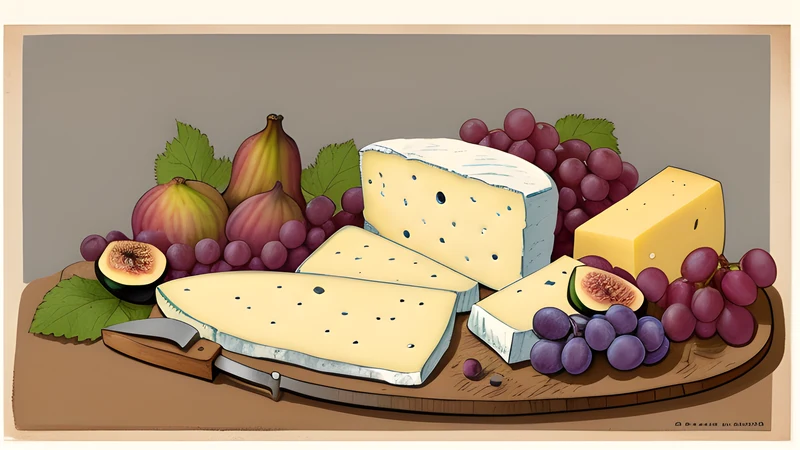
Every 20 January, cheesemongers, dairy fans and recipe writers across the United States and beyond mark National Cheese Lovers Day, an unofficial but happily observed date dedicated to the pressed, aged, brined and blue-veined results of one of humanity’s oldest acts of food preservation. It is a mid-winter excuse to open a wheel, and behind the tasting board sits a genuinely ancient story that stretches back thousands of years before anyone thought to name a day for it.
Older than writing
Cheese predates written history. The earliest hard evidence comes from Kuyavia in central Poland, where archaeologists found perforated pottery sieves, dated to around 5,500 BCE, carrying chemical traces of milk fat. Those sieves are effectively Neolithic cheese strainers, used to separate curds from whey some 7,500 years ago. That timing is no accident. Early European adults were largely lactose intolerant, unable to digest fresh milk comfortably, and cheesemaking neatly solved the problem by draining off much of the milk sugar with the whey. Cheese let farming communities store milk’s nutrition through lean months and consume dairy without discomfort, long before the genetic mutation for adult lactose tolerance spread across the continent.
The oldest cheese anyone has actually held dates from a much drier place. In the Xiaohe cemetery of the Taklamakan Desert in western China, mummified bodies from around 1,600 BCE were buried with lumps of a pale substance smeared on their necks and chests. In the 2010s scientists identified it as cheese, and in 2024 DNA analysis confirmed it was made with a kefir-style culture, using bacteria still used in fermented dairy today. That makes it the oldest preserved cheese in the world, roughly 3,600 years old and still recognisable.
History in caves and monasteries
Much of the cheese we recognise today was shaped by geography and patience. Roquefort, the sharp blue sheep’s-milk cheese of southern France, is ripened in the limestone caves of Combalou at Roquefort-sur-Soulzon, where natural fissures called fleurines pull cool, damp air through the rock and feed the blue mould Penicillium roqueforti. The cheese was prized enough that in 1411 King Charles VI granted the villagers a monopoly on ageing it in those caves, one of the earliest examples of what we would now call a protected regional food.
England’s contribution carries a place name that has gone global. Cheddar takes its name from the village of Cheddar in Somerset, where the deep, cool Cheddar Gorge caves were used to mature the cheese from at least the twelfth century. The technique of “cheddaring”, stacking and turning slabs of curd to press out whey and build a dense texture, spread so widely that “cheddar” is now made on every inhabited continent, most of it nowhere near Somerset.
Italy’s great hard cheeses owe much to medieval monasteries. Benedictine and Cistercian monks in the Emilia-Romagna region refined the enormous, slow-aged wheels we call Parmigiano-Reggiano, valued because their low moisture let them keep and travel for years. By the fourteenth century the cheese was famous enough that the writer Boccaccio joked, in the Decameron, about a mountain of grated Parmesan in an imaginary land of plenty.
Why a day for cheese
Beyond the pleasure of it, cheese is one of the most efficient preservation technologies our ancestors ever devised. A wheel of hard cheese concentrates the protein, fat and calcium of many litres of milk into a form that survives without refrigeration for months. That made it a strategic food: rations for armies, provisions for ships, currency for taxes and rents in parts of medieval Europe. Marking a day for cheese is a way of honouring the enormous cultural and economic weight carried by something as simple as curdled milk. It also supports the many small producers keeping regional varieties alive against the pull toward cheap, industrial, uniform blocks.
How it is celebrated
National Cheese Lovers Day is low on ceremony and high on eating. Cheesemongers and delis run tastings and discounts, restaurants build the day around fondue, raclette, macaroni cheese and grilled-cheese specials, and dairies open their doors for tours of the make room and the ageing cellar. Home cooks treat it as licence to assemble a proper cheeseboard, often pairing a hard, a soft, a blue and a washed-rind cheese with fruit, nuts and bread. On social media the day generates a steady flow of pairing advice, from the classic match of port with Stilton to the argument over whether cheese belongs before or after dessert. For the ambitious, it is a prompt to try making a simple fresh cheese at home, since ricotta or paneer needs little more than milk, heat and an acid such as lemon juice.
Variations around the world
Cheese looks different everywhere it is made. Halloumi from Cyprus is set with a high melting point so it can be grilled or fried without collapsing. Mozzarella at its best is made from the milk of water buffalo in the Campania region of Italy, stretched and torn while warm. Sardinia produces casu marzu, a sheep’s cheese deliberately colonised by the larvae of cheese flies, so soft and pungent that it is banned from open sale. Across the Middle East and South Asia, fresh unaged cheeses like paneer and akkawi are everyday staples rather than delicacies. The sheer range is enormous: estimates of the number of distinct cheeses run to well over a thousand, and France alone is often credited with several hundred.
Britain contributes one of the more alarming cheese traditions. At Cooper’s Hill in Gloucestershire, competitors chase a nine-pound wheel of Double Gloucester down an almost vertical slope, tumbling after it at speeds that regularly cause injury. The winner keeps the cheese. The event is a reminder that cheese has never been a purely solemn subject.
Traditions and symbols
Cheese carries symbolic weight in language and custom. The English phrase “the big cheese”, meaning an important person, is often linked to giant celebratory cheeses, among them the “mammoth cheese” of Cheshire, Massachusetts, a 1,235-pound wheel presented to President Thomas Jefferson in 1802 as a gift. The very words we use trace old roots: “cheese” comes from the Latin caseus, while the French fromage and Italian formaggio derive from the Greek formos, the basket in which curds were once drained.
Fun facts worth chewing over
The holes in Swiss Emmental, properly called “eyes”, are made by bacteria that release carbon dioxide as the cheese ripens. Cleaner modern milking has actually shrunk the holes, because tiny specks of hay that once seeded them are now filtered out.
Pizza cheese is a serious agricultural force. A large share of all the mozzarella produced in the world exists to be melted on pizza, making a Neapolitan street food one of the biggest single drivers of global cheese demand.
Cheese can be genuinely addictive in a mild sense. It is rich in casein, a protein that releases casomorphins during digestion, compounds that interact with the brain’s opioid receptors and may partly explain why cheese is so hard to resist.
The rind of a washed-rind cheese such as Époisses gets its orange colour and powerful aroma from Brevibacterium linens, the same family of bacteria that lives on human skin and contributes to the smell of feet. The overlap is not a coincidence of language alone.
The science in the curd
Almost every cheese begins with the same fork in the road. Milk is warmed and a coagulant is added, most often rennet, an enzyme traditionally taken from the fourth stomach of a young calf, which makes the milk proteins clump into a solid curd and leave the liquid whey behind. What happens next decides everything. Cut the curd fine, press it hard and age it for years, and you get a Parmesan hard enough to crack. Leave it soft, salt the surface and let mould bloom across the outside, and you get a Brie that runs at room temperature. The same starting bowl of milk becomes feta, cheddar or Camembert depending only on temperature, salt, time and which microbes are invited in.
That microbial cast is why cheese still resists full industrialisation. A traditional raw-milk cheese carries a living community of bacteria and moulds specific to the farm, the pasture and even the wooden shelves it ages on, and cheesemakers have learned that scrubbing those boards too clean can ruin a batch. Much of the modern debate over pasteurised versus raw-milk cheese turns on exactly this: heat treatment makes cheese safer and more consistent, while stripping away some of the wild complexity that gives the great traditional varieties their depth.
A closing reflection
Cheese is a quiet monument to human patience. Someone, thousands of years ago, worked out that milk left to sour and drain became something that lasted, travelled and tasted better with age, and then generations of shepherds, monks and farmers spent centuries refining that discovery into hundreds of distinct forms tied to particular caves, valleys and breeds. To love cheese is to appreciate slowness in a hurried food culture, the months of ageing, the turning of wheels by hand, the specific damp air of one hillside. Set alongside other edible observances such as National Kimchi Day and National Toast Day, cheese belongs to a long human habit of turning simple ingredients into something worth waiting for. This 20 January, the best way to honour it is probably the simplest: cut a piece, taste it properly, and consider how far it travelled through time to reach the board.
Related Content