National Cheddar Fries Day
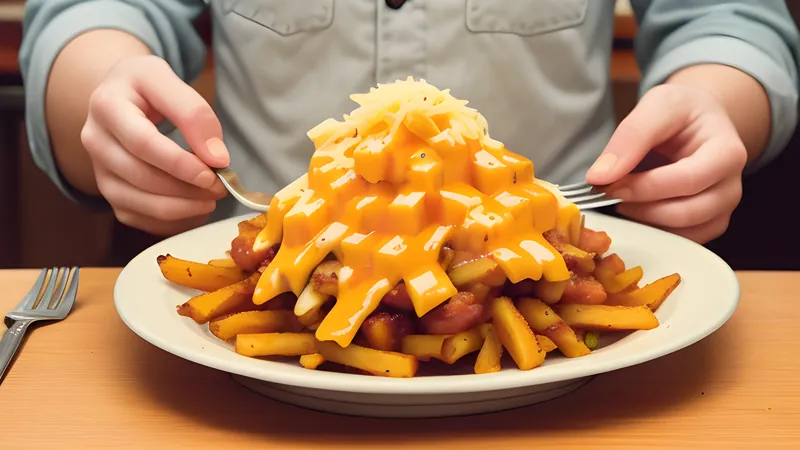
In 1978, a new bar called Snuffer’s opened on Lower Greenville Avenue in Dallas, Texas, and a group of students from nearby Southern Methodist University put together a plate that would outlast the décor, the menus and very nearly the building itself: hand-cut Idaho potato fries buried under freshly grated aged Wisconsin cheddar. They called them cheddar fries, and the dish became so closely identified with the place that Snuffer’s later founded a whole observance around it. National Cheddar Fries Day celebrates that heap of crisp chips and molten orange cheese, a dish that asks nothing of the eater but a willingness to dig in before it cools.
Where the day comes from
Unusually for a food holiday, this one has a documented and traceable parent. Snuffer’s Restaurant and Bar created National Cheddar Fries Day in 2016 to honour the dish that had been on its menu since the day it opened in 1978, and to lay public claim to having invented it. Most modern food observances are anonymous things, conjured by greetings-card logic and lost calendars; this one belongs to a specific business in a specific city, defending a specific recipe. That provenance gives the day an edge of genuine local pride rather than vague enthusiasm, because for Snuffer’s the celebration doubles as an assertion of authorship.
The recipe the SMU students settled on has barely changed: hand-cut Idaho potatoes fried until crisp, topped with freshly grated aged Wisconsin cheddar, with bacon, chives and jalapeños offered as optional additions. The discipline of those few components, rather than any elaboration, is the point.
The longer history of fries and cheddar
If the dish itself is young, its two halves are not. The fried potato has been argued over for centuries, with Belgium and France each claiming to have first cut and fried the chip; the Belgian case rests on villagers along the Meuse frying potato batons when the river froze and fish were scarce. Cheddar is older and far more precisely located. It takes its name from the village of Cheddar in Somerset, England, where the constant cool and humidity of the Cheddar Gorge caves made an ideal natural store for ageing the cheese. The technique of “cheddaring”, stacking and turning slabs of curd to press out whey, gave the cheese its firm, dense body.
That body is exactly what makes cheddar suit hot chips. It melts smoothly without splitting, its tang cuts the richness of the fry, and a mature wheel carries enough character to stand up to salt and heat. The marriage flourished in North America, where loaded fries became a bar-and-diner mainstay through the second half of the twentieth century, and it was on that fertile ground that the specifically branded cheddar fry took root in Dallas.
The making of a proper chip
The fry beneath the cheese deserves more credit than it usually gets, because a soggy chip drowns under any topping. The technique that diners and chip shops settled on over the twentieth century is the double fry, and the physics behind it explains why a careless single frying disappoints. The first bath, at a lower temperature of around 150°C, cooks the potato through and drives moisture from its interior without colouring the outside. The chips are then rested and fried a second time at a fiercer 180–190°C, which crisps and browns the surface that the first fry dried out. Skip the first stage and the outside burns before the middle is cooked; skip the second and the chip stays pale and limp. Snuffer’s hand-cut Idaho potatoes work because a high-starch baking potato fluffs inside while crisping outside, exactly the contrast a waxy salad potato cannot give. Cheese, then, is the reward for a chip already made well, not a disguise for one made badly.
There is a second technical decision that separates a memorable plate from a forgettable one: whether the cheese is grated and melted by the heat of the chips, or poured on as a sauce. Snuffer’s grates aged cheddar fresh over the hot fries and lets the residual heat soften it, which keeps the tang and bite of a real matured cheese. The alternative, the bright “nacho cheese” sauce of the cinema and stadium, owes more to Cheez Whiz than to Somerset, and trades character for the convenience of a product that never seizes or splits. Both have their defenders, but the grated-cheddar approach is what gives the dish its name a meaning beyond marketing.
Why it matters
It would be easy to wave away a dish so unpretentious, but its very plainness is the argument. Cheddar fries stand for food as shared pleasure rather than ceremony: something passed around a table, eaten with fingers, enjoyed without instruction. The day also quietly rewards craft in the components, because there is nowhere for sloppiness to hide. A chip must be crisp without and fluffy within, fried twice if it is done properly; the cheese must be a real cheddar with genuine bite, grated fresh and melted to a sheen rather than dumped from a tub. Treating those small things seriously is what lifts a snack into something worth a name on the calendar, the same conviction that animates a good basket at the bar wherever fried potato meets melted cheese. There is also a small economic truth at work, the same one that built so many bar snacks: potatoes and cheese are cheap, filling and forgiving, which let a struggling diner offer something generous-looking at a margin that still made sense. Comfort and thrift have always travelled together on the casual menu.
How it is celebrated
The day is marked most enthusiastically where the dish already lives: in bars, pubs and casual restaurants, which run specials or build ever more towering loaded versions. At Snuffer’s the occasion is, naturally, a flagship event. At home, cooks chase the crisp-and-melt ideal, baking or double-frying chips until they shatter and grating a sharp mature cheddar over them straight from the heat so it sags into the gaps. Most people treat the date as an excuse to gather a few friends around one generous shared platter, which suits a dish that has never been about solitary fine dining. The mood is relaxed, sociable and faintly competitive about whose toppings are best.
Variations across the table
Loaded cheddar fries have gathered a familiar set of companions: crisp bacon, sliced spring onion, soured cream and pickled jalapeños, each turning a simple basket into a centrepiece. The wider family of fried-potato-and-cheese dishes stretches well beyond Texas. Canada offers poutine, chips smothered in cheese curds and gravy, a Québécois invention of the late 1950s. In Britain, cheesy chips are a chip-shop fixture, and in the north of England they are often finished with gravy in a close cousin of the Canadian idea. Across many cuisines the basic move recurs, fried potato plus melting cheese, each version bent to local taste. Cheddar fries, with their bright, sharp, distinctly orange cheese, hold their own corner of that broad and well-loved territory, sitting comfortably alongside other casual indulgences like a heaped order of French fries and the bar-snack classics built for sharing such as cheese doodles.
Symbols and traditions
The dish has its own visual signature: the long elastic strand of cheese trailing from a lifted chip, an image so bound up with indulgence that advertisers reach for it instinctively. Served in a basket or on a wooden board, usually beside a cold drink, cheddar fries carry the unmistakable informality of the diner and the sports bar. There is even a small piece of food trickery in the colour. The vivid orange that signals “cheddar” to most eyes is frequently not the cheese at all but annatto, a natural dye drawn from the seeds of the achiote tree, added because shoppers came to expect their cheddar to look sunset-bright. The taste owes nothing to it.
Fun facts
- Cheddar fries have a precise birthplace and date: Snuffer’s on Lower Greenville Avenue in Dallas, in 1978, devised by a group of Southern Methodist University students.
- The vivid orange of much cheddar comes not from the cheese but from annatto, a plant-based dye from achiote seeds, added purely to meet expectations about colour.
- Cheddar takes its name from the Somerset village whose limestone gorge caves provided a natural, climate-controlled cellar for ageing the cheese.
- The sharpness of cheddar rises with age, so the same plate of fries tastes markedly tangier when made with a well-matured wheel rather than a young, mild one.
- National Cheddar Fries Day is one of the rare food holidays founded openly by a single business, created by Snuffer’s in 2016 partly to stake a claim as the dish’s inventor.
A closing reflection
There is something quietly honest about a dish whose entire history can be traced to a college crowd improvising at a bar, then defended decades later as a point of pride. Cheddar fries make no pretence of refinement, and that is exactly why they endure: they were built to be shared, eaten fast and argued over in the most amiable way. The best comfort food rarely sets out to be important. It earns its place on the calendar by being reliably, generously good when nothing fancier will do.
Related Content