National Cereal Day
In 1894, in the kitchens of the Battle Creek Sanitarium in Michigan, a batch of boiled wheat dough was left out too long and began to go stale. Rather than throw it away, the staff rolled it through the machine anyway, expecting a single sheet, and instead got individual flakes that crisped beautifully when toasted. The accident belonged to Dr John Harvey Kellogg, the sanatorium’s director, and his younger brother Will, and it would do more to reshape the Western breakfast than any deliberate invention of the era. National Cereal Day, observed each year on 7 March, celebrates the bowl of flakes, puffs and clusters that grew from that mishap, and the genuinely strange history of how a health-reform experiment became a children’s treat sold by cartoon tigers.
Origins at the sanatorium
The Battle Creek Sanitarium was not an ordinary hospital. It was a wellness institution run on the principles of the Seventh-day Adventist Church, where John Harvey Kellogg promoted vegetarianism, exercise, abstinence and a diet of bland, easily digested food intended to calm the body and, in his particular preoccupations, dampen the appetites. Patients needed wholesome, grain-based alternatives to the heavy meat-and-pastry breakfasts of the day, and the Kelloggs spent years experimenting with cooked and pressed grains to provide them.
Their first flaked product, made from wheat, was marketed as Granose, the world’s first commercial flaked cereal. Corn flakes made from toasted maize followed in 1898, and a longer-lasting version arrived in 1902. The food was conceived as medicine, not pleasure, and that earnest, almost austere beginning sits oddly beside the sugary, mascot-fronted aisle the industry would later become.
The brothers and the split
The decisive turn came in 1906, when Will Keith Kellogg bought the rights to the flake recipe and founded the Battle Creek Toasted Corn Flake Company, breaking from his more puritanical brother. Will, the businessman to John Harvey’s reformer, did the thing his brother resisted: he added sugar to make the flakes palatable, and he marketed aggressively. The results were extraordinary. By 1909 his company was producing 120,000 cases of corn flakes a day.
He was not alone. Charles William Post, a former patient at the sanatorium, had already adapted the Kellogg methods into his own products, launching the cereal beverage Postum in 1895 and then the dense, malty Grape-Nuts in 1897, a cereal that, despite its name, contains neither grapes nor nuts. In January 1906 he introduced a corn flake of his own, first sold under the biblical name “Elijah’s Manna” and later renamed Post Toasties after religious objections to the original, set in direct competition with Kellogg. Battle Creek, a modest Michigan town, became the contested capital of an entire industry, earning the nickname Cereal City as more than a hundred rival firms reportedly sprang up there to chase the new fortune, most of them vanishing within a few years.
How cereal grew up, then grew young
Through the early twentieth century, cereal sold itself on health and convenience, fortified with added vitamins and minerals and pitched to adults as a sensible, modern start to the day. The mid-century brought a sharp change of audience. Manufacturers realised that children, not their parents, were the most persuadable customers, and the cereal box was redesigned accordingly: sweetened grains, vivid colours, cartoon mascots and small toys buried in the packet.
That toy-in-the-box gambit was a marketing masterstroke, turning breakfast into a small daily lottery and binding brands to childhood memory in a way few foods manage. The sweetening that made it possible put cereal in odd company: a bowl of frosted flakes can carry more sugar by weight than a scoop of the dessert celebrated on National Ice Cream Day, which is a startling thing to say about a food still sold as the responsible start to the morning. The mascots became cultural fixtures in their own right, recognised by people who had not bought the product in decades. Cereal had completed a peculiar journey, from a tool of dietary restraint dreamed up by a man suspicious of pleasure to one of the most pleasure-forward products in the supermarket.
Why the day matters
National Cereal Day works because cereal occupies a strange double position in the way people eat. It is at once utterly ordinary, a five-second meal poured from a box, and densely loaded with nostalgia, the taste and rattle of childhood mornings. Few other foods carry such a vivid emotional charge while asking so little effort, and the day is partly an excuse to acknowledge that contradiction.
It also offers a tidy window onto larger histories: of how ideas about diet shift, of how marketing learned to target children, and of how a religious health movement accidentally launched a global commodity. To pour a bowl on 7 March is to take part in a ritual whose roots run straight back to a stale batch of wheat in a Michigan sanatorium.
How it is celebrated
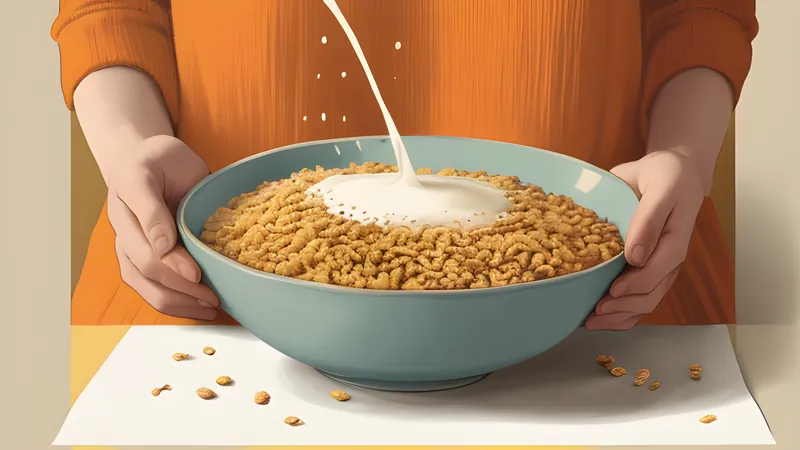
People mark the day in the most direct way imaginable, by eating a bowl of a favourite cereal, often one they have not tasted since childhood. The food’s looseness about timing helps: cereal has long doubled as a late-night snack, so the celebration need not be confined to breakfast. Some pour two or three varieties together into a single bowl, an indulgence usually reserved for holidays away from home, while others rediscover the small reward of the sweetened milk left at the bottom.
Brands lean into the date with discounts, anniversary packaging and social campaigns built around their veteran mascots, who are happy to be wheeled out for the occasion. The mascots themselves are a study in longevity: Tony the Tiger has fronted Frosted Flakes since 1952, Snap, Crackle and Pop have sold Rice Krispies since the 1930s, and the Trix rabbit has been denied his cereal in advertisements since 1959. Few other product categories lean so heavily on characters that long outlive the people who first met them. For a food so tied up with personal memory, much of the celebration is simply people sharing which box defined their mornings, in the same affectionate spirit that surrounds a wedge of a red apple at the start of the day or any other small, reliable comfort.
Variations across regions
What goes in the bowl differs sharply by place. Switzerland gave the world muesli, a raw mix of oats, fruit and nuts devised around 1900 by the physician Maximilian Bircher-Benner for patients at his Zurich clinic, a health-spa origin that rhymes neatly with Battle Creek’s. Northern and central Europe lean toward plainer flakes and muesli of this kind, while North American shelves tip toward the sweeter, brighter, child-aimed end of the spectrum.
Hot cereals run on a parallel track entirely. Porridge made from oats remains a fixture of British and Scottish breakfasts, and cooked grain dishes hold their own across many cuisines that never fully embraced the cold, ready-to-eat flake. The pairing of grain and milk at the start of the day, in one form or another, has nonetheless become a near-universal fixture of kitchen cupboards, which is part of what gives the cereal box its oddly global familiarity. A bowl of muesli and a bowl of bright frosted loops are, beneath the marketing, the same ancient idea about grain and morning.
Britain offers its own twist on the cold-flake habit. Weetabix, the compressed wheat biscuit launched in the 1930s, is eaten in a way no American would recognise, softened in warm milk until it half-collapses, and remains one of the country’s best-selling breakfast foods. India and much of South Asia lean instead on savoury morning grains such as poha, flattened rice, which predate any Western cereal by centuries and answer the same need for something quick, filling and grain-based at dawn. Even the sweetened-flake model travelled unevenly: continental European shelves still favour plainer mueslis and granolas, while the cartoon-fronted, sugar-forward box that dominates North America is treated more warily elsewhere as a children’s indulgence rather than a default adult breakfast. The shared thread, grain softened in milk to start the day, is genuinely old; the marketing wrapped around it is the recent, and distinctly American, invention.
Fun facts
- The first flaked cereal was the result of a kitchen mistake: a batch of wheat dough left out long enough to go stale, then rolled and toasted in 1894.
- John Harvey Kellogg promoted bland cereal partly because he believed plain food curbed the appetites and passions, an austere motive entirely at odds with the sugary brands that followed.
- The Kellogg brothers fell out over sugar: Will added it to make flakes sell, while John Harvey, the health reformer, disapproved.
- By 1909, just three years after founding his company, Will Kellogg was turning out 120,000 cases of corn flakes a day.
- Swiss muesli was invented around 1900 by a doctor for his clinic’s patients, giving the cold-cereal world a second, independent health-spa origin to match Battle Creek’s.
A closing reflection
There is a quiet irony at the centre of National Cereal Day. The food was conceived to be dull on purpose, a deliberate antidote to pleasure, and it triumphed only once someone added sugar and a toy and aimed it squarely at children. The bowl on the table carries both impulses at once, the reformer’s grain and the marketer’s colour, which may be why it feels so ordinary and so loaded at the same time. A breakfast can hold a surprising amount of history before the milk goes warm.
Related Content