National Cake Day
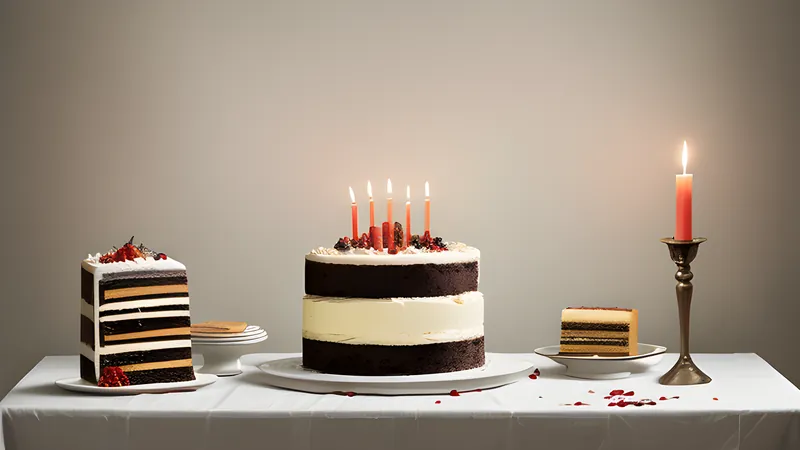
Long before anyone thought to pipe a rose of buttercream or wish over a candle, the cooks of ancient Egypt were sweetening their dense, round loaves with honey and studding them with nuts and dried fruit. Those honeyed breads, baked thousands of years ago without refined sugar or any reliable way to make a batter rise, are the distant ancestors of everything we now call cake. National Cake Day, observed on 26 November, is a cheerful salute to that long lineage and to one of the few foods that turns up at almost every milestone a human life accumulates.
Cake appears at births and birthdays, weddings and farewells, and at the quietest of afternoon teas. The day sets aside a moment to enjoy it for no reason at all, no anniversary to justify it, no candles required. Whether the preference runs to a towering layered confection, a homely slice of sponge or a dense slab of chocolate, 26 November is an open invitation to bake, buy or share a little sweetness with the people nearby.
Where the day comes from
The precise origin of National Cake Day is not well documented, and no single founder or founding year can be reliably named. Like many modern food observances, it appears to have grown up through online food calendars and the enthusiasm of bakers rather than from any official decree. What can be said with confidence is that the date has settled comfortably into late November, in the United States the days just after Thanksgiving, when ovens are already warm and the appetite for baking is rising towards Christmas. The day asks nothing more than that you mark the moment with cake, which is a low bar and rather the point.
The long history of cake
Cake’s history stretches back several thousand years, and for most of it the word meant something far heavier than the airy sponge of today. The word itself comes from the Old Norse kaka, which entered Middle English as kake by the early thirteenth century and originally described a small, flat baked good. The Egyptians, as noted, sweetened bread with honey. The Romans enriched their dough with butter, eggs and honey to produce something cake-like, and through the medieval centuries European cakes remained dense, fruit-laden affairs, closer to a modern fruitcake than a Victoria sponge.
The transformation into the light, tender cakes we recognise came late and in stages. Round, iced cakes began appearing in Europe in the middle of the seventeenth century, the first icings a boiled mixture of sugar and egg whites that set hard and glossy. The real revolution waited for the nineteenth century, when refined sugar became cheap, the technique of beating air into eggs spread, and chemical raising agents such as baking powder arrived. Together these turned cake from a luxury of the wealthy into the soft, varied, everyday treat baked in kitchens the world over.
The chemistry that changed everything
It is easy to take a light sponge for granted, but its existence rests on a genuine technological leap. For most of cake’s history, the only way to lift a batter was to beat air into it by hand, a laborious process, or to rely on yeast, which gave bread-like results. The breakthroughs came in quick succession in the nineteenth century. Refined sugar, once a luxury locked away by the wealthy, became cheap enough for ordinary kitchens. Then came chemical raising agents: bicarbonate of soda, and later baking powder, patented in the 1840s and 1850s, which released carbon dioxide into the batter without any kneading or proving at all. Suddenly a tender, even-crumbed cake was a matter of minutes’ mixing rather than an afternoon’s beating. The cake you slice today, soft and reliably risen, is in a real sense a Victorian invention, the product of laboratory chemistry as much as culinary tradition.
Why cake matters
Cake matters because it marks the moments that matter. To carry out a cake is to signal celebration, gratitude or welcome, and the simple act of sharing one is an old and tender form of hospitality. National Cake Day honours not just the food but the warmth it carries: the candles wished over, the slices cut for friends, the recipes copied out in a relative’s handwriting and passed quietly down a family. There is a reason that a cake, more than almost any other dish, becomes the centrepiece of the table rather than a course within the meal.
How the day is celebrated
The most popular way to mark the day is the most obvious one: baking a cake at home, or treating yourself to a slice from a favourite bakery. Some people use the occasion to attempt an ambitious recipe; others to revive a treasured family classic. Sharing is central to the spirit, so cakes are carried into offices, schools and homes to be cut and passed round. Bakeries and cafés often join in with special offerings, and social feeds fill with photographs of frostings, fillings and well-turned-out sponges.
Because the day hands the spotlight to cake in general, it naturally gathers in the whole family of more specific cake observances that crowd the calendar. The same impulse runs through National Pound Cake Day, which honours one of the oldest and most enduring recipes, named for the pound each of butter, sugar, eggs and flour it once called for, and through US National Chocolate Cake Day, a reminder of how late chocolate actually arrived in the cake’s long story, only after cocoa became affordable in the nineteenth century.
Cakes around the world
Almost every culture keeps its own beloved cake. Britain has the Victoria sponge and its rich Christmas fruitcakes; Germany the cherry-and-cream Black Forest gâteau; France an array of delicate gâteaux and the buttery Breton far. Japan prizes the airy, honey-scented castella, brought by Portuguese traders centuries ago; the Caribbean treasures its dark, rum-soaked black cake; Italy raises the towering Christmas panettone. Eastern Europe offers the honey-layered medovik and the poppy-seed roll. National Cake Day, loosely American in flavour, tips a hat to this vast and delicious global family without claiming any of it.
The cake at the centre of a life
There is a reason cake, and not pie or pudding, became the food we plant candles in and cut at weddings. Its roundness and its capacity to be decorated made it a natural canvas for symbolism long before the modern birthday cake took shape. The custom of a candle-topped cake, wished over and then blown out, is often traced to older European celebrations, though the version familiar today is comparatively recent. The towering tiered wedding cake, meanwhile, grew out of older British traditions of stacking sweet buns and rich fruitcakes, eventually formalised into the white-iced architecture we now expect. Cutting the first slice together, distributing it among guests, even saving the top tier for a later anniversary: these are rituals that treat cake not as food but as a vessel for memory and good wishes. Strip the ceremony away and the cake is just sugar and flour; the ceremony is what makes it matter, and it is that ceremonial role, more than any flavour, that National Cake Day quietly honours.
Fun facts
- The English word “cake” comes not from French or Latin but from Old Norse kaka, carried to Britain by Scandinavian settlers.
- For most of history a “cake” was a dense, honeyed bread; the light sponge we picture today is barely two centuries old.
- Iced cakes only emerged in mid-seventeenth-century Europe, and the earliest icing set rock-hard from boiled sugar and egg white rather than soft buttercream.
- Japan’s castella sponge is a direct legacy of sixteenth-century Portuguese traders, who introduced the recipe through the port of Nagasaki.
- Cake’s airy modern texture owes less to bakers’ skill than to nineteenth-century chemistry, specifically the arrival of cheap refined sugar and baking powder.
The democratisation of a luxury
For most of its history, cake was a marker of wealth. The ingredients that define it, sugar, plentiful eggs, butter, dried fruit and spices shipped from distant trade routes, were expensive, and a rich, elaborate cake announced that a household could afford to be extravagant. The medieval and early-modern fruitcake, dense with imported currants and candied peel, was as much a display of status as a dessert. What the nineteenth and twentieth centuries did, through cheap sugar, mass-produced flour, reliable ovens and eventually the boxed cake mix, was strip cake of its exclusivity. By the mid-twentieth century a child’s birthday sponge cost almost nothing to make, and the cake that had once signalled privilege became the most democratic of treats, present in the humblest kitchen as readily as the grandest. National Cake Day, in its cheerful, undemanding way, is a celebration of exactly that levelling: a food that climbed down from the tables of the rich to become everybody’s, and which now belongs to whoever cares to bake one.
A closing reflection
What is striking, looking back across the honeyed loaves and hard-iced sponges, is how little the purpose of cake has changed even as the recipe was reinvented from the ground up. It has always been the food brought out when something is worth marking, the edible signal that says this matters, and you matter, so here is the best thing I could make. A day set aside for cake is really a day set aside for that small, generous act of cutting a slice and handing it to someone else.
Related Content