National Bundt Day
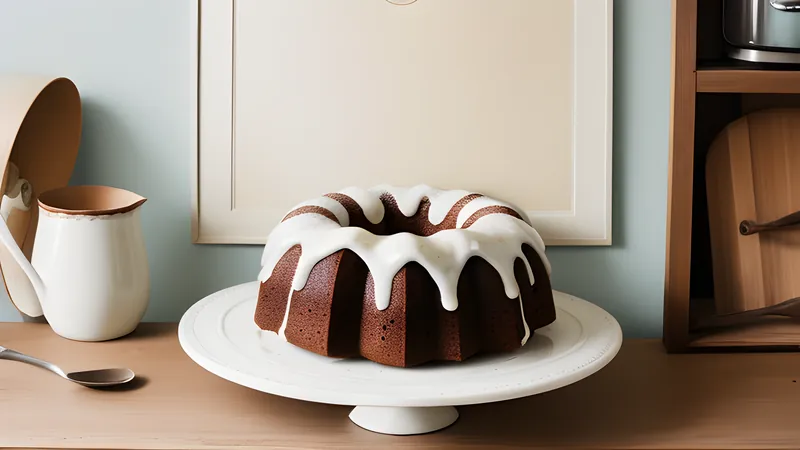
In 1950, a group of women from the Minneapolis chapter of Hadassah, the Jewish women’s organisation, approached a metal-spinning manufacturer named H. David Dalquist with an unusual request. They wanted a modern, lightweight version of the heavy ceramic ring moulds their families had brought from Central Europe, the kind used to bake the tall, fluted Gugelhupf they remembered from home. Dalquist, who with his wife Dorothy had bought a small aluminium-products firm called Northland and was trading under the name Nordic Ware, obliged. He cast a fluted ring pan in aluminium, and, casting about for a name, settled on “Bundt”, a coinage that would go on to define a whole category of cake. National Bundt Day, observed each year on 15 November, honours that pan and the handsome ring-shaped cakes it turns out.
There is something irresistibly cheerful about a bundt: tipped from its mould in one confident motion, dusted with sugar or veiled in glaze, it manages to look both homely and grand at once. The day is a gentle invitation to grease a pan, share a slice and appreciate the strange, slow-burning history baked into that distinctive shape.
Where the name comes from
The shape is far older than the American pan, but the word is Dalquist’s own. He took the German Bund, suggesting a gathering or an association of people, and added a final “t”. The reasons were practical as much as poetic: the altered spelling let him trademark the name, and it distanced his cheerful cake pan from the German American Bund, the pro-Nazi organisation active in 1930s America whose memory was still raw. So a piece of bakeware acquired a name that gestures, quietly, at togetherness, exactly the spirit in which the cakes are usually shared.
The original Hadassah request was rooted in the Gugelhupf, the yeasted, often fruited ring cake beloved across Austria, Germany and Alsace. Dalquist’s aluminium pan was an adaptation of that ancient European form, lighter, sturdier and far easier to turn out cleanly than the old ceramic kugelhopf moulds it replaced.
The cake that saved the pan
For more than a decade, the Bundt pan was a commercial failure. Sales were so poor that Dalquist seriously considered discontinuing it. Its rescue came from an unlikely quarter: a home baker in Houston named Ella Helfrich, who entered the 1966 Pillsbury Bake-Off with a dense chocolate ring cake she called the Tunnel of Fudge, baked, naturally, in a Bundt pan, with a soft, gooey centre that seemed to form by magic. Helfrich took second place and a prize of 5,000 dollars, behind a 25,000-dollar grand winner long since forgotten.
The cake, however, was not forgotten. Pillsbury was deluged with letters, more than 200,000 of them, most asking not for the recipe but for where on earth one could buy the curious pan it required. Nordic Ware could not keep up. Dalquist put the factory onto round-the-clock production and, at the peak, it was turning out some 30,000 Bundt pans a day. The Tunnel of Fudge remains the most requested recipe in the history of the Pillsbury Bake-Off, and the pan it popularised became one of the best-selling pieces of bakeware ever made.
A name worth a trademark
The trademark mattered more than it might seem. Because Nordic Ware registered “Bundt” as a brand, the word technically belongs to the company, and a cake baked in someone else’s ring pan is, strictly speaking, not a bundt at all but a ring cake. In practice the term escaped into common use so thoroughly that almost nobody observes the distinction, a fate that has befallen other trademarks turned everyday nouns. It is a small irony that the most generic-seeming category of cake in the American repertoire is, on paper, a proprietary name, and that the company which owns it built an entire identity, and a national day, around a pan it once nearly abandoned. Dalquist himself, a trained engineer who had spun aluminium for far less romantic products, seems to have regarded the whole phenomenon with a degree of bemusement.
Why the shape works
The bundt occupies a happy spot between effort and reward. Its sculpted form does the decorative work, so even a plain batter emerges looking impressive with no need for layering or fiddly icing. The central tube is the clever part: it conducts heat through the middle of the cake, letting dense, rich batters, pound cakes, coffee cakes, the fudgy sort Helfrich won with, bake evenly all the way through rather than scorching at the edges while the centre stays raw. National Bundt Day is, in part, a small tribute to that ingenuity, and a reminder that good design can make everyday cooking feel a little more generous.
How the day is kept
People mark the day by baking, of course. Home cooks reach for favourites, from classic vanilla pound cake to chocolate, lemon drizzle, spiced apple or marbled varieties, and share the results online, comparing pans and patterns. Bakeries and baking communities sometimes run challenges or feature seasonal flavours. Because 15 November falls in the long approach to the festive season, autumnal notes of cinnamon, pumpkin, cranberry and orange tend to take the lead, making the day a natural prelude to the baking-heavy weeks ahead.
If the appeal of a single, well-loved sweet calls to you, the calendar offers plenty of company. The bundt’s pleasures sit happily alongside US National Pots de Crème Day, which celebrates another rich, comforting dessert with deep European roots, and US National Spumoni Day, a reminder that some of the best-loved treats in America, the bundt very much among them, were carried over and reshaped by immigrant families.
Cousins across Europe
The bundt’s ancestors remain beloved in their homelands. The Gugelhupf endures across Austria, Germany and Alsace, often taken with coffee, while related ring cakes appear under many names throughout Central and Eastern Europe. In Poland, the yeasted babka graces festive tables. The American bundt, then, is one branch of a much older family tree, and the day inadvertently celebrates a shape that has travelled, adapted and survived across centuries and borders, only to be reborn in cast aluminium in a Minnesota workshop.
The pan as the decoration
What sets the bundt apart from almost every other cake is that its beauty is engineered into the mould rather than applied afterward. A layer cake demands frosting, filling and a steady piping hand; a bundt arrives finished, its fluted ridges and central tube doing all the decorative work the moment it is turned out. This is why the form has lent itself to ever more elaborate pans. Nordic Ware and its imitators now sell moulds shaped as roses, cathedrals, spirals, seashells, fir trees and snowflakes, each capable of producing a strikingly ornate cake from nothing more than a good batter and a well-greased tin. The whole appeal rests on a single anxious moment familiar to anyone who bakes: the instant of inversion, when the pan is lifted and the cake either releases cleanly in one handsome piece or clings stubbornly and tears. A properly greased and floured pan, or a thorough coating of baking spray, is the difference between triumph and a patched-up disaster, and that small suspense is part of the ritual every 15 November.
Fun facts
- The Bundt pan was such a flop that Nordic Ware nearly dropped it; it was rescued more than a decade later by a single contest entry.
- Ella Helfrich’s Tunnel of Fudge only came second at the 1966 Pillsbury Bake-Off, yet it became the most requested recipe in the contest’s history.
- The deluge of letters after the contest, over 200,000 of them, pushed the factory to make roughly 30,000 pans a day to meet demand.
- H. David Dalquist added the final “t” to “Bund” partly to secure a trademark and partly to avoid any association with a 1930s pro-Nazi group of similar name.
- The pan was born of a fundraising idea: Hadassah women wanted lightweight moulds to bake European ring cakes for charity sales.
A Minnesota empire built on a ring
The story behind the pan is also the story of a family business that outlasted nearly all its rivals. H. David Dalquist and his wife Dorothy ran Nordic Ware from St. Louis Park, Minnesota, and kept it in family hands rather than selling out during the boom years. When the Tunnel of Fudge sent demand vertical in 1966, they could have licensed the design away; instead they pushed their own factory to extraordinary output and reaped the rewards directly. Decades on, Nordic Ware remains family-owned and still manufactures in Minnesota, an increasingly rare thing for American housewares, and the Bundt pan it nearly scrapped is reckoned among the best-selling pieces of bakeware ever produced, with tens of millions sold worldwide. The Smithsonian’s National Museum of American History holds an original pan in its collection, a quiet acknowledgement that a piece of spun aluminium from a Minneapolis suburb changed the way a country bakes. Not bad for an object that began as a favour to a fundraising committee and spent its first decade gathering dust on shop shelves.
A closing reflection
It is worth remembering that the Bundt pan spent over a decade as a mistake. What turned it around was not a marketing campaign but a home baker improvising a gooey centre and an entire country writing in to ask how she had done it. The bundt’s whole story is one of generosity rewarded, a shape made to be shared, rescued by sharing. As the November light shortens and kitchens warm, that seems a fitting reason to grease a pan and wait for the small suspense of a clean release.
Related Content