National Biscuit Day
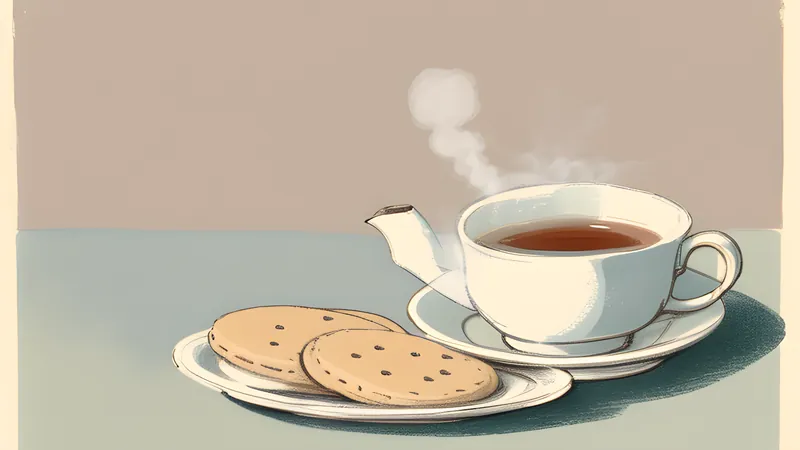
In 1998, a physicist named Len Fisher published a serious piece of research, funded by the biscuit maker McVitie’s, on the optimal way to dunk a biscuit in tea. He worked out the mathematics of capillary action drawing hot liquid up through the biscuit’s tiny channels, concluded that a dunked biscuit releases roughly ten times more flavour than a dry one, and recommended holding it at a shallow angle so the top stays firm while the underside softens. The work earned him an Ig Nobel Prize the following year, and it captures something essential about the food National Biscuit Day celebrates each 29 May: in Britain, the biscuit is taken seriously precisely because it is so small.
From the digestive to the custard cream, the bourbon to the humble rich tea, the biscuit occupies a corner of everyday British life that runs deeper than its size suggests. The day is a light-hearted excuse to reach for the tin, but the thing it honours is genuinely woven into the history of tea drinking, industrial baking and the comforts of routine.
Where the day comes from
The origin of National Biscuit Day itself is undocumented, as is often the case with single-food calendar days: no founding body or reliable first year is on record, and it grew through popular and commercial enthusiasm rather than decree. The word, though, has a precise and ancient pedigree. “Biscuit” comes from the Latin bis coctus, meaning “twice cooked”, a reference to the old practice of baking goods a second time to dry them out so they would keep. That etymology is not a curiosity but the whole point of what a biscuit originally was.
A history of keeping things dry
Twice-baked breads and hard biscuits were practical foods from Roman times through the age of sail, prized by sailors and soldiers because they survived long voyages and campaigns almost indefinitely. Ship’s biscuit, or hardtack, was a staple of naval life for generations: baked rock-hard and almost devoid of moisture, it could last years if kept dry, though it was notorious for harbouring weevils, which sailors learned to tap out before eating. It was nourishment first and pleasure a distant afterthought, the very opposite of the indulgent snack the word now conjures, and yet it is the direct ancestor of the chocolate digestive in the tin today. The line from survival ration to teatime treat runs straight through the same word and the same basic method. The familiar sweet tea biscuit is a far more recent development, flourishing alongside the rise of tea drinking and the industrialisation of baking in the nineteenth century. British firms such as Huntley and Palmers of Reading and McVitie’s of Edinburgh turned biscuit-making into a major industry, producing on a vast scale and exporting across the British Empire, from India to Australia.
The most famous of all has a precise birth. The McVitie’s digestive was created in 1892 by Alexander Grant, then a young employee at the firm, working to a recipe he kept secret. Its name came from the belief that its high content of bicarbonate of soda aided digestion, a claim that has long since been quietly dropped while the name endured. Digestives had appeared even earlier, advertised by Huntley and Palmers in 1876 and sold by chemists alongside indigestion powders, but it was Grant’s 1892 version that became the best-selling biscuit in Britain and has stayed there. Grant himself went on to lead the company and was eventually knighted, an unusually grand trajectory for a man whose lasting monument is a round, slightly malted snack.
The biscuit firms of the period were industrial giants, not the cosy bakeries the modern packet might suggest. Huntley and Palmers at its peak was one of the largest biscuit manufacturers in the world, its decorated tins shipped to every corner of the British Empire and beyond, turning up on polar expeditions and battlefields alike precisely because they kept so well. Those ornate tins, designed to be reused and treasured, are now collectors’ items, a reminder that the biscuit was once a serious item of trade as well as a teatime comfort. The chocolate digestive, the digestive’s even more popular descendant, did not arrive until 1925, and regularly tops surveys as Britain’s favourite biscuit, defended with the quiet consistency of a national institution.
What the word means depends on where you stand
A biscuit is not the same thing everywhere, and the confusion is worth clearing up. In Britain and much of the Commonwealth, a biscuit is a crisp baked treat, sweet or savoury, what an American would call a cookie or a cracker. In the United States, a biscuit is something else entirely: a soft, fluffy bread roll served warm at breakfast, often with gravy. National Biscuit Day, in its British sense, is firmly about the crisp variety. Other cultures keep their own versions of the small baked treat, from the Italian biscotti, still faithful to the twice-baked tradition and made to be dunked in sweet wine, to the spiced speculaas of the Low Countries, the buttery shortbread of Scotland, and the German Lebkuchen of the Christmas markets. Each grew from the same basic problem the word records, how to bake something that keeps, and each solved it with whatever flavours were local, which is why a tin of biscuits can read almost like a map of regional taste.
How it is celebrated
The day is kept with cheerful informality. Workplaces and homes break out a fresh packet, the kettle goes on, and the eternal questions are revisited: is the chocolate digestive superior to the hobnob, and does dunking improve a biscuit or merely risk losing it to the bottom of the mug? Bakeries and biscuit makers join in with offers and new flavours. For many it is simply permission to bake a batch at home and fill the kitchen with the scent of butter and sugar, a small, comforting indulgence in the same spirit as the unapologetic pleasures of National Ice Cream Day.
The biscuit’s place in British working life is worth dwelling on, because it is genuinely distinctive. The mid-morning or mid-afternoon tea break, packet of biscuits passed around the office or building site, is a small social institution, and the unwritten etiquette around it, who buys, who gets the last one, whether it is acceptable to take two, is the stuff of endless gentle workplace negotiation. A poorly stocked biscuit tin can dent morale out of all proportion to its cost, and the question of which biscuits a workplace provides has been known to feature, only half in jest, in discussions of staff contentment. Few foods carry that much social weight for so little money.
Traditions and the national sport of dunking
The biscuit comes laden with affectionate ritual, and dunking, lowering a biscuit into hot tea just long enough to soften it without losing it, is practically a national sport, which is exactly why Fisher’s research struck such a chord. Different biscuits have wildly different tolerances; the rich tea collapses in seconds into a sad, sodden mush, while a hobnob, dense with oats, holds its nerve far longer, and the chocolate digestive presents the additional hazard of a melting coating that can slide off entirely if the dunk runs long. The biscuit tin, kept in its appointed place and guarded with mock seriousness, is a fixture of British households, often hoarding a confusing mix of half-empty packets and the unloved survivors of a selection box. Office arguments over the “best” biscuit can become genuinely heated, and the perceived hierarchy, where a custard cream or chocolate hobnob signals generosity and a plain rich tea signals indifference, is a recurring source of national humour. That gentle, ritualised disagreement places it among the quietly British pleasures, the sort of everyday comfort that pairs as naturally with routine as a good apple does on Eat a Red Apple Day.
Fun facts
- Physicist Len Fisher won a 1999 Ig Nobel Prize for calculating the optimal way to dunk a biscuit, research funded by McVitie’s, which found a dunked biscuit releases about ten times more flavour.
- The McVitie’s digestive was created in 1892 by a young employee, Alexander Grant, and remains the best-selling biscuit in the United Kingdom.
- The digestive owes its name to the once-believed digestive benefit of its bicarbonate of soda; the health claim has been abandoned, but the name has stuck for over a century.
- “Biscuit” means a soft breakfast bread roll in the United States and a crisp sweet snack in Britain, two foods that share a word but almost nothing else.
A closing reflection
It says something about a culture that it will fund a physicist to study the dunking of a biscuit and then give him a prize for it, half in jest and half in genuine appreciation. The biscuit endures not despite being trivial but because of it: a reliable, low-stakes pleasure repeated across countless ordinary afternoons. The deepest affections, it turns out, often attach to the smallest things, and few are smaller, or more defended, than the right biscuit with a good cup of tea.
Related Content