National Bacon Day
In 1997, two friends named Danya Goodman and Meff Leonard decided the year needed one more reason to gather and eat well before the calendar turned over. They wanted a winter holiday with no religious freight and no obligation beyond pleasure, and they settled on the one food they could agree was worth its own day. As a wink, they pinned their new observance partly on Homer Simpson, whose devotion to bacon had by then become a small cultural shorthand for uncomplicated greed. National Bacon Day was the result, and it has been kept on 30 December ever since, tucked into the lull between Christmas and New Year where one more indulgence costs nothing in conscience.
The day is exactly what it sounds like: an unembarrassed celebration of cured pork in all its crisp, salty glory. It belongs to the breakfast butty, the bacon sandwich argued over for the right sauce, and the more elaborate creations that have grown up around a food people seem unable to leave alone.
Where the day comes from
Goodman and Leonard’s version is the one with a traceable beginning, which is rarer than it ought to be among single-food observances. Their stated aim was a secular, end-of-year occasion built around generosity and good humour, and bacon, cheap, beloved and faintly absurd as a centrepiece, fit the brief perfectly. The Simpsons reference was not incidental; it placed the day squarely in the late-1990s moment when food fandom and pop culture were beginning to merge.
It is easy to confuse 30 December with International Bacon Day, a separate observance held on the Saturday before the American Labor Day in early September. The two share an enthusiasm but not a history. The December date is the one with named founders and a stated purpose, which makes it the more honest peg for a celebration.
A much older history
Bacon itself reaches back far beyond any modern holiday. Curing pork with salt to keep it through the months without refrigeration was a practical craft long before it was a pleasure, and the happy accident was that preservation produced something delicious. The word descends from old Germanic and French roots referring to the back or the meat of the pig, and the regional split in style is genuinely old. The British favour back bacon, cut from the loin and leaner; streaky bacon, taken from the fatty belly, is the cut that crisps into the shattering rashers associated with the American diner plate.
Italy turned the same belly into pancetta and the pig’s cheek into guanciale, both salt-cured rather than smoked, and both indispensable to the classic Roman pasta dishes that lean on rendered pork fat for their backbone. A proper carbonara or amatriciana depends on guanciale’s particular richness, and Italians will tell you, often at length, that bacon is no substitute. Germany and central Europe built their own smoked and cured traditions, the Speck of the Alpine regions chief among them, dry-cured and lightly smoked over months. Across East and Southeast Asia various cured and smoked pork preparations fill a similar role: China’s lap yuk is air-dried and seasoned with soy and spirit, while Korea’s samgyeopsal is unsmoked fresh belly grilled at the table. The specifics differ enormously, but the underlying move, salt, time and often smoke, is shared across continents.
The chemistry of craving
There is a reason bacon inspires holidays and Homer Simpson alike, and it is partly chemical. The smell that drifts through a house and rouses the half-asleep comes from the Maillard reaction, the same browning chemistry that gives seared steak and roasted coffee their complexity. When the proteins and sugars in the meat hit a hot pan, they break down and recombine into hundreds of new aromatic compounds, many of them found nowhere in the raw rasher. Layered on top of that is bacon’s near-perfect balance of three things the human palate is primed to seek: salt from the cure, fat that carries flavour and coats the mouth, and the savoury depth of umami concentrated by curing. The combination is close to archetypal, which is why a few rashers can rescue an otherwise plain dish and why the food has proved so stubbornly hard to resist.
That craveability has a flip side worth acknowledging on a day of indulgence. Cured and processed meats are high in salt and, eaten in quantity, are not health food, which is part of why a holiday framing, occasional, deliberate, shared, suits bacon better than treating it as an everyday staple.
Why a food gets its own day
Bacon occupies a place in the kitchen out of all proportion to its simplicity. It is comfort food and breakfast staple, but it is also a flavour tool: a few rendered rashers lend savoury depth to soups, stews, salads and sauces that would otherwise taste thin. Part of what Goodman and Leonard tapped into is that bacon is rarely eaten alone in spirit. It belongs to the shared fry-up, the weekend breakfast, the sandwich handed across a kitchen, and a day in its honour is really a day for that small conviviality.
There is a quieter argument the day can carry too. The same enthusiasm that produces novelty bacon products has, in recent years, fed a serious interest in well-cured, ethically raised pork from named producers, the kind of provenance that turns a cheap commodity back into a craft. Dry-curing rather than the faster wet-injection method, longer ageing, rare-breed pigs, hardwood smoke over chips and liquid smoke flavouring: these are the markers of bacon made as something to savour rather than to mass-produce, and a day in bacon’s honour is a fair moment to taste the difference.
The British and American divide
Nowhere is bacon argued over more than in the gap between British and American kitchens, and the difference is real rather than imagined. British back bacon, cut from the loin, is meatier and leaner, the centre of the cooked breakfast and the contested bacon sandwich, or butty, whose proper sauce, brown or red, is a genuine source of household friction. American bacon is almost always streaky, cut from the fatty belly, sliced thin and fried until it shatters, the form that crumbles over salads and gets candied with maple syrup. Neither is the “correct” bacon; they are simply different cuts of the same animal, treated to suit different breakfasts. The disagreement is good-natured, mostly, but it runs deep enough that visitors on either side of the Atlantic are routinely surprised by what arrives on the plate when they order what they thought was a familiar food.
How it is celebrated
Celebration is mercifully uncomplicated: people cook bacon and eat it. Some keep faith with the classic full breakfast or the contested perfect sandwich. Others treat the day as licence to experiment, wrapping bacon around dates, sausages or a roast, crumbling it over salads, or pushing into sweet-savoury territory with candied bacon and bacon-laced desserts. Restaurants and home cooks alike use 30 December to show off a favourite preparation, and the internet duly fills with photographs of golden, crisp-edged rashers.
Those drawn to its September sibling can note the difference in tone there too, much as the contrast between a quiet pint and a brewery crawl distinguishes the calm and the boisterous ends of National Beer Day. And like the deliberate excess of National Banana Split Day, this is a celebration that makes no apology for putting pleasure first.
Traditions and symbols
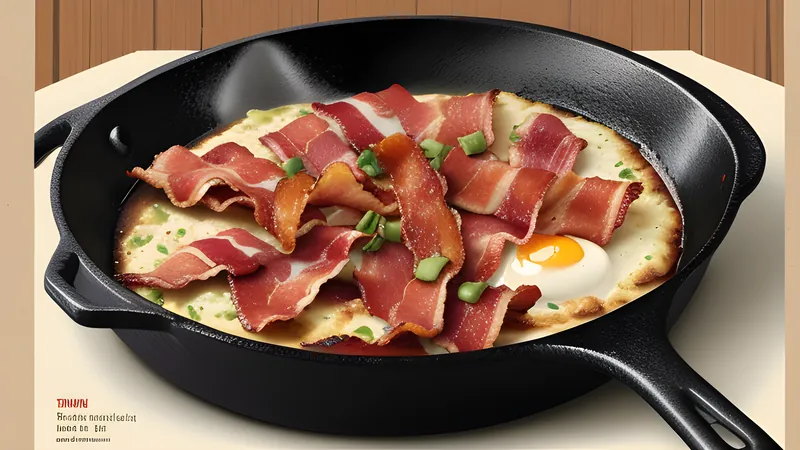
The defining image is the rasher cooked to whatever degree of crispness a household will defend, a division that runs as deep as any culinary disagreement. The cast-iron pan, the grill and the oven tray are its instruments, and the genuine debate over which produces the best result is part of the ritual. Bacon’s emblematic status in popular food culture, the novelty products, the maximalist recipes, is itself a kind of tradition now, a running joke the day cheerfully leans into.
Fun facts
- National Bacon Day was founded in 1997 by Danya Goodman and Meff Leonard, who deliberately built it as a secular, gift-giving winter holiday with no religious overtones.
- The choice of bacon was partly an homage to Homer Simpson, whose appetite had turned the food into a pop-culture punchline by the late 1990s.
- The smell that drags people out of bed comes from the Maillard reaction, the same chemistry of browning that gives seared meat and roasted coffee their savoury complexity.
- There are two distinct American bacon days: this one on 30 December, and International Bacon Day on the Saturday before Labor Day in September.
A closing reflection
There is something telling in the fact that two friends, asked to invent a holiday from scratch, reached not for grandeur but for a cheap, universally loved breakfast meat. The instinct says a good deal about what people actually want to mark together: not solemnity but the small, shared, reliable pleasures that need no justifying. Bacon was never going to change anyone’s life, and that is rather the point of giving it a day.
Related Content