National Apricot Day
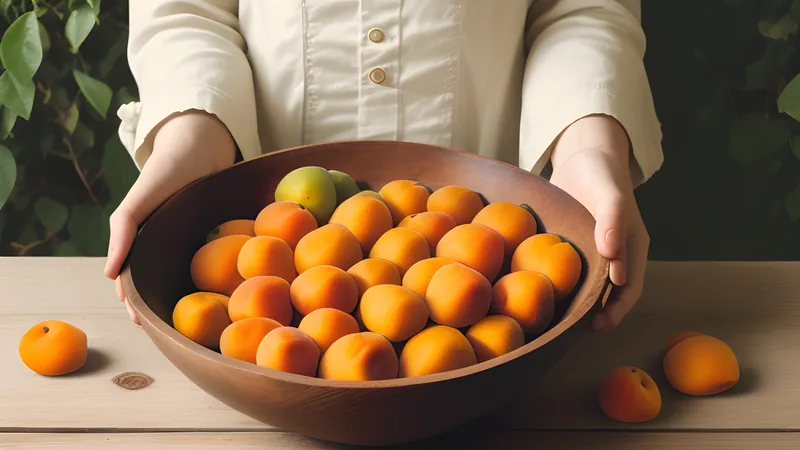
The Roman naturalist Pliny the Elder, writing in the first century, described a kind of early-ripening fruit he called armeniaca, believing it to have come from Armenia. He was wrong, and his mistake has clung to the apricot ever since, embedded in its very scientific name, Prunus armeniaca. The fruit had in fact been domesticated far to the east, in Central Asia and China, long before any Roman tasted one. Small, velvety and the colour of a low winter sun, the apricot is among the most quietly luxurious of fruits, its honeyed flesh held in check by a gentle tartness. National Apricot Day, observed each 9 January, celebrates this ancient stone fruit at the very moment when, in the northern hemisphere, fresh apricots are nowhere to be found.
Where the day comes from
Like the other single-fruit food days, National Apricot Day has no recorded founder and belongs to the loose, unofficial calendar of culinary observances that food enthusiasts and writers have built up over the years. Its date, though, is quietly clever. Falling in the depths of January, it lands precisely when fresh apricots are out of season across Europe and North America, throwing the spotlight instead onto the dried, jammed and preserved forms of the fruit that come into their own in the cold months. The day is less a celebration of the apricot at its summer peak than a reminder of its remarkable second life in the winter pantry.
Origins
The apricot’s homeland lies in Central Asia, with most botanists pointing to the mountainous regions in and around China as the place where it was first brought under cultivation. Archaeological finds of apricot stones at Neolithic sites in the Yellow River valley attest to how deep this relationship runs, and genomic studies suggest the Chinese lineage diverged on the order of three thousand years ago. From this eastern cradle the fruit travelled westward along the trade routes of the Silk Road, very probably carried towards Persia by merchants, and from there spread further into the Mediterranean world.
It was on this journey that the apricot acquired its misleading reputation. So widely and so anciently was it grown in Armenia that the Greco-Roman world assumed the fruit had originated there, an error Pliny helped to cement and which survives in the name botanists still use. The English word “apricot” records a different and no less tangled journey, descending from the Latin for “early-ripening” through medieval Arabic, al-barqūq, into Spanish and French before settling at last into its modern English form, a small linguistic fossil of the routes the fruit itself once travelled.
History
For most of its long history the apricot was valued as both food and medicine. It thrives in warm, dry climates that nonetheless enjoy cool winters, and over the centuries it became central to the cuisines of Persia, the wider Middle East, the Mediterranean and Central Asia. Drying was the great preservation method, and it is the key to the apricot’s enduring association with winter. Dried, the fruit becomes intensely sweet, keeps for months and survives long-distance transport, which made it a staple of the pantry and a valuable item of trade across great distances long before refrigeration existed. Orchards eventually spread to suitable climates around the world, and Turkey, California and parts of the Mediterranean remain among the major producers today, Turkey especially dominant in the dried-fruit trade.
Nowhere is the apricot more woven into local identity than in the high valleys of Central Asia and the Karakoram, in regions such as Hunza and Ladakh, where the fruit has been cultivated since long before written record and where whole communities once timed their year around its harvest. In these regions the apricot was not a luxury but a mainstay, dried in vast quantities on flat rooftops, its kernels cracked for oil and its surplus traded down the mountain routes. The fruit’s reputation for longevity attached itself to the people who ate it, and travellers’ tales of unusually long-lived mountain populations sustained by apricots have circulated for generations. Such stories outrun the evidence, but they capture something true about how central the fruit became to survival in places where little else would grow. The apricot, in those valleys, was less a treat than a way of getting through the year.
Why it matters
The apricot is a small lesson in the rewards of preservation. Fresh, its season is fleeting and its perfect ripeness briefer still, a matter of days. Yet dried, it becomes a concentrated, jewel-like sweet that lasts through the winter, and turned to jam it captures high summer in a sealed jar. A day in its honour, falling in cold January, gently celebrates exactly this resilience, the capacity of a delicate fruit to be carried, intact in flavour if not in form, across both seasons and continents. Apricots are also a worthwhile source of vitamins and fibre, being notably rich in the compounds that the body converts to vitamin A, though the day is more about pleasure than nutrition, and rightly so.
The apricot’s history also makes it a quiet emblem of cultural exchange. A fruit that began in the mountains of Central Asia, passed through Persian gardens, gained a false Armenian pedigree from the Romans, picked up an Arabic name on its way west and finally lodged in English orchards has crossed more borders than most travellers. It carries, in its very biography, the story of the trade routes that knitted the ancient world together. To bite into one, fresh or dried, is to taste the end point of a journey thousands of years and thousands of miles long, which is a great deal of history to find in something so small.
How it is celebrated
In January the day is most naturally observed through the preserved fruit. People eat dried apricots straight from the bag, fold them into porridge and baking, or simmer them into tagines and stews where their sweetness plays against spice and meat. Apricot jam, spread thickly on warm toast, is another easy way to mark the occasion. The day is also a moment to look ahead to summer, when fresh apricots return to be baked into tarts and crumbles, poached in syrup, or simply eaten sun-warm from the hand. Bakers in particular treat the day as a prompt, since apricot pairs so beautifully with almond, vanilla and honey, a set of affinities that the kitchen rediscovers every year.
Traditions and symbols
The apricot’s soft, downy skin and glowing orange-gold colour are its most recognisable features, and its flesh has lent its name to a shade. Across the Middle East and Central Asia, dried apricots are a fixture of hospitality, set out with nuts and other dried fruits to welcome guests. The fruit threads through countless preserves and sweets, and its kernel, hidden inside the stone, carries an almond-like flavour that links it to a wider family of flavoured treats. That bittersweet kernel lends its character to certain liqueurs and to the Italian biscuit amaretti and the liqueur amaretto, though the kernels contain compounds that mean they must be handled with care rather than eaten freely.
Around the world
Apricots are woven deeply into the cooking of many regions. Turkey is among the world’s great producers, especially of dried fruit, and apricots feature richly in Turkish, Persian and Levantine kitchens, paired with lamb, rice and warming spices in dishes that balance sweet against savoury. In Europe the fruit shines in jams, fruit brandies and pastries, including the Austrian Marillenknödel, a sweet dumpling built around a whole apricot. Across all these traditions the apricot moves easily between sweet and savoury registers, equally at home in a slow-cooked tagine and in a buttery summer tart. Its versatility places it comfortably among the other foods that have earned their own days, the broad procession of edible observances that includes the oil-focused Extra Virgin Olive Oil Day and the orchard-minded Eat a Red Apple Day.
Fun facts
- The apricot’s scientific name, Prunus armeniaca, immortalises an ancient mistake, since the fruit was domesticated in Central Asia and China rather than Armenia, despite Pliny the Elder’s belief to the contrary.
- The English word “apricot” travelled through Latin, Arabic and Spanish before reaching its present form, a linguistic echo of the trade routes that carried the fruit itself.
- Dried apricots that stay bright orange have usually been treated to preserve their colour, while naturally sun-dried fruit darkens to a deep, almost chocolatey brown.
- The kernel inside the apricot stone tastes faintly of almond and flavours the liqueur amaretto and the biscuit amaretti, but it contains compounds that mean it cannot be eaten with the freedom of the flesh.
- Apricot stones have been found at Neolithic sites in China’s Yellow River valley, evidence that humans and apricots have kept company for thousands of years.
A closing reflection
There is a particular pleasure in celebrating a summer fruit in the dead of winter. National Apricot Day asks us to appreciate not the apricot at its sun-ripened best, which January cannot offer, but the apricot as it endures, dried into concentrated gold or sealed in a jar of jam. That, in the end, is the more remarkable thing. A fruit so delicate it bruises at a touch has nonetheless crossed continents and millennia, surviving the journey by surrendering its water and keeping its sweetness. To eat a dried apricot in the cold is to taste a small triumph of human ingenuity over the seasons, and to be reminded that summer, like the orchards that will bear it again, is only ever a few months away.
Related Content