Midsummer's Eve
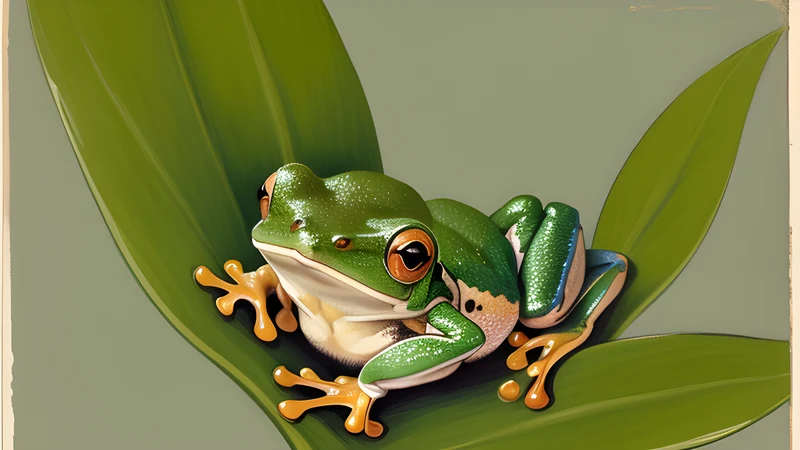
In a Swedish meadow on the Friday closest to the solstice, a tall pole wound with birch leaves and garden flowers is raised upright to a fiddle tune, and hundreds of people join hands to dance around it pretending to be small frogs. This is Midsummer’s Eve, the pale-night festival that marks the turning of the year at its brightest, and in the countries around the Baltic it rivals Christmas as the most important day of the calendar. For a few hours at the top of the year, when the sun in the far north scarcely dips below the horizon, an entire region abandons its cities for lakesides and summer cottages to eat pickled herring, drink schnapps, wear crowns of meadow flowers and stay awake for a sky that never fully darkens.
What Midsummer’s Eve Marks
Midsummer’s Eve is the evening before Midsummer’s Day, the festival built around the June solstice — the moment when the northern hemisphere is tilted most directly towards the sun and daylight reaches its annual maximum. The astronomical solstice falls on 20 or 21 June, but the celebration attached itself long ago to the eve and feast of Saint John the Baptist on 23 and 24 June, and it is that Christianised anchor, roughly three days after the true solstice, that most of Europe still keeps. In Sweden and Finland the holiday was moved in the twentieth century to the Friday and Saturday between 19 and 25 June so that it always lands on a weekend, which is why the Swedish Midsommarafton wanders across those dates while the older Feast of Saint John holds firm on the 23rd elsewhere.
The distinction between the two names matters. Across the Catholic and Orthodox worlds the day is Saint John’s Eve, a religious feast; across the Nordic and Baltic countries it is simply Midsummer, a festival whose churchly gloss sits very lightly over something far older. In practice the two have been fused for well over a thousand years, and the bonfires that burn on the shortest night are claimed with equal confidence by folklorists as pagan sun-worship and by clergy as beacons lit for the saint who called himself a voice crying in the wilderness.
History
The written record of European midsummer fires reaches back to the early Middle Ages. A frequently cited passage attributed to a thirteenth-century monk describes three customs of the feast of Saint John: fires of bones, fires of wood, and a burning wheel rolled downhill to imitate the sun beginning its descent from the solstice. Whether or not every detail is authentic, the burning wheel appears again and again in later accounts across the Rhineland and the Alps, and it captures the idea at the heart of the day — that this is the sun’s high-water mark, and from here the light begins, imperceptibly at first, to ebb.
In Sweden the maypole, or majstång, is the defining image, and its history is more tangled than the flowers wound around it. The pole is almost certainly a German import, carried north in the late Middle Ages by Hanseatic merchants who raised decorated poles for their own spring festivities. Sweden’s short spring meant the tradition slid forward into June, where the abundance of leaves and blossoms made the pole far easier to dress, and by the eighteenth century the raising of the midsommarstång had become the fixed centrepiece of the rural celebration. The frog dance performed around it, Små grodorna, is younger still and slightly absurd in origin: its tune is borrowed from a French military march of the Napoleonic era, which the British mocked by calling French soldiers frogs, and the mockery somehow travelled to Sweden and settled into a children’s ring dance about frogs having neither ears nor tails.
Finland fixed its own date by parliamentary decision in 1955, tying Midsummer to that late-June weekend and folding in a second meaning, for the same holiday is the official Day of the Finnish Flag. In the Baltic states the solstice festival became a vessel for national feeling under long foreign rule; Latvia’s Jāņi, the feast of Jānis, was so central to Latvian identity that its songs and rituals were carried quietly through the Soviet decades and re-emerged, undimmed, with independence. Latvian Jāņi songs, the līgotnes, run to the tens of thousands and carry the refrain “līgo” between their lines; they belong to the vast body of Latvian folk verse that UNESCO recognised in 2003, and singing them was a discreet act of cultural survival in the decades when public nationalism was forbidden.
The Christian layer sits atop something demonstrably older. Church councils of the early medieval period repeatedly condemned the solstice fires as heathen survivals even as the same fires were absorbed into the feast of Saint John, and the very awkwardness of that fusion — a saint’s day pressed into service to sanctify a sun festival — tells you which came first. The choice of John the Baptist for late June was itself a piece of theological symmetry: his feast was set half a year from Christmas because the Gospel of Luke places his conception six months before that of Christ, and his own words, that he must decrease so that another might increase, were read by medieval commentators as a figure of the sun beginning its long decline from the solstice. The persistence of these customs through centuries of church reform and political upheaval is the strongest evidence of how deep the day runs. You can read the same solstice logic in the seasonal markers that bracket the year elsewhere, from the spring fires of Walpurgis Night to the deep-winter candles of Saint Lucy’s Day.
Why It Endures
The endurance of Midsummer has a simple root: at these latitudes, light is the scarcest resource of the year, and the solstice is the one night when it is briefly inexhaustible. In Stockholm the sun sets for only a few hours around the solstice, and the sky never truly blackens; in the far north above the Arctic Circle it does not set at all. A festival that lets people stay outdoors through a bright night, after months of winter darkness, answers something that no calendar reform could dislodge. The move to a fixed weekend in Sweden and Finland only strengthened it, guaranteeing that the whole country could leave work behind and decamp to the lakes and forests at the same moment.
How It’s Celebrated
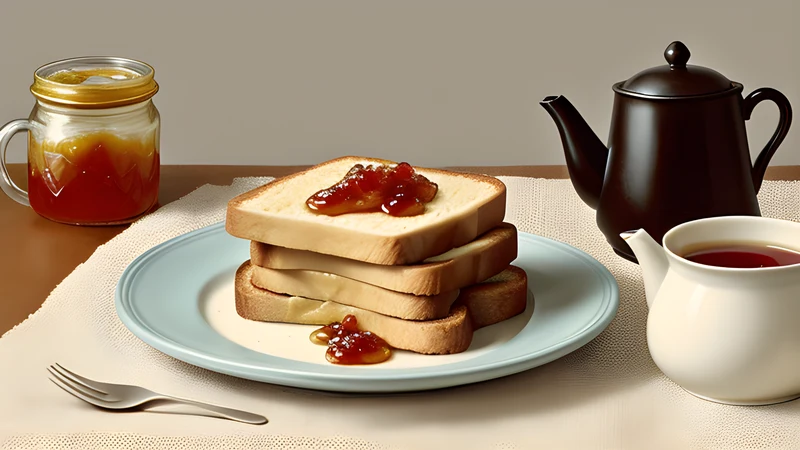
The Swedish table is exact and unchanging: pickled herring in several styles, boiled new potatoes eaten with dill, soured cream, hard bread, and the first strawberries of the season with cream to finish. Schnapps is drunk in small glasses between snapsvisor, the short drinking songs that punctuate the meal. Flower crowns are woven from meadow blooms and worn by children and adults alike, and the maypole is raised in the early afternoon so the dancing can carry on through the long evening.
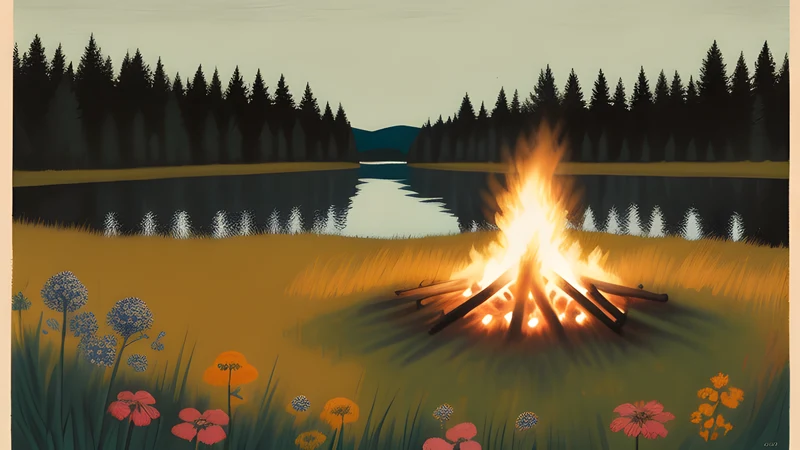
Finland’s celebration is quieter and more elemental, built around the kokko, the great bonfire lit at the water’s edge, and the summer cottage with its lakeside sauna. Many Finns leave the towns almost entirely; on Midsummer weekend, Helsinki can feel emptied. In Latvia and Lithuania the fires burn all night and revellers are meant to stay awake until dawn, jumping the flames and hunting through the woods for the mythical blooming fern that the folklore promises but never delivers. In Spain and Portugal the same solstice night becomes the Noite de São João, a raucous urban party of bonfires on the beaches and, in Porto, a cheerful tradition of tapping strangers gently on the head with soft plastic hammers.
World Variations
The reach of the solstice festival is wider than the Nordic heartland suggests. In Estonia, jaanipäev is bound up with the memory of the 1919 Battle of Võnnu and doubles as Victory Day, so the midsummer fires carry a martial as well as a seasonal charge. In Ireland and parts of Britain, bonfire nights on Saint John’s Eve survived in Cork and along the west coast well into the modern era, echoes of the same fires that once dotted the whole of Europe. Quebec keeps 24 June as its Fête nationale, a solstice-timed celebration of French-Canadian identity that began as the feast of Saint-Jean-Baptiste, the province’s patron. Even in the southern hemisphere the date is honoured out of season by expatriate Scandinavian communities, who gather for herring and flower crowns in the depths of an Australian or Argentine winter, keeping the calendar rather than the daylight.
Traditions and Symbols
Water and greenery run through the whole festival. Doorways and cottages are decorated with fresh birch branches; homes are strewn with cut flowers and leaves. Divination belongs to the night above all: an unmarried woman who gathers seven or nine different wildflowers in silence and lays them under her pillow is promised a dream of her future husband, a charm recorded across Scandinavia and the Baltic for centuries. The bonfire, the flower crown and the pole raised toward the sky are the three symbols that recur wherever the day is kept, each of them a way of marking the sun at its zenith.
Fun Facts
The frog dance that looks like an ancient rite is set to a stolen French army march, and its lyrics cheerfully point out that frogs lack both ears and tails. The Swedish belief that Midsummer’s Eve is the year’s peak for conception is borne out by the statistics: births in Sweden show a clear cluster in March, roughly nine months later. The mythical fern flower that Latvians and Lithuanians search for on the solstice cannot exist, because ferns reproduce by spores and never bloom at all — the hunt is, and always was, an excuse for young couples to wander into the woods together. And in Porto the correct greeting on Saint John’s night is a tap on the head, a tradition that swapped garlic stalks for squeaky plastic hammers only in the late twentieth century.
A Closing Reflection
There is a particular melancholy folded into the brightest day of the year, and the old sources knew it. To celebrate the solstice is to celebrate a summit, and a summit is also the point from which every step leads down; the burning wheel rolled downhill said as much to medieval villagers as the pickled herring says to a Swedish family today. Midsummer is a festival that holds joy and its own ending in the same hand, which may be exactly why it has outlasted the beliefs that first lit its fires. It teaches, gently and without a word of doctrine, that the fullest light is worth staying awake for precisely because it will not last.
Related Content