Michaelmas
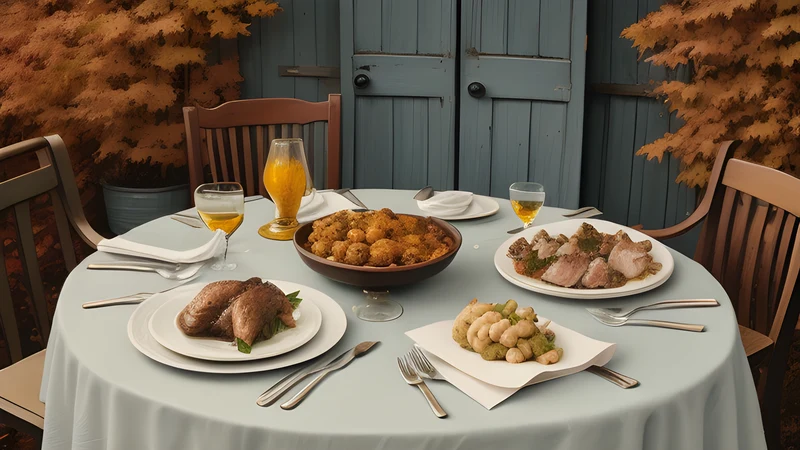
On 29 September, as the harvest ended and the nights drew in, medieval England kept the feast of Saint Michael the Archangel — Michaelmas, the “mass of Michael.” For centuries it was one of the busiest dates in the ordinary person’s year, and its reach went far beyond church. Rents came due, servants were hired at Michaelmas fairs, university and legal terms opened, and a fattened goose went into the oven. The archangel who leads the armies of heaven against the powers of darkness became, in England, the patron of the turning autumn: a saint of endings and reckonings, presiding over the moment when the agricultural year closed its books and the dark half of the calendar began.
Who Michael Is
Michael appears in both Jewish and Christian scripture as an archangel of exceptional rank. In the Book of Daniel he is “the great prince” who stands guard over God’s people; in the Epistle of Jude he disputes with the devil over the body of Moses; and in the Book of Revelation it is Michael who leads the heavenly host in war against the dragon and casts Satan out of heaven. From this last image comes his enduring iconography: a winged warrior in armour, sword or spear raised, standing over a defeated serpent or dragon, and often holding a set of scales, for Michael was also believed to weigh the souls of the dead. The full title of the English feast, Michael and All Angels, gathers the whole angelic host into the celebration, but Michael, as their commander, gives the day its name.
History and the Quarter Days
The commemoration of Michael is ancient. A basilica was dedicated to him near Rome by the sixth century, and his feast on 29 September was well established across the Western church in the early Middle Ages. In England the date acquired a second, secular life as one of the four quarter days — Lady Day on 25 March, Midsummer on 24 June, Michaelmas on 29 September and Christmas on 25 December. These four dates, spaced roughly a quarter-year apart, formed the skeleton of English financial and legal life. Rents on land and property fell due on the quarter days; contracts and leases began and ended on them; magistrates held their sessions and debts were settled by them.
Michaelmas, falling just after the harvest, was especially loaded. It was the natural point to reckon the year’s farming accounts, when a tenant knew at last what the land had yielded and could pay what he owed. Hiring or “mop” fairs clustered around the date, at which labourers and servants stood in the market place to be taken on for the coming year. The academic and legal calendars still carry the memory: the autumn term at Oxford and Cambridge, and the first term of the English law courts, are called the Michaelmas term to this day. The feast sits in the year’s later chapters, after the first-fruits festival of Lammas Day and near the autumn equinox, pointing on toward All Saints’ Day and the dark of the year.
The Michaelmas Goose
No custom is more firmly attached to the day than eating goose. By Michaelmas the year’s young geese had fattened on the stubble of the cut cornfields — the “stubble goose” or “green goose” — and were at their plump best, which made a roast goose the natural centrepiece of the feast. A well-worn rhyme promised that whoever ate goose on Michaelmas Day would not want for money in the year to come, and tenants sometimes presented a goose to their landlord along with the Michaelmas rent, a small sweetener at a tense financial moment.
A popular legend ties the custom to Queen Elizabeth I, who was said to be eating goose when news arrived of the defeat of the Spanish Armada in 1588, and to have decreed that the bird should be eaten every Michaelmas in memory of the victory. The story is almost certainly a later invention — the goose was a Michaelmas dish long before the Armada — but it shows how eagerly the English wove their national mythology around the feast.
Blackberries and the Devil
A second, stranger custom warns that blackberries must not be picked after Michaelmas Day. The reason, folklore explains, is that when the Archangel Michael cast Lucifer out of heaven, the fallen angel landed in a bramble bush, and in his fury he cursed, spat, or in some tellings stamped and urinated upon the blackberries, spoiling them for the year. There is a kernel of natural truth beneath the tale: as the weather turns damp and cold in early autumn, wild blackberries genuinely do deteriorate, growing mouldy and sour, so the “devil’s spitting” is a memorable way of encoding a real seasonal deadline. It is one of the loveliest examples of folk belief doing the practical work of a foraging calendar.
How It Is Celebrated
Michaelmas is no longer the great pivot it once was, but it survives in pockets. Some Anglican, Catholic and other churches keep the feast of Michael and All Angels with special services on or near 29 September. Schools and universities founded in the English tradition still open their autumn term under the name. In a handful of towns, Michaelmas fairs continue, descended from the old hiring fairs, now given over to funfair rides and market stalls. Roast goose remains a Michaelmas dish for those who keep the custom, and cooks sometimes mark the day with blackberry pies and crumbles made from the last safely gathered berries. In Waldorf and Steiner schools the day has a particular importance, celebrated with plays and pageants that dramatise Michael’s courage as an autumn festival of inner strength facing the coming dark.
Traditions and Symbols
The Michaelmas daisy — the aster, which flowers in shades of purple and mauve in late September just as most garden colour is fading — takes its name from the feast and stands as its floral emblem. Scales, the sword and the vanquished dragon carry Michael’s own imagery, while the goose, the blackberry and the sheaf of the finished harvest belong to the earthly side of the day. A traditional saying held that the Michaelmas daisy’s late bloom was a sign of good cheer as the year declined.
Michaelmas Beyond England
Though its role as a rent-and-hiring day was distinctively English, the feast of Michael was kept across Christendom, and each region shaped it to its own landscape. In Ireland and parts of Scotland, a special Michaelmas bannock or Struan Micheil was baked from the year’s cereals — oats, barley and rye — and shared out among the household and the poor, sometimes with a ceremony of riding horses along the shore. In Germany and Austria the day, Michaelistag, marked the traditional close of the summer’s outdoor work and the start of the season of indoor spinning and evening gatherings by lamplight; carnivals and fairs called Michaelismarkt still carry the name. In parts of the Alps, Michaelmas was one of the days on which cattle were brought down from the high summer pastures, tying the archangel to the great seasonal movement of the herds.
The dedication of high and dangerous places to Michael runs through European geography with unusual consistency. Beyond the tidal marvels of Mont-Saint-Michel and St Michael’s Mount, the archangel guards the Sacra di San Michele perched above the Val di Susa in Italy and the great sanctuary of Monte Sant’Angelo in Apulia, one of the oldest shrines to him in Western Europe. The recurring pattern — Michael on the heights, watching over threshold places between land and sea, this world and the next — is exactly what one would expect of the angel who stands guard at the boundary of heaven itself.
Fun Facts
The academic “Michaelmas term” preserves a medieval calendar in modern institutions: students at Oxford, Cambridge, Durham and elsewhere, and barristers in the English courts, still date the start of their working autumn to the feast of an archangel.
Mont-Saint-Michel in Normandy and St Michael’s Mount in Cornwall — two dramatic tidal islands crowned with sanctuaries — are both dedicated to Michael, part of a chain of hilltop and island shrines to the archangel scattered across Europe, several of which are said to fall along a straight line running across the continent.
The custom of eating goose is echoed in the German-speaking world, where the roast goose is more usually eaten at Martinmas on 11 November, showing how the same “autumn goose” tradition attached itself to different saints’ days across Europe.
Michael is one of only a small number of figures venerated as an archangel across Judaism, Christianity and Islam alike, appearing in the Quran under the name Mikal, which makes his September feast the celebration of a genuinely shared figure of the Abrahamic imagination.
A Closing Reflection
Michaelmas is a day poised on a threshold. Behind it lies the light and plenty of summer and the gathered harvest; ahead lie the short days, the settled debts and the long dark. The medieval mind gave that turning-point a warrior angel to preside over it — a figure who weighs souls and drives back the dragon — and surrounded him with geese and daisies and brambles, the homely furniture of an English autumn. Whether or not one keeps the feast, there is wisdom in marking the moment the year tips over, in eating well before the cold sets in, and in knowing exactly when the blackberries have had their day.
Related Content