Measure your feet day
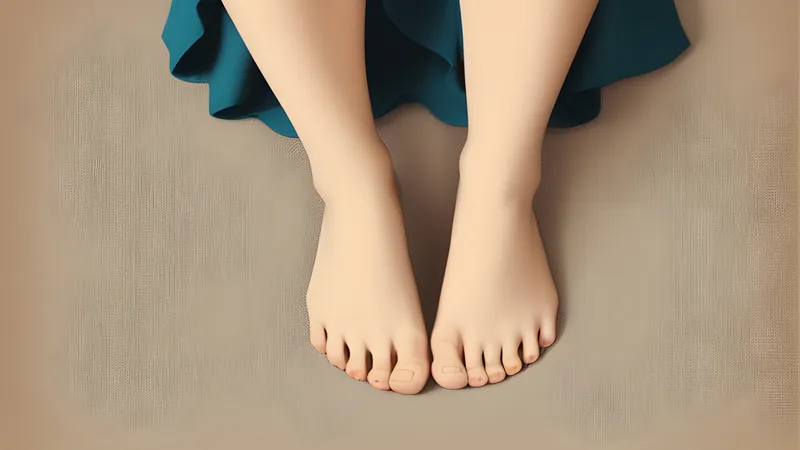
The gap between a size seven and a size eight shoe is exactly one third of an inch, and that oddly specific figure is a fossil. It comes from the barleycorn, a unit equal to a third of an inch that English measurers once defined by lining up three grains of barley to the inch. Measure Your Feet Day, on 23 January, is a light-hearted nudge to check that your shoes actually fit, but behind the gentle reminder sits a genuinely strange history of how humanity learned to put numbers on the foot.
The barleycorn at the bottom of it all
The system most of the English-speaking world still uses is built on the barleycorn. The unit appears as far back as the tenth-century Welsh Laws of Hywel Dda, and English statute between roughly 1266 and 1303 fixed three barley grains to the inch and twelve inches to the foot. Shoemakers borrowed this ready-made unit and applied it to feet, which is why each full shoe size differs from the next by a third of an inch and each half size by a sixth. King Edward II is often credited with formalising the shoe-sizing system by royal decree in 1324, and the story is repeated everywhere, but there is in fact no surviving evidence that he did anything of the kind. It is a tidy legend that has outlived the search for its source.
What can be documented is patchier and later. The Academy of Armoury and Blazon of 1688 set out a defined children’s scale, with size one measuring five inches and each size adding a quarter of an inch up to size thirteen. In 1856 Robert Gardiner of London published The Illustrated Handbook of the Foot, noting the one-third-of-an-inch interval between sizes. The barleycorn, in other words, had been doing quiet work in the workshops of cobblers from the medieval period to the Victorian age before anyone wrote the rules down clearly.
From the cobbler’s hand to the shop floor
For most of history there was no need to measure against a standard scale, because there was no standard. A cobbler made each pair to the individual foot, taking the measure of the customer directly. Standardised sizing only became necessary with mass production, when shoes were made in advance in a range of sizes and the customer had to be matched to a size rather than the shoe to the customer.
That created a problem: how to measure a foot quickly and consistently in a shop. The first real answer was the Ritz Stick, a flat wooden scale with a fixed heel stop and a sliding toe marker, patented in 1916. The decisive leap came in 1927, when Charles Brannock of Syracuse, New York, patented the metal measuring device that still bears his name. The Brannock Device measured length in thirds of an inch and width in gradations of three-sixteenths, and crucially it also captured the position of the arch, the distance from heel to the ball of the foot, which often matters more for fit than overall length. Brannock, whose family ran a shoe shop, reportedly built his first prototype from a Erector construction set while trying to improve on the crude wooden stick then in use. He went on to found a company to manufacture the device, and it remains in production in Syracuse to this day. Nearly a century later his invention is still the standard fixture under the chair in shoe shops, one of those rare tools so thoroughly solved that it has barely changed in design.
It is worth appreciating just how varied the world’s sizing systems remain despite all this. The UK and the US both descend from the barleycorn but number their scales differently, and confusingly the men’s and women’s US scales are offset from each other. Continental Europe uses the Paris point system, in which each size is two-thirds of a centimetre rather than a third of an inch, so European numbers run much higher. Japan and much of Asia simply state the length of the foot in centimetres, which is arguably the most rational system of all and a quiet rebuke to the medieval grain of barley still lurking inside the others. Anyone who has ordered shoes from abroad has met this confusion first-hand, and it is one more reason a day devoted to actually measuring the foot, in plain length, has practical value.
Why the right size genuinely matters
A badly fitted shoe is not a trivial discomfort. Too small, and it produces blisters, corns, calluses and, over time, bunions and crowded toes; too large, and the foot slides, the toes grip, and the gait suffers. Poor fit can throw off posture and refer aches upward into the knees, hips and back. For anyone who stands all day, or who has diabetes or circulation problems where unnoticed pressure can cause real harm, fit moves from comfort to health.
The complication is that feet are not fixed. Weight change, ageing, and pregnancy all alter the size and shape of the foot. The ligaments that hold the arch tend to loosen over the years, so that arches flatten and the foot lengthens and widens with age; it is common to take a larger size at sixty than at thirty for this reason alone. Pregnancy can produce a permanent increase of as much as half a size, as the hormone relaxin loosens the ligaments of the whole body, the feet included. The size you wore confidently a decade ago may simply be wrong now, and the assumption that it is still right is exactly the kind of small error this day exists to catch. This is the quiet point behind the day: most people stop checking, trusting a number they settled on years before, and the number quietly stops being true. A day given over to a small act of bodily self-attention sits comfortably alongside other practical observances on the calendar that turn an everyday habit into a moment of deliberate care.
How the day is kept
The observance asks little: stand on a sheet of paper, trace the foot, measure heel to longest toe, and compare. The most sensible use of 23 January is to check your current size properly, sort out shoes that no longer fit, and pass the worn-out ones on. Parents check children’s feet, which grow alarmingly fast and outgrow shoes long before the shoes wear out. There is no parade and no feast, which makes it one of the more honestly useful entries among the calendar’s many single-purpose days; its entire point is to make you do one sensible thing you have probably been neglecting.
The tools as the day’s emblems
The natural symbols are the instruments themselves: the Brannock Device with its sliding markers, and the humble tape measure for those checking at home. The small ritual of standing barefoot to be measured, weight evenly on both feet, is familiar to anyone who was ever fitted for school shoes as a child, made to stand still while a shop assistant slid the cold metal marker against the toes. The day’s spirit is workshop-practical rather than ceremonial, which suits a celebration of getting a measurement right.
There is sound technique behind doing it properly, and the day is a good occasion to learn it. Feet should be measured while standing rather than sitting, because the foot spreads and lengthens under the body’s weight. Both feet should be measured, not just one, because most people have a slightly larger foot and shoes should be fitted to it. And the measurement should be taken later in the day, since feet swell as the hours pass and a shoe fitted to a morning foot can pinch by evening. None of this is complicated, but most people have never been told it, and a shoe bought on a guessed size or a half-remembered number from years ago is a small daily discomfort that need not exist.
Fun facts
- A full shoe size differs from the next by exactly one third of an inch, a leftover of the medieval barleycorn unit defined as three grains of barley to the inch.
- King Edward II is widely credited with standardising shoe sizes in 1324, but no historical evidence supports the claim; it is an enduring myth.
- Charles Brannock is said to have built the first version of his famous foot-measuring device, patented in 1927, out of an Erector construction set.
- Most people’s feet are slightly different sizes, so the sensible rule is to fit both shoes to the larger foot rather than the smaller.
- Feet swell over the course of a day, so measuring in the afternoon or evening, when they are at their largest, gives the most reliable result.
A closing reflection
There is something quietly humbling about a day devoted to remeasuring a part of yourself you assumed you already knew. The number in your shoe is one of the few facts about your own body you carry around as fixed, and it is very likely outdated. Measure Your Feet Day is really an argument against complacency in miniature: even the most familiar measurements drift, and the only way to keep them honest is, every so often, to take them again.
Related Content


