Korean Hangul Day
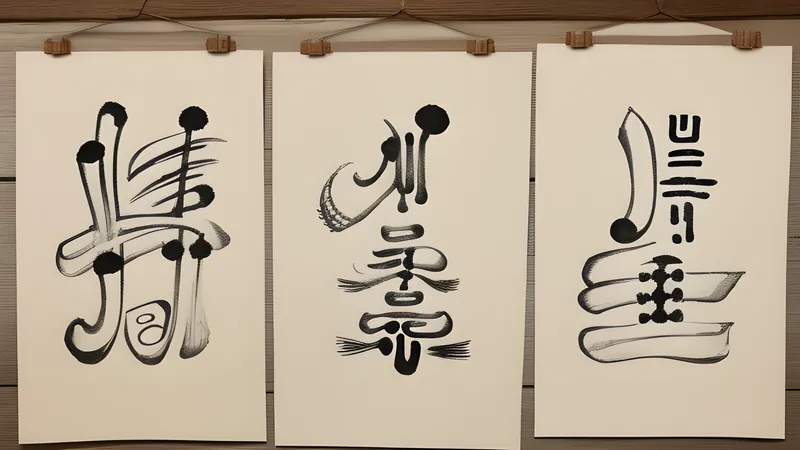
In the ninth month of 1446, the Korean court published a slim document with an ambitious title: Hunminjeongeum, “the correct sounds for the instruction of the people”. Its preface, attributed to King Sejong the Great, made a startling promise. The script it introduced was so simple, it claimed, that a wise man could master it before the morning was out, and even a fool could learn it in ten days. Few inventions have lived up to their advertising so completely. Korean Hangul Day, observed in South Korea on 9 October, celebrates that publication and the alphabet linguists routinely rank among the most rational ever devised.
A king who designed an alphabet
Hangul did not evolve over centuries, as most writing systems did. It was commissioned, designed and proclaimed within a few years by the fourth monarch of the Joseon dynasty. Sejong had set the project in motion by 1443 and the result was published in 1446. Before it, Korean was written with Classical Chinese characters, a system that fitted the Korean language poorly and demanded years of study, which kept literacy locked inside an educated, mostly aristocratic, elite. Sejong’s stated motive was bluntly democratic: ordinary people who wished to express their grievances had no way to commit their thoughts to writing, and he pitied them.
The design itself is the marvel. The consonant shapes were modelled on the position of the tongue, lips, teeth and throat as each sound is made, so that the letters are, in effect, little diagrams of the mouth at work. The vowels were built from three strokes carrying cosmological meaning: a dot for heaven, a horizontal line for earth and a vertical line for the upright human being. The letters are then grouped into neat syllable blocks rather than strung out in a line, which is why written Korean looks so distinctively tidy on the page.
The system is also “featural”, a rarity among the world’s scripts: related sounds are written with related shapes. The basic letter for a soft consonant gains an extra stroke when the same sound is aspirated, so that the relationship between the spoken sounds is mirrored in the look of the letters. This is why linguists such as the British writer Geoffrey Sampson have singled out Hangul as a genuine intellectual achievement rather than merely a convenient code, and why it is often described as the only major alphabet whose internal logic was worked out in advance rather than inherited by accident.
Suppression, revival and a fixed date
A creation so deliberately accessible was not universally welcomed. Scholars who had spent their lives mastering Chinese characters resisted a script that threatened their learned monopoly, and for centuries Hangul was treated as second-rank, dismissed as writing for women and commoners while official business carried on in Chinese. Its fortunes turned in the late nineteenth and early twentieth centuries, when reformers and nationalists seized on it as a badge of Korean identity, particularly under Japanese colonial rule, when the Korean language itself was actively suppressed.
The commemoration grew directly out of that revival. The Korean Language Society established the holiday in 1926, originally calling it Gagyanal after the first syllables in the charts once used to teach the script. The society renamed it Hangul Day in 1928, the word hangul itself, meaning roughly “great script”, having been coined by the linguist Ju Sigyeong in the early twentieth century. The 9 October date reflects scholarly calculation of the anniversary of the Hunminjeongeum’s publication. The same impulse to protect a mother tongue under pressure animates International Mother Language Day, while the founding of the Korean state it presupposes is honoured on Korean National Foundation Day.
Why an alphabet earns a holiday
It is genuinely rare for a nation to give a writing system its own public holiday, and the reason says a good deal about how Koreans regard theirs. The argument is not merely aesthetic. Because Hangul maps sound to symbol so cleanly, it is exceptionally quick to learn, and South Korea today reports one of the highest literacy rates in the world. The day therefore honours an idea quite as much as an object: that the ability to read and write should be the common property of everyone, not a privilege rationed out to the few who can spare years of study.
There is a quieter satisfaction in the celebration too. Hangul is one of the few alphabets whose inventor, date and underlying theory are known, which lets Koreans point to a specific act of foresight rather than a slow accident of history. To celebrate the script is to celebrate the man who insisted his people deserved a voice on the page.
The holiday’s own status has not been entirely steady, which gives modern Koreans a further reason to value it. For a stretch in the early 1990s the South Korean government, worried about lost working days, downgraded Hangul Day from a public holiday, and it was not fully restored as a day off until 2013 after sustained public pressure from cultural and linguistic groups. That the people lobbied to win back a holiday for their alphabet says as much about national feeling as any ceremony could.
How it is celebrated
In South Korea, Hangul Day is a public holiday; government offices and many businesses close. Cultural institutions mount exhibitions, calligraphy demonstrations and academic lectures on the alphabet’s history and design, with the National Hangeul Museum in Seoul a particular focus. Schools and universities run competitions in handwriting, poetry and typography, and public ceremonies often include readings from the Hunminjeongeum and tributes to Sejong, whose seated bronze statue in Gwanghwamun Square in central Seoul presides over the capital.
North Korea also honours the alphabet but on a different date in January, tied to its supposed creation rather than its proclamation, and refers to the script as Chosŏn’gŭl. Beyond the peninsula, the day matters to Korean communities abroad, where language schools and cultural centres use it to connect children to a heritage their grandparents brought with them. The recent global appetite for Korean music, film and television has drawn fresh outside curiosity about the script, and growing numbers of learners now meet Hangul for the first time.
An alphabet built for the keyboard
Sejong could not have foreseen smartphones, but his design turned out to suit them remarkably well. Because Korean groups its consonants and vowels into syllable blocks, and because the letters fall naturally into a left-and-right, top-and-bottom logic, the standard Korean keyboard layout places consonants under the left hand and vowels under the right, letting a typist build each syllable in a quick alternation. On a phone, the dominant “Cheonjiin” input method goes back to first principles, offering just the three primal vowel strokes, heaven, earth and humanity, from which every vowel is assembled, so that the entire system fits comfortably on a handful of keys.
This efficiency has occasionally tempted others. In the early twenty-first century, linguists and activists experimented with adapting Hangul to write previously unwritten languages, and in 2009 the Cia-Cia people of Sulawesi in Indonesia adopted a Hangul-based script for their tongue, a small but genuine instance of a fifteenth-century Korean invention being lent to a community on the far side of the Pacific. The episode flattered Korean pride and made headlines, and whatever its long-term fate, it underlined the original claim: that this was an alphabet designed to be lent, learned and used by anyone.
Symbols of the day
The dominant symbol is Sejong himself, typically shown seated and scholarly, his face familiar from the 10,000-won banknote. The clean geometric characters of the original Hunminjeongeum turn up in logos, posters and artworks made for the occasion, and calligraphers and type designers treat the day as a chance to explore the visual possibilities of the script. The modern alphabet’s tidy inventory, fourteen consonants and ten vowels, lends itself naturally to playful classroom displays.
Fun facts
- Sejong’s preface boasted that a wise man could learn the alphabet in a single morning, a claim that turns out to be only mildly exaggerated.
- The consonants are shaped after the mouth: the letter for “n” mimics the tongue touching the roof of the mouth, and the letter for “m” echoes the shape of the closed lips.
- The Hunminjeongeum Haerye, the explanatory commentary that finally revealed how the letters had been designed, was lost for centuries and only rediscovered in 1940; it is now inscribed in the UNESCO Memory of the World register.
- UNESCO named its King Sejong Literacy Prize after the monarch, a neat tribute to a ruler whose chief ambition was to spread the written word.
- The word hangul is itself a modern coinage; the script went by other names for most of its history before the linguist Ju Sigyeong popularised the current one.
A closing reflection
Most countries that pause for their language do so to mourn it, to defend it against extinction or erasure. Korea’s autumn holiday is unusual in being a celebration of pure good fortune: the accident of a literate, philosophically minded king who decided that the gift of writing was too important to leave in the hands of an elite. An alphabet is the most ordinary thing in the world until you imagine being without one. Once a year, Koreans decline to take theirs for granted, and there is wisdom in that small act of gratitude.
Related Content