Japanese Respect for the Aged Day
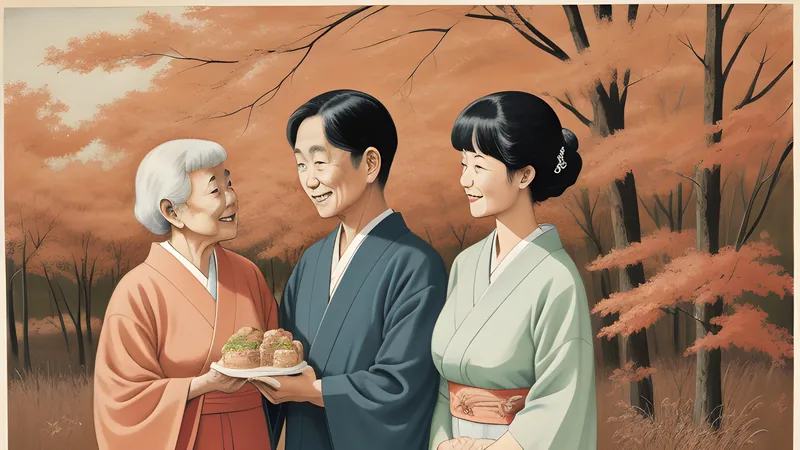
In 1947, in the small farming village of Nomadani in Hyōgo Prefecture, the local mayor proposed setting aside 15 September to honour the village’s elderly and to learn from their experience as the community rebuilt after the war. He called it Toshiyori no Hi, Old Folks’ Day, and timed it for the lull after the harvest, when the worst of the summer heat had broken. From that single village the idea spread across Hyōgo, then across Japan, and in 1966 it became a national holiday. Today, as Keiro no Hi, Respect for the Aged Day falls on the third Monday of September, when families call on their grandparents, town halls host gatherings for senior residents, and the country pauses to thank the generation that came before it.
A holiday that began in one village
The detail of Nomadani matters because it is unusually well documented for a national holiday. The village, since absorbed into the town of Taka, chose 15 September partly for the practical reason that farm work eased at that point in the year, leaving time to gather. The founding idea was not merely sentimental: the mayor framed it as a chance to draw on the knowledge of older residents in the hard work of post-war reconstruction, treating age as a resource rather than a burden.
The name changed as the day grew. Toshiyori no Hi, literally Old People’s Day, struck some as too blunt, and when the observance was elevated to national status in 1966 it was rechristened Keiro no Hi, “respect for the aged”, a phrasing with more warmth and dignity. For decades it kept the original 15 September date. Then, under the Happy Monday System, a series of reforms designed to move public holidays onto Mondays and give workers long weekends, the holiday shifted in 2003 to the third Monday of the month.
Deeper roots in Japanese tradition
The 1947 village proposal did not invent reverence for elders so much as give it a modern home. The value it drew on was shaped by Confucian ideals of filial piety, imported from China and woven through Japanese family life, and by Buddhist and Shinto practices of honouring ancestors and the continuity between generations. Caring for ageing parents within the household was long treated as a fundamental duty, and milestone birthdays had their own established ceremonies long before any national holiday existed.
That older framework gives the modern holiday a vocabulary it still uses. Particular ages are marked with traditional celebrations, each with its own name and colour: kanreki at 60, associated with red and a symbolic return to one’s birth year in the zodiac cycle, when the celebrant may be given a red cap and waistcoat to wear; koki at 70, drawn from a line of Tang-dynasty poetry observing that living to seventy had always been rare; and beyond them beiju at 88, whose name puns on the character for rice, and the rare hakuju at 99. Keiro no Hi gathered these long-standing customs of honouring age into a single date on the public calendar.
The milestone names repay a moment’s attention because they reveal how playfully Japanese tradition treats long life. Beiju, the 88th birthday, takes its name because the character for “rice”, 米, can be broken apart into the figures eight, ten and eight. Hakuju at 99 works the same way: the character for “hundred”, 百, with its top stroke removed becomes 白, “white”, and one hundred minus one is ninety-nine. These are not idle puns but a whole grammar of celebration, in which reaching a great age is something the language itself conspires to honour.
Why the day has grown more pointed
When Nomadani’s mayor proposed the holiday, Japan was a young, recovering country. It is now among the oldest societies on earth, with more than a tenth of its population aged 80 or over and tens of thousands of citizens past 100. That demographic shift has given Keiro no Hi a weight its founders could not have foreseen. What began as gratitude towards a relatively small group of elders has become a yearly confrontation with one of the defining facts of contemporary Japanese life.
The holiday now does double duty. It still recognises the generation that rebuilt the country and raised those who followed, affirming that growing old is to be honoured rather than hidden away. But it also prompts a harder national conversation about care, isolation and dignity, as families and the state alike grapple with how to support a vast and growing population of older people. For individual households it offers a structured prompt to express affection that the rush of ordinary life tends to crowd out.
The numbers behind this shift are striking. Each year around Keiro no Hi the government’s statistics bureau releases fresh figures on the elderly population, and the announcements have become a fixture of the holiday’s news coverage. Japan’s count of people aged 100 or over passed 1,000 in 1981, crossed 10,000 in 1998, and has since climbed past 90,000, the overwhelming majority of them women. That a holiday once meant to thank a handful of village elders now arrives alongside data on tens of thousands of centenarians captures, better than any speech could, how thoroughly the ground has moved beneath it.
How the day is observed
The celebration is grounded in personal contact rather than spectacle. Families gather to share meals with grandparents and elderly relatives, often bringing small gifts or simply offering company. Local governments and community groups host events for senior residents, and many present commemorative gifts to those reaching notable ages; the national and local authorities have a long custom of honouring citizens who turn 100. For decades the government sent each new centenarian a commemorative silver sake cup, but as their numbers swelled into the tens of thousands the cost grew unwieldy, and in 2016 the cups were downgraded to a cheaper silver-plated version, a small bureaucratic footnote that says a great deal about the scale of Japan’s ageing. Schoolchildren prepare cards, performances and handmade tokens, and the media fills with profiles of the country’s oldest people. Nursery and primary schools sometimes arrange visits to local care homes, where children sing or perform for residents, a deliberate effort to keep the two ends of the generational chain in contact in a society where multi-generational households have grown rarer. Some towns also send small gifts, a cushion, a flower, a letter from a schoolchild, to housebound seniors who cannot attend a gathering, an acknowledgement that the people the day most wants to honour are sometimes the hardest to reach.
The themes of long life and continuity surface naturally alongside other points in Japan’s calendar of family observances. The day shares its tenderness with Shichi-Go-San, the November rite that celebrates the very young rather than the old, so that between them the calendar bookends a life. It also echoes the domestic warmth of the spring Doll Festival, another occasion built around family gathering and the passing of care between generations.
Symbols of longevity
The imagery of the day leans on age-old emblems of long life. The crane, said in folklore to live a thousand years, and the tortoise, credited with ten thousand, appear on cards and decorations, and gifts traditionally carry wishes for health and longevity. The colours and warmth of early autumn frame everything, but the true symbol of Keiro no Hi is the gesture itself: the younger turning, with affection, towards the elder.
Beyond Japan
Japanese communities abroad, particularly long-established ones in Hawaii and on the west coast of North America, mark Keiro no Hi to keep a thread of heritage alive, often through community lunches and ceremonies for local elders. The instinct it expresses is not unique to Japan, and the United Nations observes an International Day of Older Persons on 1 October, but few countries have rooted the sentiment so firmly in a national holiday with so traceable an origin.
Fun facts
- The holiday began in 1947 in one village, Nomadani in Hyōgo Prefecture, whose mayor chose 15 September because farm work eased after the harvest.
- It was first called Toshiyori no Hi, “Old Folks’ Day”, and only became Keiro no Hi when it was made a national holiday in 1966.
- The date moved from a fixed 15 September to the third Monday of the month in 2003, under the Happy Monday System designed to create long weekends.
- Japan honours specific milestone ages with named celebrations, including kanreki at 60 and the rare hakuju at 99, whose name puns on the character for “white”.
- Japan is home to tens of thousands of centenarians, and the day routinely brings news coverage of the country’s oldest residents.
A closing reflection
There is a quiet radicalism in a holiday born from the idea that the old are worth consulting, not merely caring for. Nomadani’s founders wanted to learn from their elders as much as thank them, and that distinction still matters in a country now reckoning with what it means to be old in large numbers. To honour the aged is, in the end, an act of self-recognition: every person now young is being shown, gently, the road they too will walk.
Related Content