Japanese Doll Festival
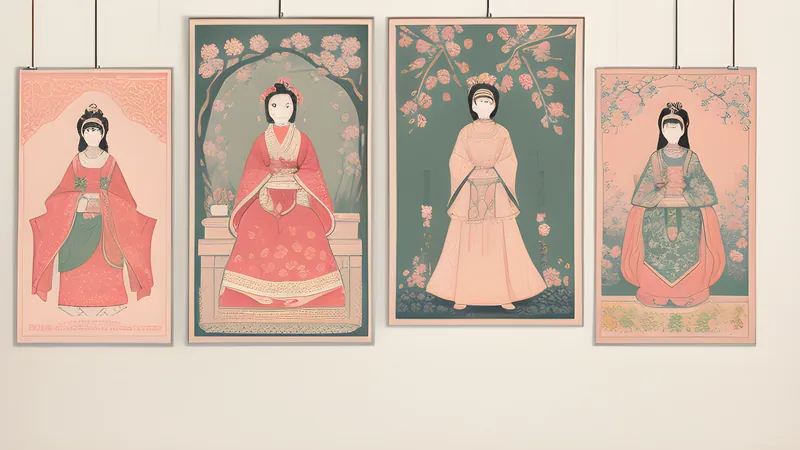
In 1629, when the young Empress Meishō ascended the throne of Japan, her mother arranged a set of dolls to mark the occasion, posing them as a contentedly married imperial couple. That arrangement is often cited as the first time hina dolls were displayed in the manner that would become Hinamatsuri, the Japanese Doll Festival held each year on 3 March. Nearly four centuries later the same impulse plays out in living rooms across Japan: families lift heirloom figures from their boxes, dress a miniature court in the courtly robes of a vanished era, set out peach blossom and sweets, and dedicate the whole tableau to the health and happiness of their daughters. Sometimes called Momo no Sekku, the Peach Festival, for the blossoms that accompany it, the day folds together purification ritual, aristocratic play and a fierce attention to seasonal beauty.
Where the festival comes from
Hinamatsuri grew from two older customs that gradually braided together. The first arrived from China: a purification rite, linked to the Shangsi festival, in which impurity and misfortune were transferred onto dolls of paper, clay or straw and then floated away down a river. Carried to Japan, this practice survives as nagashibina, the setting adrift of paper dolls, and it gave the festival its underlying logic, that a doll could absorb harm meant for a child.
The second thread was play. During the Heian period, from the late eighth to the late twelfth century, aristocratic children amused themselves with small dolls and miniature household objects in a pastime called hina-asobi. The dolls in that game were toys to be handled rather than icons to be displayed. Over the following centuries the purificatory dolls and the playful ones converged, and the figures shifted from something set adrift to something arranged and admired indoors.
From riverbank to royal court
The festival took its recognisable shape in the Edo period, the long peace under the Tokugawa shoguns from 1603 to 1868. The government formally designated Jōshi no Sekku, the third day of the third month, as one of the five official sekku or seasonal festivals, which fixed the date and lent it national weight. As doll-making techniques advanced, the figures grew finer and the displays more ambitious. The single pair seen in Empress Meishō’s day multiplied into multi-tiered arrangements depicting an entire imperial court, complete with attendants, musicians and ministers.
A set of hina dolls became a treasured possession passed from mother to daughter or assembled gradually over years, and the custom of presenting a girl with her own dolls took hold. These were never ordinary toys. Many sets were costly heirlooms, brought out once a year, handled with ceremony and packed away promptly, the latter tied to a gentle superstition that dolls left on display too long would delay a daughter’s eventual marriage. The warning is still repeated today, often with a smile rather than literal belief.
The Edo period also gave the dolls their distinctive styles, and the rivalry between them became part of the festival’s history. Two schools came to dominate: the elaborate, opulent Kyoto manner and the styles favoured in the new shogunal capital of Edo. At one point in the eighteenth century the figures grew so large and ornate, the so-called ōgata dolls, that the Tokugawa government issued sumptuary edicts restricting their size and the lavishness of their dress, an early case of a state stepping in to curb a festival’s extravagance. The most refined surviving form, the Kyoto-made yūsoku dolls, dressed with painstaking accuracy in the costumes of the historical imperial court, are still regarded as the pinnacle of the craft.
Why the day endures
At its simplest, Hinamatsuri gives shape to a parent’s hopes for a daughter, turning love and anxiety about the future into an annual act anyone in the household can take part in. That emotional core has proved remarkably durable, surviving the move from a lunar to a solar calendar and the upheavals of modern Japanese life largely intact.
The festival also carries forward an aesthetic inheritance that would otherwise be hard to keep alive. The robes, the lacquered miniatures, the prescribed positions of each figure preserve in miniature the etiquette and craft of the old imperial court. To set up the display is to rehearse a vanished world once a year, which makes Hinamatsuri a quiet act of cultural memory as much as a wish for a child.
How families mark it
The dolls go up on a covered tiered stand, traditionally draped in red cloth called dankake or himosen, in the days leading up to 3 March, and come down soon after. There is even a favoured moment for putting them up: many families set out the display on a fortunate day shortly after Setsubun in early February, giving the dolls several weeks on show, while the dismantling is done swiftly and ideally on a dry, clear day so that no damp is sealed away with the figures for the year. The day is a domestic affair built around the home and the family table rather than public spectacle. Particular foods are prepared and shared: hishimochi, diamond-shaped layered rice cakes; hina-arare, small sweet rice crackers; ushiojiru, a clear clam soup whose paired shells stand for a happy union; and amazake, a mild, sweet fermented rice drink served to children in a non-alcoholic form. The clam soup is pointed in its symbolism, since a clam’s two shells fit only their own partner, a wish for a faithful future marriage.
The court in miniature
At the top of a full display sit the dairi-bina, the emperor and empress, before a gilded screen. Below them descend tiers of three court ladies, five musicians, two ministers and three attendants, accompanied by miniature furniture, lanterns and flowering trees. Peach blossom, emblem of feminine grace and of the season, stands beside the figures. Even the colours of the hishimochi cakes are read as a seasonal picture: white for lingering snow, green for new growth pushing through, and pink for the blossom of early spring.
One small detail of the arrangement reveals a genuine cultural divide. In most of Japan the emperor doll is placed on the left as the viewer faces the display and the empress on the right, a modern convention said to follow the seating Emperor Taishō adopted for his coronation in the early twentieth century under the influence of Western protocol. In and around Kyoto, the old imperial capital, the positions are reversed, with the emperor on the right, preserving the older court etiquette in which the left was the place of higher honour. A single glance at which way the imperial couple sits can therefore betray whether a household keeps Tokyo or Kyoto custom.
Regional and overseas variations
Some parts of Japan keep the older, watery form of the festival alive. In towns such as those along the rivers of Tottori and Wakayama, communities still hold nagashibina ceremonies, floating paper dolls downstream to carry misfortune away. Elsewhere, places like Katsuura in Chiba mount spectacular public displays, cascading hundreds of dolls down long flights of stone shrine steps.
The instinct behind the day connects to Japan’s wider calendar of family rites. It looks across to the autumn shrine visits of Shichi-Go-San, when children are dressed in their finest and presented to the gods, and it pairs naturally with Children’s Day on 5 May, so often treated as a counterpart for boys that the two together bracket the year’s hopes for the young. Wherever Japanese communities have settled, museums and cultural centres mount displays of antique hina dolls, letting visitors abroad appreciate the craftsmanship and the elaborate etiquette of their arrangement.
Fun facts
- A full traditional display can hold fifteen dolls across seven tiers, each figure assigned a fixed and prescribed position in the miniature court.
- The first hina display in the modern style is traced to 1629 and the accession of Empress Meishō, whose mother arranged dolls as a happily married couple.
- The festival’s distant ancestor was a Chinese purification rite in which dolls absorbed bad luck and were floated down a river, a practice that survives today as nagashibina.
- The clear clam soup served on the day is symbolic: a clam’s two shells match only each other, so the dish stands for a faithful and lasting marriage.
- Many families still observe the superstition that hina dolls left on display past 3 March will delay a daughter’s wedding, prompting a brisk tidy-up the moment the festival ends.
A closing reflection
It is worth pausing on the oddness of a festival whose central objects began as vessels for misfortune and ended as cherished heirlooms. The dolls travelled from the riverbank, where they carried harm away, to the top tier of the household display, where they preside over hopes for the future. In that journey is something of how affection works, taking the fear of what might befall a child and turning it, year after year, into an act of beauty and care.
Related Content