Japanese Culture Day
On the morning of 3 November each year, a small group of recipients gathers in the State Room of the Imperial Palace in Tokyo to receive the Order of Culture directly from the Emperor’s hand. The medal they accept is shaped like a mandarin orange blossom, a flower the chamberlains chose because its evergreen leaves and fruit promised something that does not fade. That ceremony, held on this date since 1937, is the formal heart of Japanese Culture Day, known across Japan as Bunka no Hi. Around it the rest of the country settles into something quieter: museums opening their doors for free, calligraphy hung on temple walls, school halls filled with student plays and the smell of festival food drifting through autumn air.
Where the date comes from
The choice of 3 November was deliberate, and it carries two layers of history. The date was originally the birthday of Emperor Meiji, who reigned from 1867 to 1912 and presided over Japan’s headlong rush from feudal isolation into an industrial power. From 1927 until 1947 the country kept 3 November as a national holiday called Meiji Setsu, set up by law specifically to honour the late emperor.
After the Second World War the date was given a new meaning rather than abandoned. Japan’s post-war constitution, which formally renounced war and enshrined popular sovereignty, was promulgated on 3 November 1946. Two years later, in 1948, lawmakers established Bunka no Hi on that anniversary, defining it as a day for “loving freedom and peace, and promoting culture”. The phrasing matters: the holiday deliberately ties artistic life to the pacifist promise written into the new constitution, so that brush and ink stand alongside the renunciation of arms.
A century of honouring achievement
The Order of Culture, the award that anchors the day, was instituted in 1937, and its ceremony has been pinned to 3 November ever since. It is one of the highest civilian honours Japan bestows, given for outstanding contributions to the arts, the sciences and scholarship. The physicist Hideki Yukawa, who in 1949 became the first Japanese person to win a Nobel Prize, was among its laureates, and the writer Yasunari Kawabata, Japan’s first Nobel laureate in literature, also received it. Alongside the Order, the government names that year’s Persons of Cultural Merit, recognising figures who have devoted a lifetime to a craft or a discipline.
Around this central act of recognition, the holiday absorbed older Japanese habits of stewardship. Long before Bunka no Hi existed, Japan had begun designating works and buildings as National Treasures and Important Cultural Properties, a legal apparatus for deciding what was worth preserving. The roots of that system reach back to the early Meiji era: in 1871 the new government issued a decree for the preservation of antiquities, alarmed that the rush to modernise was leading temples and families to sell off or melt down irreplaceable objects. By 1897 the country had its first formal law protecting old shrines and temples, and the framework was overhauled again in 1950 into the comprehensive Law for the Protection of Cultural Properties still in force today. Culture Day slotted into that long tradition of curation, and over the decades the single holiday spread outward into a broader autumn season of exhibitions, lectures and performances timed to coincide with it.
That same impulse to safeguard the intangible, not just objects but skills, is captured in one of Japan’s most evocative legal categories. Under the 1950 law the country can designate a living person as a holder of Important Intangible Cultural Property, popularly known as a Living National Treasure: a potter, a swordsmith, a Bunraku puppeteer or a Kabuki actor whose mastery is judged irreplaceable and worth supporting so it can be taught onward. The honours announced around Culture Day sit alongside this register of human treasures, so that the day quietly recognises not only finished works but the fragile chains of apprenticeship that produce them.
Why the day still earns its place
The argument behind Bunka no Hi is that a nation is held together by more than its economy and its institutions. By bracketing creativity with the constitutional commitment to peace, Japan treats poetry, ceramics and scholarship not as ornaments but as part of the same civic project as democracy itself. That is an unusual claim for a public holiday to make, and it gives the day a seriousness that the free museum entries and student fairs might otherwise disguise.
There is also a practical case. Culture is fragile and depends on being handed deliberately from one generation to the next; a master potter or a Noh actor cannot simply be replaced once the chain of teaching breaks. A day that publicly elevates such people, and lets ordinary families wander through galleries without paying, is a small institutional defence against that fragility. It is the kind of holiday that quietly tells a busy, work-driven society that learning and beauty are worth a day of the national calendar.
How the day unfolds
The Imperial Palace ceremony is the marquee event, but most of the country experiences Culture Day at street and school level. Public museums and many private galleries waive their admission fees, drawing families to drift among paintings, lacquerware and historical artefacts they might never otherwise pay to see. Local governments stage art exhibitions, parades and craft markets in parks and civic halls. The day sits at the centre of the autumn bunkasai season, when schools and universities mount their own culture festivals, lively affairs full of student-run food stalls, drama, music and displays of artwork that turn campuses into open houses for parents and neighbours.
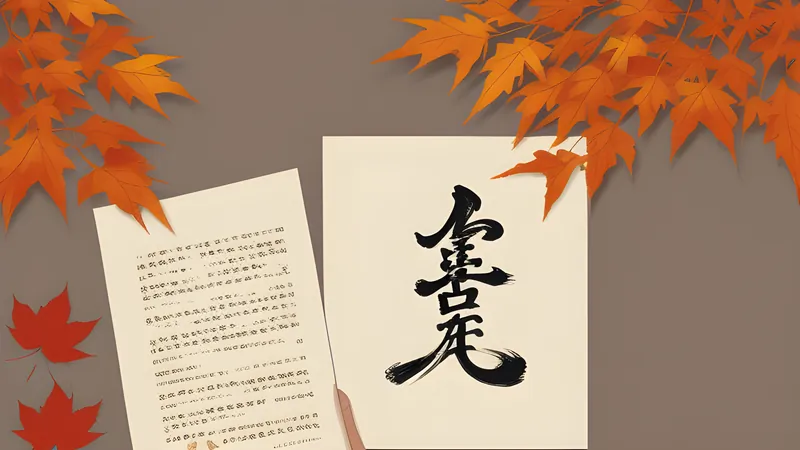
Calligraphy occupies a particular place in the day. The measured discipline of the brush, where a single stroke cannot be corrected, embodies the patience the holiday celebrates, and demonstrations and competitions are common. Tokyo’s Meiji Shrine, named for the emperor whose birthday seeded the date, holds an annual autumn festival around this time featuring displays of traditional martial and courtly arts, including yabusame, the spectacular art of archery performed from a galloping horse, and kyūdō demonstrations by ranked practitioners. The pairing is fitting for a holiday that began with an emperor and now honours the long inheritance of Japanese craft: the same shrine grounds host both the memory of the throne and a living demonstration of disciplines that have been handed down, teacher to pupil, since the days of the samurai.
Beyond Japan
The connection to nearby festivals is easy to trace in the Japanese calendar, where the year is studded with days marking the passage of life and season. Culture Day looks across to the family rites of Shichi-Go-San, which falls only twelve days later and fills the same November shrines with children in formal kimono, and to the spring tenderness of the Doll Festival, another occasion when Japan deliberately puts its aesthetic inheritance on display. Where those days are intimate and domestic, Culture Day is civic and national, but all three share the instinct to mark time through beauty and ritual.
Japanese communities abroad, from Honolulu to São Paulo, sometimes hold their own modest Culture Day events, sharing calligraphy, music and food with neighbours and offering a window onto traditions that might otherwise stay distant.
Symbols and the season
Autumn imagery saturates the day. The crimson and gold of turning maple leaves, the season’s chrysanthemums and the low, clear light of early November form its natural backdrop. The chrysanthemum carries extra weight, being the imperial flower of Japan, which links the season’s blooms back to the throne whose birthday gave the date its origin. The brush, the scroll and the folding screen all feel especially apt as emblems, though the day has no single official symbol beyond the orange-blossom medal of the Order itself.
Fun facts
- The Order of Culture is shaped like a mandarin orange blossom, chosen because its evergreen leaves and fruit symbolise permanence rather than something that withers with the season.
- The date was a national holiday three different times under three different names: Tenchosetsu while Emperor Meiji lived, Meiji Setsu from 1927 to 1947, and Bunka no Hi since 1948.
- The Order of Culture ceremony has been held on 3 November since 1937, predating the modern holiday it now anchors by more than a decade.
- Hideki Yukawa, the first Japanese Nobel laureate, and the novelist Yasunari Kawabata, the country’s first literary Nobel winner, both number among the Order’s recipients.
- Culture Day has a folk reputation as one of the least rain-prone dates in the Tokyo calendar, an informal “special weather day” that conveniently suits its outdoor festivities.
A closing reflection
There is something pointed about a country choosing to honour its artists on the same date it once honoured an emperor, and on the anniversary of its renunciation of war. Bunka no Hi quietly insists that the brush and the constitution belong to the same conversation, that what a society makes is bound up with how it chooses to live. Beneath the maples, the day asks who will carry the inheritance forward, and answers by handing a medal, in person, to those who already have.
Related Content