Japanese Children's Day
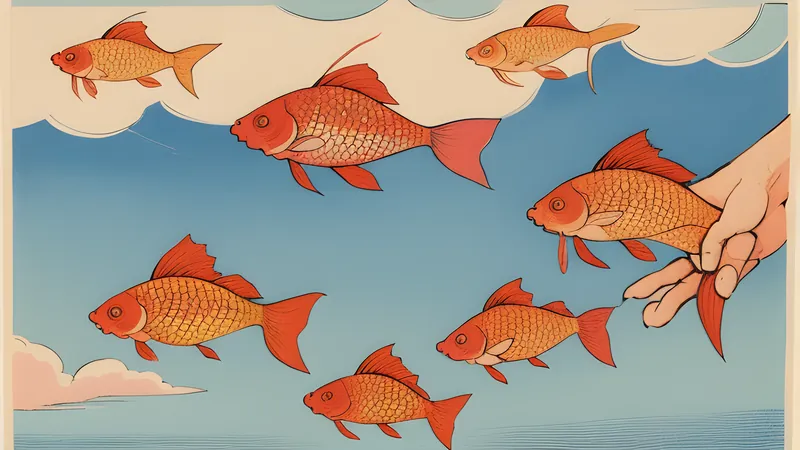
Drive through almost any Japanese town in late April or early May and you will see them long before you reach anyone’s front door: great fabric carp, sometimes three or four metres long, strung from poles and balconies and filling with the spring wind until they ripple as though swimming through the air. These are koinobori, and they are the unmistakable signal that Kodomo no Hi — Children’s Day — is near. Observed each 5 May as a national holiday, the day is given over to the health, happiness and individuality of children, and it gathers up a thousand years of imported philosophy, samurai symbolism and seasonal ritual into something that now reads as pure springtime joy. It falls at the close of Golden Week, Japan’s busiest run of public holidays, and it carries, beneath the colour, a surprisingly old and martial history.
Origins: from a women’s purification rite to Boys’ Day
The festival that became Children’s Day began life as Tango no Sekku, one of the five seasonal ceremonies, the gosekku, observed at the imperial court and celebrated on the fifth day of the fifth month. Its earliest associations were not with boys at all. In its oldest form, the day was a purification rite tied to women, who thatched roofs with iris leaves to drive out illness and misfortune as the wet season approached. The iris, with its sharp, sword-shaped leaves and its supposed power to ward off evil, sat at the heart of the observance.
The shift towards boys came later, during the Kamakura period (1185–1333), when the samurai class rose to dominance. The martial overtones of the iris — those blade-like leaves — and the homophonic play in Japanese between the word for iris and words associated with militarism made the day a natural fit for warrior households. By degrees, Tango no Sekku became an occasion for samurai families to celebrate their sons, displaying armour and helmets as emblems of strength and protection, and praying that boys would grow up tough, healthy and brave. What had been a rite about cleansing the home turned into a rite about hardening its heirs.
The carp and the waterfall
The most resonant symbol of the day arrived through a piece of borrowed myth. An old Chinese legend tells of a carp that swam doggedly upstream against a powerful current and finally leapt the falls at a place called the Dragon Gate, whereupon it was transformed into a dragon and ascended to heaven. The carp, an unglamorous river fish, became in this story the supreme emblem of perseverance: the creature that rises in the world by sheer refusal to be swept backwards.
The streamer form developed during the Edo period (1603–1867). Samurai households had long flown nobori, tall banners bearing family crests that identified military units, and over time these merged with the carp imagery to produce the first true koinobori, which appeared in Edo — present-day Tokyo. The vividly coloured carp streamers familiar today, however, are largely a flourish of the Meiji era (1868–1912), when the custom spread well beyond the warrior class and the fish multiplied into the bright family clusters now seen everywhere. The arrangement carries its own quiet meaning: traditionally a black carp for the father, a red or pink one for the mother, and a smaller carp — often blue, sometimes green or orange — for each child.
1948: how Boys’ Day became Children’s Day
For all its deep roots, the holiday as currently understood is a modern, post-war creation. In 1948, in the new constitutional order taking shape after the Second World War, the date was formally established as Kodomo no Hi, Children’s Day, and its meaning was deliberately broadened. Where Tango no Sekku had honoured boys and, by extension, fathers, the new holiday was defined to celebrate the happiness of all children and, strikingly, to express gratitude towards mothers as well. The legislation reframed a centuries-old boys’ festival as an inclusive national holiday about childhood itself.
What is charming about the result is how little of the old material was thrown away. The armour, the carp, the iris baths and the warrior dolls all survived; only their official meaning expanded. A girl in modern Japan grows up under the same leaping carp that once flew only for sons, and the festival now holds its older, boy-centred customs and its inclusive modern intent comfortably side by side.
How it is celebrated
Families with children fly koinobori outside their homes, the streamers strung in descending size. Indoors, many households display gogatsu ningyo: ornamental warrior dolls, or miniature suits of armour and kabuto helmets, set out as wishes for a child’s strength and protection. The seasonal foods are specific and beloved. Kashiwa-mochi are sweet rice cakes filled with bean paste and wrapped in an oak leaf; chimaki are sweet rice dumplings wrapped in bamboo or reed. Some families still take a warm bath scented with iris leaves — the shobu-yu — a direct survival of the festival’s ancient purifying purpose, now offered to children for good health.
In public, the private custom becomes spectacle. Communities raise great clusters of koinobori together, and some of the most striking displays string hundreds of carp on ropes spanning entire rivers and valleys, so that whole stretches of countryside seem to be swimming. The effect turns a family gesture into a collective one — a town’s worth of hopes for its young hung out in the open air.
Symbols and what they mean
Every element of the day carries an argument. The carp streamer stands for determination and the will to rise against the current. The oak leaf around the festive rice cake is no accident either: the oak does not drop its old leaves until the new ones have appeared, which made it an emblem of family continuity and the unbroken handing-on from one generation to the next. The iris, beyond its scent, supplies the martial note — sword-leaves to ward off evil and to wish a child courage. The armour and warrior dolls, softened of their original militarism, now simply voice the hope that a child will grow up safe and strong. Taken together, the symbols form a coherent wish: persevere, stay protected, and carry the family forward.
Where it sits in the Japanese year
Kodomo no Hi does not stand alone but belongs to a calendar dense with observances that each frame a stage of life or a strand of national identity. Its closest companion is its mirror image earlier in the spring. The carp-and-armour traditions of 5 May have long had a counterpart in the doll-displaying Japanese Doll Festival, Hinamatsuri, held on 3 March and closely associated with girls, so that the two festivals are habitually spoken of together as a pair bracketing the season. And as a national holiday devoted to a defining tradition, Children’s Day shares the wider impulse behind observances such as Japanese Culture Day — the desire to set aside fixed points in the year at which a society reaffirms what it values and passes those values on.
Why it matters
The deeper appeal of the day is that it gives an entire society a single, fixed moment at which to turn its attention to its youngest members. In wishing children health, strength and a bright future, families also rehearse the qualities they hope to pass on — resilience, effort, the nerve to face difficulty. The carp climbing its waterfall is a quietly profound image to hold up to a child: a promise that worthwhile things are reached by pushing against the current rather than drifting with it. The 1948 decision to fold gratitude towards mothers into the holiday deepened it further, acknowledging that the raising of children is itself a labour worth honouring, not merely the children themselves.
Fun facts
- The carp was chosen partly for its real reputation: river carp genuinely are strong, persistent swimmers able to fight upstream against stiff currents, which made the leaping-dragon legend feel earned rather than fanciful.
- Children’s Day was officially Boys’ Day until 1948; the law that renamed it also wrote in thanks to mothers, not just fathers.
- The festival began as a women’s purification rite involving iris-thatched roofs — almost the opposite of the martial, boy-centred holiday it later became.
- The bright multicoloured carp streamers most people picture are mainly a Meiji-era development; earlier koinobori were far plainer and grew out of samurai battle banners.
- The oak-leaf rice cake, kashiwa-mochi, is so tied to the season that its appearance in shop windows is one of the reliable signs that 5 May is approaching.
A closing reflection
What makes Kodomo no Hi so durable is the way it speaks to children and adults at once, in the same breath. To a child, the leaping carp is an adventure and a lesson — be brave, keep going, do not let the current win. To a parent, the same streamer snapping above the roof is something quieter and more anxious: a wish flung out into the spring wind for a small life one cannot finally protect. The genius of the day is that it lets both readings hang together on the same pole. The carp are not really decoration. They are hopes made visible, which is perhaps the most any festival can honestly offer.
Related Content