International Whale Shark Day
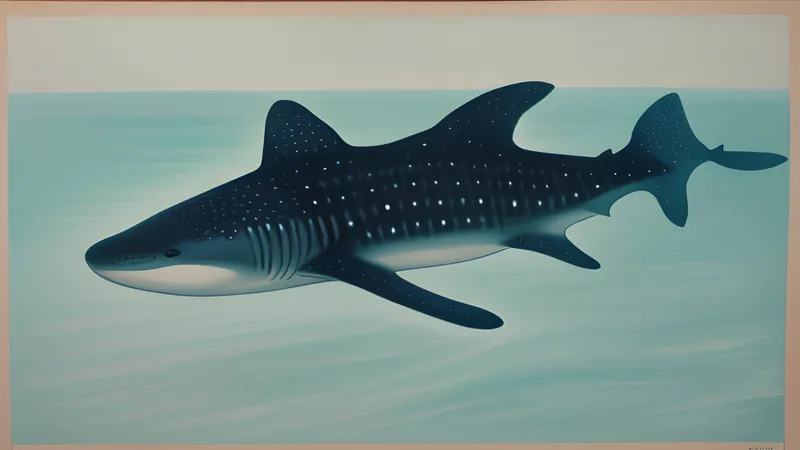
In 1828, a British army surgeon named Andrew Smith, then living in Cape Town, examined a 4.6-metre fish that had been harpooned in Table Bay and gave science its first formal description of Rhincodon typus, the whale shark. Even at that modest size, the specimen was a curiosity; the living adults can reach the length of a bus and beyond, making this the largest fish on Earth. Yet for all its bulk, the whale shark is a placid filter-feeder that strains some of the smallest organisms in the sea through its gills and poses no threat whatever to a human swimmer. International Whale Shark Day, observed every 30 August, is dedicated to this gentle giant and to the increasingly urgent business of keeping it alive.
Where the day comes from
Unlike many calendar observances, this one was born in a room full of scientists. International Whale Shark Day was declared in 2008 at the Second International Whale Shark Conference, held on Isla Holbox, a low sandy island off the Yucatán Peninsula of Mexico where the sharks gather seasonally in large numbers to feed. Mexico’s National Commission of Natural Protected Areas formalised the date during that gathering, which brought together more than forty researchers and conservationists to confront the species’ decline at the hands of overfishing, accidental capture and a warming, busier ocean. The choice of 30 August has been honoured ever since.
That origin matters to the character of the day. Because it emerged from the research and conservation community rather than from commerce, tourism or folklore, it carries a clear and serious purpose: to marshal public attention and money behind a species whose numbers are falling and whose biology makes recovery painfully slow.
The natural history of a gentle giant
The whale shark is a shark, not a whale, despite the confusing name; the “whale” refers only to its size. It belongs to a small group of filter-feeding sharks, drawing in enormous mouthfuls of water and straining out plankton, small fish, squid and fish eggs through fine sieve-like structures in its gills. It can grow to lengths estimated at up to eighteen metres or more, and may weigh many tonnes, yet divers regularly swim alongside it in complete safety. Its lifespan is thought to run to several decades and quite possibly well beyond.
The animal’s most striking feature is its skin: a dark grey or bluish hide scattered with a constellation of pale spots and stripes, arranged in a pattern unique to each individual. The hide is also remarkably thick, among the thickest of any animal, a defence against the few predators large enough to trouble an adult. Inside that vast mouth, which can gape well over a metre wide, sit thousands of tiny teeth that play no part in feeding at all, a vestige of an ancestry the whale shark has long since abandoned in favour of straining plankton.
Much of the species’ life, however, remains genuinely mysterious. Scientists still do not know with certainty where whale sharks breed, nor where their newborn young spend their earliest years, gaps in the basic record that make conservation harder than it should be. A rare insight came in 1995, when a female caught off Taiwan was found to be carrying around three hundred pups at varying stages of development, settling a long-running debate by showing that whale sharks give birth to live young rather than laying eggs. Even so, newborn whale sharks are almost never seen in the wild, and where the females go to give birth is one of marine biology’s enduring puzzles. What is clear is that the species ranges across all the warm and tropical seas of the planet and undertakes long migrations between feeding grounds, some individuals tracked swimming thousands of kilometres across open ocean.
Why it matters
The whale shark is classified as endangered. Its populations are under pressure from targeted fishing in some regions, from entanglement in nets, from collisions with the hulls and propellers of an ever-busier shipping world, and from the disruptions of warming seas. The species is especially vulnerable because it grows slowly, matures late, and ranges over enormous distances, which means losses are slow to replace and a problem in one nation’s waters can hollow out a population that surfaces in another’s.
A day devoted to the animal matters because public awareness underpins the funding, the research and the protective rules on which its survival depends. It also points to something larger than a single species. A creature that filters vast volumes of seawater for plankton is bound up intimately with the health of the whole marine system, and its fate is a barometer for the ocean it drifts through. Because the whale shark crosses national borders on its long journeys, its protection depends on cooperation between countries, a challenge it shares with the creatures honoured on World Migratory Bird Day, whose survival likewise hangs on landscapes and nations agreeing to look after the same travellers. And the affection that draws snorkellers to swim with these animals is of a piece with the warmth people lavish on the creatures of National Cat Day; fondness, in conservation, is a resource as real as money.
How it is celebrated
Observance is led largely by conservation groups, aquariums, dive operators and scientific bodies. They mark the day with public talks, educational campaigns, fundraising drives and online efforts to spread information about the species and its plight. In coastal regions where whale sharks aggregate seasonally, such as Holbox itself, Western Australia’s Ningaloo Reef, the Philippines and the Maldives, responsible eco-tourism operators often highlight the day, stressing codes of conduct for approaching the animals without harassing them. For the wider public, who may never see a whale shark in the flesh, the day is an invitation to learn about the species and to support the organisations working to protect it. The growth of whale shark tourism is itself a double-edged matter that the day’s educators often address: handled carelessly, boats and swimmers can stress the animals and even injure them, but managed well, the same tourism gives coastal communities a powerful financial reason to keep their whale sharks alive rather than fished, turning the animal from a catch into a recurring asset.
A starry solution
One of the day’s most appealing stories shows how distant fields of science can rescue a fish. In 2002 an American software engineer named Jason Holmberg had a chance encounter with a whale shark while diving in the Red Sea and was struck by the problem of telling one individual from another. Working with the marine biologist Brad Norman of the Australian nonprofit ECOCEAN, and with the astrophysicist Zaven Arzoumanian at NASA’s Goddard Space Flight Center, he realised that the shark’s spotted skin resembled nothing so much as a starfield. They adapted the Groth algorithm, a pattern-matching technique built to map stars and galaxies, to recognise individual whale sharks from their spots. The resulting photo-identification database, into which anyone from researchers to tourists can upload a snapshot, has catalogued thousands of individual animals and turned holidaymakers into citizen scientists.
Symbols and traditions
The whale shark’s spotted skin is the day’s natural emblem, and the constellation imagery, fitting for an animal identified by software meant for the heavens, recurs across campaign material. The other quiet motif is the encounter itself: the photograph or video of a swimmer dwarfed by a serene, slow-moving giant, an image that conveys both the animal’s scale and its harmlessness more persuasively than any statistic. That sense of awe, of meeting something vast and unbothered by your presence, is much of what the day tries to protect.
Fun facts
- It is the largest fish in the sea by a wide margin, yet it survives almost entirely on tiny drifting plankton, among the smallest food in the ocean.
- Each whale shark’s pattern of spots is so individually distinctive that conservationists identify particular animals using the Groth algorithm, software originally written by astronomers to map stars.
- Nobody has reliably documented where whale sharks give birth or where their pups spend their first years, one of the great open questions in marine biology.
- The species was first described in 1828 by Andrew Smith from a single specimen harpooned in Table Bay, off Cape Town, South Africa.
A closing reflection
International Whale Shark Day asks us to hold two feelings at once: wonder at a creature of extraordinary scale and gentleness, and concern for its precarious future. There is a neat irony in the fact that the tools we use to keep track of the largest fish in the sea were first invented to chart the stars, as if the same impulse to map what is vast and far away could be turned, for once, on something close enough to swim beside. To mark the thirtieth of August is to take a small part in that effort, and to remember that the biggest fish alive depends, in the end, on the attention of beings far smaller than itself.
Related Content