International Vulture Awareness Day
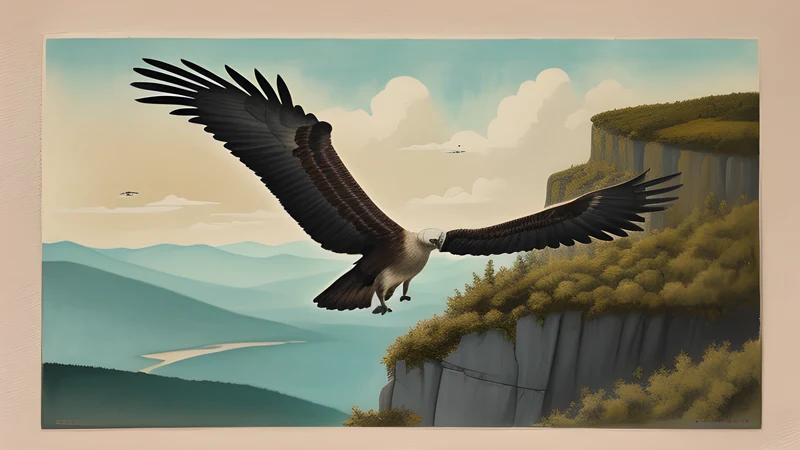
On the first Saturday of September, zoos in Andover, rehabilitation centres in the Free State of South Africa, and hillside reserves across the Pyrenees open their gates for a bird that most people have spent their lives being taught to dislike. International Vulture Awareness Day exists because vultures are, by almost any ecological measure, among the most useful animals alive, and by almost any cultural measure among the least loved. The day sets out to close that gap.
The birds themselves
There are twenty-three species of vulture, and they fall into two groups that are not closely related at all. The Old World vultures of Africa, Asia and Europe belong to the same family as eagles and hawks. The New World vultures of the Americas, including the turkey vulture and the enormous Andean and California condors, are a separate lineage entirely, and the resemblance between the two is a case of convergent evolution: both arrived at the same bald-headed, carrion-eating design because it works.
That design is remarkable. A vulture’s stomach acid is corrosive enough to destroy anthrax, botulism and cholera bacteria that would kill most other scavengers. The bald head, so often called ugly, keeps rotting flesh from fouling feathers the bird cannot easily clean. Turkey vultures locate carcasses by smell, following the faint scent of ethyl mercaptan rising from decay, an ability rare among birds and one that gas-pipeline engineers have exploited, adding the same compound to fuel and then watching for circling vultures to reveal a leak. Many species cool themselves and disinfect their legs by deliberately urinating on them, a habit called urohidrosis. The bearded vulture, or lammergeier, lives almost entirely on bone, carrying skeletons aloft and dropping them onto rock slabs to shatter them into swallowable pieces, then digesting the fragments with acid strong enough to dissolve them within a day.
Size ranges enormously across the family. The hooded vulture of West Africa is a slight, scruffy bird that scavenges around villages, while the cinereous vulture of Eurasia is one of the heaviest flying birds in the world, a dark giant with a wingspan approaching three metres. What they share is a body built for soaring: broad wings that ride rising columns of warm air, letting a vulture cover a hundred kilometres in a day while barely beating a wing, its eyes scanning the ground and, crucially, watching the behaviour of every other vulture on the horizon.
History
The modern awareness day grew out of a genuine emergency. Across the 1990s, the vultures of the Indian subcontinent began to vanish at a speed no one could explain. Three species of Gyps vulture that had once darkened the skies over Delhi and Karachi collapsed by more than ninety-nine per cent in barely a decade, one of the fastest declines of any bird ever recorded. Carcasses that would have been stripped clean in an hour lay rotting for days in the sun.
The cause was identified in 2004 by a team led by the veterinary scientist Lindsay Oaks, working in Pakistan. The culprit was diclofenac, a cheap anti-inflammatory given to working cattle. Cows treated with it and then left for vultures, as tradition dictated, carried a dose that caused fatal kidney failure in any bird that fed on them. India, Pakistan and Nepal banned the veterinary drug in 2006, but the recovery has been agonisingly slow, partly because the drug remained available for human use and continued to leak into animal medicine. The collapse rippled outward in ways that took economists years to add up: feral dog numbers rose sharply as carcasses went uneaten, and with them came a measurable increase in rabies deaths across India. For the Parsi community of Mumbai, whose Towers of Silence depend on vultures to consume the dead, the loss struck at the heart of a religious practice thousands of years old, forcing them to install solar reflectors to speed decomposition instead.
Against that backdrop, the Birds of Prey Programme in South Africa and the Hawk Conservancy Trust in Hampshire began coordinating a single awareness day, and the first International Vulture Awareness Day was held in September 2009. It absorbed and expanded earlier regional efforts, and has since grown into a loose global network of well over a hundred participating organisations across dozens of countries each year.
Why it matters
A vulture removes disease from a landscape faster and more thoroughly than any human sanitation system. A committee of vultures can reduce a large carcass to bone in under an hour, halting the spread of pathogens before they reach water or livestock. Conservationists have started putting a monetary figure on this, estimating that India’s lost vultures cost the country tens of billions of dollars through the public-health fallout of rotting carcasses and booming scavenger populations, an accidental natural experiment in what happens when a keystone scavenger is removed.
The threats have broadened since the diclofenac crisis. In parts of Africa, poachers deliberately poison carcasses to kill vultures whose circling would otherwise alert rangers to a fresh elephant or rhino kill; a single laced carcass can wipe out hundreds of birds at once. Others are killed for belief-based use, their heads sold in the mistaken conviction that they grant foresight or lucky visions. Power lines electrocute them, wind turbines strike them, and lead fragments from hunters’ ammunition poison the California condor, a species that fell to just twenty-two individuals in 1987 before a captive-breeding programme brought it slowly back from the edge to several hundred birds today.
How it is marked
The day has no single ceremony. Wildlife parks run vulture-feeding demonstrations and let visitors meet captive birds up close, hoping proximity will do what argument cannot. Conservation groups host “vulture restaurants”, supervised feeding stations that provide clean, drug-free carcasses and give researchers a chance to count and tag the birds that arrive. Schools build nest boxes, birdwatching societies run population counts, and online the day fills with photographs meant to reframe a much-maligned face.
Much of the effort is educational in the plainest sense: explaining that these birds are a free, self-renewing public-health service with feathers, wrongly feared for centuries as omens and carriers of filth. The awareness this day builds shares a lineage with the broader calendar of conservation observances such as World Wildlife Conservation Day and the growing list of single-species campaigns like World Giraffe Day that use one charismatic animal to make a wider argument about extinction. Even a much smaller scavenger day, such as those focused on seals and other coastal cleaners, leans on the same idea: that the animals doing the least glamorous work are often the ones holding an ecosystem together.
Around the world
In Spain and France, the griffon vulture has become a conservation success, its numbers rebuilding along the mountain ranges after decades of protection, and reintroduced bearded vultures once again glide over Alpine valleys where they had been shot out a century before. In Nepal, community-run “vulture safe zones” have banned diclofenac across wide districts and begun to see the first tentative signs of recovery, with captive-bred birds released back into the wild. In southern Africa, tracking devices fitted on tagged birds have revealed just how far a single vulture ranges, sometimes crossing several national borders in a week, which makes their protection an inescapably international problem and explains why the awareness day was designed to be global from the start.
Symbols and old meanings
Vultures carry a heavier symbolic load than almost any other bird. Ancient Egypt revered them: the goddess Nekhbet, protector of Upper Egypt and of the pharaoh, was depicted as a vulture, and the birds were associated with maternal devotion because Egyptians believed, wrongly but tenderly, that all vultures were female and conceived by facing into the wind. In Tibetan and Zoroastrian sky-burial traditions the vulture is the honoured agent of a clean, generous return of the body to the world. Only in more recent Western culture did the bird curdle into a cartoon of greed and death, the circling shadow over a dying man in the desert, an image that conservationists on this day work patiently to unpick.
Fun facts
A group of vultures has different names depending on what they are doing: a resting group is a committee, a group in flight is a kettle, and a group feeding on a carcass is a wake. The Rüppell’s griffon vulture holds the record for the highest confirmed bird flight, one having collided with an aircraft at around eleven thousand metres, higher than the summit of Everest. The Andean condor has the largest wingspan of any land bird, stretching past three metres, and can stay aloft for hours barely flapping. The bearded vulture’s pale plumage is often stained a deep rust-orange because the bird deliberately bathes in iron-rich mud, a cosmetic habit whose purpose scientists still debate. And vultures find food so efficiently in part by spying on one another: when one bird drops from the sky towards a carcass, every vulture within eyeshot follows, turning a scattered flock into a coordinated search grid stretched across the landscape.
A closing reflection
The trouble with vultures is that they arrive at the end of the story, and no one likes the character who appears only when something has already died. Yet the work they do is the quiet closing of a loop, the return of the dead to the soil without leaving disease behind. A landscape with healthy vultures is a landscape that cleans itself, and the sudden silence over India showed exactly how much we had been taking for free. The first Saturday in September asks for something modest and difficult at once: to look at the least beautiful bird in the sky and recognise the shape of a debt we owe it.
Related Content