International Translation Day
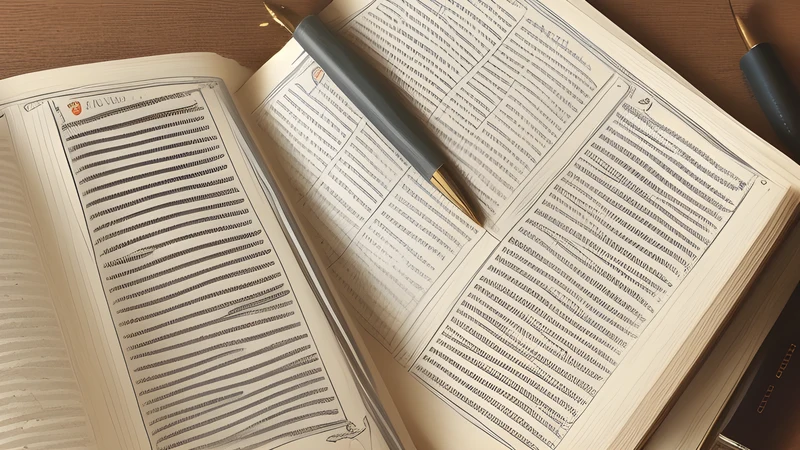
On 30 September in the year 420, a cantankerous scholar named Eusebius Sophronius Hieronymus died in a cell near the grotto of the Nativity in Bethlehem, having spent the better part of three decades wrestling the Hebrew and Greek scriptures into Latin. The world remembers him as Saint Jerome, patron saint of translators, librarians and encyclopaedists, and his death-day has become International Translation Day: the one date in the calendar when the people who move meaning between languages are asked to step out from behind the text and take a bow.
The scholar behind the date
Jerome was born around 342 in Stridon, a town on the border of Dalmatia and Pannonia whose exact site is now lost. He studied rhetoric in Rome, learned Greek, and then, in a decision that shaped a millennium of European thought, taught himself Hebrew from a Jewish convert so that he could translate the Old Testament from its original tongue rather than from an intermediate Greek version. Commissioned by Pope Damasus I in 382 to standardise the various Latin scriptures then in circulation, he produced what came to be called the Vulgate, the “common” edition. The Council of Trent declared it the Catholic Church’s official Latin text in 1546, more than eleven centuries after his death.
He was a difficult, brilliant man who quarrelled with almost everyone and wrote prose sharp enough to draw blood. He also left translators their founding text of professional anxiety. In a letter to Pammachius he argued that a good translator renders “sense for sense, not word for word”, a principle still fought over in every seminar room where the craft is taught.
From Saint Jerome to a United Nations resolution
The modern observance grew from an institution rather than a church. The International Federation of Translators, known by its French initials FIT, was founded in Paris in 1953 to give the profession a global voice. FIT began promoting 30 September as a translators’ day almost from the start, and in 1991 launched it formally as an annual international event with a theme attached to each year.
For a long time it remained an industry affair. That changed on 24 May 2017, when the United Nations General Assembly adopted resolution 71/288, recognising the role of professional translation in connecting nations and formally designating 30 September as International Translation Day across the UN system. The resolution acknowledged something the organisation knew from daily experience: the UN runs on six official languages, and every document, speech and treaty that passes between them depends on translators and interpreters who are rarely named.
History written in the gaps between languages
The story of translation is older than any single saint. Around the third century BC in Alexandria, according to tradition, seventy-two Jewish scholars translated the Hebrew Bible into Greek, producing the Septuagint, so named for the round number seventy. It became the scripture of Greek-speaking Jews and early Christians and remains a monument to the idea that a sacred text could survive the crossing into another tongue.
The most famous object in the history of translation is a broken slab of granodiorite. Napoleon’s soldiers unearthed the Rosetta Stone near the Egyptian town of Rashid in 1799. It carried the same decree in three scripts, hieroglyphic, Demotic and Greek, and because scholars could read the Greek they finally had a key to the others. Jean-François Champollion announced his decipherment of the hieroglyphs in 1822, using the stone to unlock three thousand years of Egyptian writing that had gone silent.
Translation has also decided history in real time. When Allied and Axis leaders needed to be understood at the Nuremberg trials in 1945 and 1946, the proceedings pioneered simultaneous interpreting on a large scale, with interpreters working live through headsets in German, English, French and Russian. The technique they refined under enormous pressure became the standard for the United Nations and the European institutions that followed.
The translators who shaped their languages
Some translations did more than carry a text across a border; they rebuilt the language they landed in. Martin Luther’s German New Testament of 1522, drafted in about eleven weeks while he was hiding in the Wartburg castle, gave the German-speaking lands a shared literary standard and helped forge modern High German out of a patchwork of dialects. In England, the scholars who produced the King James Bible of 1611 worked in six committees across Oxford, Cambridge and Westminster, and their cadences seeped so deeply into English that phrases like “the salt of the earth” and “a thorn in the flesh” are now spoken by people who have never opened the book.
Literary translators have pulled off similar feats more quietly. Constance Garnett, working in England around the turn of the twentieth century, translated seventy-odd volumes of Tolstoy, Dostoevsky, Chekhov and Turgenev and, for two generations of English readers, effectively introduced Russian literature to their language. Edward FitzGerald’s loose 1859 rendering of the Rubaiyat of Omar Khayyam was so freely done that scholars still argue whether it is translation or original poetry, yet it made a medieval Persian astronomer into a household name in Victorian Britain. The lesson these figures leave is that a translator is never a neutral pane of glass; the choices are authorship of a particular kind.
Why the day matters
Every field that crosses a border rides on translators. Medicine, diplomacy, law, software, literature and trade all depend on the assumption that an idea can travel from one language into another without arriving as nonsense. The stakes are easy to underestimate until something breaks. A single mistranslated clause in a contract, a misread instruction on a medicine label or a garbled phrase in a ceasefire negotiation can carry consequences far larger than the words involved.
The day also honours a peculiar kind of invisibility. Good translation is felt by its absence; readers notice a translator only when the work goes wrong. International Translation Day exists partly to correct that, insisting that the person who carried a novel across a language deserves a name on the cover and a share of the credit.
How it is marked
Translators’ associations around the world use 30 September for conferences, workshops, award ceremonies and public readings. FIT announces a theme each year, on subjects ranging from indigenous languages to the ethics of machine translation, and member associations build events around it. Universities run translation slams, in which two translators render the same passage and defend their choices in front of an audience. Publishers use the day to spotlight translated fiction, and literary prizes for translation often cluster their announcements nearby. For a profession that spends most of its time alone with a keyboard, it is a rare moment of visible community.
A craft under new pressure
No translator today can ignore the machine. The first public demonstration of machine translation came in 1954, when the Georgetown-IBM experiment translated a few dozen Russian sentences into English and its backers predicted the problem would be solved within years. It was not. Statistical and then neural systems, culminating in the tools now built into phones and browsers, have transformed everyday translation of menus, signs and emails. Yet literary nuance, legal precision and cultural subtext still defeat the machines often enough that human translators remain essential, increasingly as editors and quality guarantors rather than first drafters. The day has become an annual referendum on what the craft is for.
Fun facts
Saint Jerome is often shown in art with a lion dozing at his feet, from a medieval legend that he removed a thorn from the animal’s paw. The story almost certainly belongs to another saint, Gerasimus, whose name was confused with Jerome’s, but the lion stuck.
Michelangelo’s marble Moses in Rome has two horns on his head because of a translation choice. The Hebrew word “karan” can mean both “to shine” and “to grow horns”; Jerome chose horns, and centuries of European art gave Moses a horned brow as a result.
The Italian pun “traduttore, traditore”, meaning “translator, traitor”, is itself untranslatable into English without losing the rhyme, which is precisely why translators love quoting it.
The Bible remains the most translated book in the world, with the full text or portions available in well over three thousand languages, a scale no other work approaches.
The word “interpreter” and the word “translator” are not interchangeable in the profession: interpreters work with the spoken word in real time, translators with written text and the luxury of revision.
The longest-serving translation in continuous use may be the Septuagint’s numbering of the seventy, which gave us the word for the whole genre of scholarly editions produced by committee.
The busiest translated author in the world writes detective fiction: Agatha Christie, whose novels have been rendered into more than a hundred languages, outpacing every writer except the anonymous authors of scripture.
A closing reflection
There is a quiet humility built into 30 September. It honours the people who carry other writers’ names to strangers, the ones who spend their lives ensuring that a thought born in one language does not die at the water’s edge of another. Jerome spent his final decades in a cave arguing about the meaning of a single word, and the day named for him suggests that such arguments are among the most consequential humans have. Every idea that has ever outlived its birthplace did so because someone was willing to carry it across. Those who value the reach of the written word might also look in on World Calligraphy Day and, for the spoken side of the same coin, World Voice Day.
Related Content