International Sloth Day
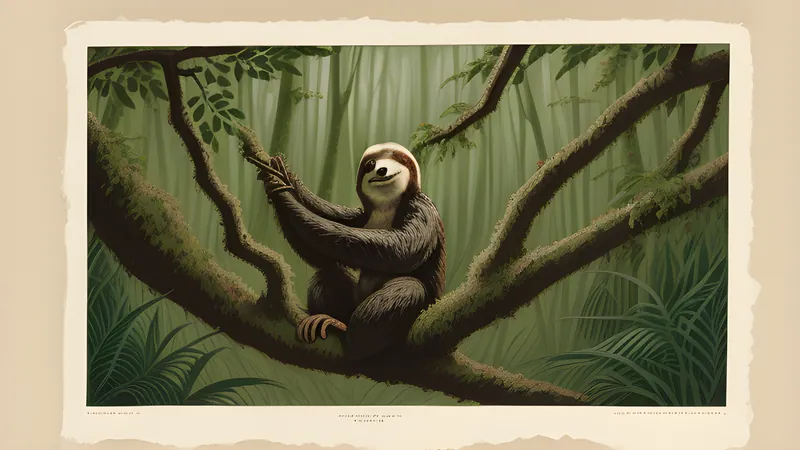
In 2010, at a rescue and rehabilitation centre in Colombia’s Caldas department, staff at the AIUNAU Foundation set aside a day to draw attention to an animal so slow-moving that its own biology seemed to work against it ever getting noticed. Sloths were turning up at their gates in growing numbers, orphaned by the pet trade, injured by power lines and dogs, or seized from tourists paying to hold them for photographs, and the foundation reasoned that an animal this vulnerable needed an annual moment in the spotlight it otherwise never sought. That moment, International Sloth Day, falls every year on 20 October and has since spread from one Colombian rescue centre into a global observance backed by zoos, universities and wildlife charities across the Americas.
Where the day began
AIUNAU, a Colombian non-profit devoted to the rescue, rehabilitation and release of sloths, is consistently credited as the originator of International Sloth Day, and its founders launched the observance specifically to counter two problems they were seeing at first hand: the illegal wildlife trade taking sloths from the forest as pets, and the tourism industry in parts of Central and South America that used sloths as photo props, handling animals for hours at a stretch in conditions that caused severe, sometimes fatal, stress. The date, 20 October, carries no older folkloric or scientific significance; it was chosen simply as a fixed annual peg for the campaign. Within a few years other rescue organisations, including the Sloth Conservation Foundation founded by the British zoologist Dr Rebecca Cliffe in Costa Rica in 2017, had adopted and amplified the date, and it now anchors a season of talks, fundraising drives and social media campaigns run from Panama to Florida.
Two families, not one animal
The word “sloth” describes two entirely separate lineages that happen to look and move alike through one of the more striking examples of convergent evolution in the mammal world. Three-toed sloths, genus Bradypus, and two-toed sloths, genus Choloepus, are not closely related within the sloth order; they diverged from a common ancestor tens of millions of years ago and evolved their slow, upside-down arboreal lifestyle independently, arriving at similar solutions to the same problem, much as the Sumatran and Malayan tigers evolved parallel adaptations to different corners of the same forest habitat. The two groups differ more than their names suggest: three-toed sloths have a distinctive facial “smile” and extra neck vertebrae, while two-toed sloths are larger, more active at night, and capable of a surprisingly fast bite if handled carelessly. Modern sloths are also a diminished remnant of a much larger family. Their prehistoric relatives included ground sloths the size of small elephants, among them Megatherium, which stood several metres tall on its hind legs and roamed South America until roughly 12,000 years ago, and giant aquatic sloths that foraged in coastal Peruvian waters.
The animal biology tries hardest to slow down
Sloths owe their name to one of the lowest metabolic rates recorded in any mammal, a trait that shapes almost everything else about them. Digestion of the tough, low-nutrient leaves that make up most of their diet can take as long as a month to complete, moving through a multi-chambered stomach not unlike a cow’s, and the animal’s body temperature drifts with the ambient temperature far more than most mammals tolerate, dropping notably overnight and forcing sloths to bask in patches of sunlight to warm back up. Three-toed sloths carry between eight and ten cervical vertebrae, roughly twice the seven found in nearly every other mammal including giraffes, an anomaly that lets them rotate their heads through close to 270 degrees to scan the canopy without moving their bodies at all, conserving the energy their slow metabolism cannot easily replace.
That same drive towards low energy expenditure produces one of the more genuinely surprising facts about sloth biology: they defecate only around once a week, and when the moment comes, a three-toed sloth descends from the safety of the canopy all the way to the forest floor to do it, digging a small hole with its stub of a tail before climbing back up. This is, by any measure, a dangerous errand: ground-level excursions are when sloths are overwhelmingly most vulnerable to predators such as jaguars and ocelots, and biologists have long puzzled over why an animal built around minimising risk and energy expenditure would take on a weekly journey that seems to maximise both. Research led by the biologist Jonathan Pauli and later expanded by Rebecca Cliffe has linked the behaviour to a remarkable ecosystem living in the sloth’s own fur: pyralid moths of the genus Cryptoses lay their eggs in sloth dung, and the moths’ presence in a sloth’s coat appears to help fertilise the algae that grows there, algae the sloth may in turn gain some nutritional or camouflage benefit from, though the full picture of costs and benefits is still being worked out. Whatever the final explanation, it means a sloth’s toilet habits sustain a small, semi-portable ecosystem of moths, algae and fungi that lives nowhere else.
From forest curiosity to conservation cause
For most of the twentieth century sloths were treated as a biological oddity rather than a conservation priority, written up in natural history accounts for their strangeness rather than studied for their population trends. That began to change as deforestation across Central and South America accelerated and the exotic pet and tourism trades put direct pressure on wild populations for the first time. The pygmy three-toed sloth, confined entirely to the small mangrove-fringed island of Isla Escudo de Veraguas off the coast of Panama, is now listed as critically endangered, with population estimates in the low hundreds, making it one of the rarest mammals in the Americas despite receiving a fraction of the attention given to comparably endangered species elsewhere. Mainland sloth species are not immune either: habitat fragmentation from agriculture and road building isolates populations in patches of forest too small to sustain healthy genetic diversity, while uninsulated power lines running through the canopy kill and maim sloths attempting to cross gaps in the tree cover, a hazard rescue centres across Costa Rica now treat as one of the leading causes of the injuries they see. Some Costa Rican municipalities and utility companies have since begun installing insulated cable sleeves and purpose-built rope bridges strung between trees on either side of roads, a low-cost fix that rescue centres report has measurably cut the number of electrocution and roadkill cases arriving at their doors, evidence that the animal’s plight responds to fairly modest, targeted interventions.
How the day is marked
International Sloth Day leans heavily on rescue centres and sanctuaries as its public face, several of which run open days, guided tours and adoption schemes timed to the date, alongside talks aimed specifically at discouraging tourists from paying for sloth photo opportunities that keep the demand for captured wild animals alive. Zoos outside the animal’s native range mark the day with keeper talks and enrichment demonstrations, using resident sloths as ambassadors for a species most visitors will otherwise only ever see draped, unmoving, over a branch. Universities and conservation groups use the date to publish new research, an approach conservation communicators also favour for occasions such as World Snow Leopard Day, where a guaranteed spike in public attention gives findings a wider audience than a routine journal publication would attract on its own. Social media campaigns, often built around video of sloths swimming, an activity at which they are unexpectedly proficient, form the day’s most visible public output, converting an animal’s reputation for comic slowness into genuine engagement with its conservation needs. Some sanctuaries also use the date to publish annual intake figures, a running count of orphaned, injured and confiscated animals that has, over the years the day has run, become one of the more concrete ways to track pressure on wild sloth populations across Central America.
Fun facts
Sloths are strong swimmers and can slow their heart rate to roughly a third of its normal resting pace to conserve oxygen while submerged, letting them cross rivers that would otherwise be impassable barriers between patches of forest. A three-toed sloth’s neck houses between eight and ten vertebrae against the seven found in almost every other mammal, from mice to giraffes, granting it a near-owl-like range of head rotation. Sloth fur grows in the opposite direction to that of most mammals, from belly to back rather than back to belly, an adaptation that lets rain run off efficiently while the animal hangs upside down. The pygmy three-toed sloth exists on a single small island off Panama and nowhere else on Earth. And a sloth’s weekly descent to defecate on the forest floor sustains a miniature ecosystem of moths and algae living in its fur, a genuinely symbiotic relationship still being unravelled by biologists.
A Closing Reflection
The sloth’s slowness looks, at a casual glance, like a design flaw evolution somehow failed to correct. Closer study suggests the opposite: an animal that has tuned every system it has, metabolism, muscle, even its willingness to risk a predator’s jaws once a week, towards spending as little energy as possible in a forest canopy that rewards patience over speed. International Sloth Day exists because that same unhurried strategy, so well suited to a life spent hanging from branches, offers no defence at all against a chainsaw, a power line or a tourist with a camera, and the animal needs advocates who move at a rather different pace than it does.
Related Content