International Falafel Day
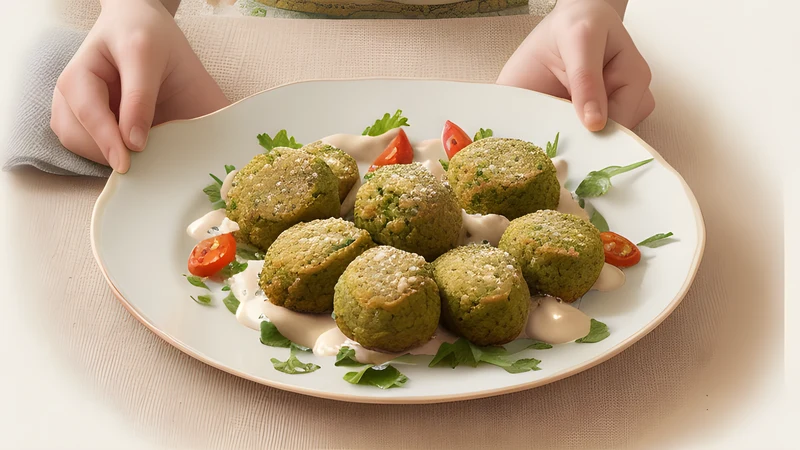
Every 12 June, cooks and eaters from Cairo to Chicago mark International Falafel Day, an unofficial but widely observed tribute to one of the oldest and most fiercely contested street foods on earth. The fritter itself is disarmingly simple, a ball of ground pulses and herbs dropped into hot oil until the outside shatters and the inside stays soft and green. The arguments around it, about who invented it, what belongs inside it, and which nation may claim it, are anything but simple, and that tension is exactly why the day is worth keeping.
What falafel is
A falafel is a deep-fried patty or ball made from ground chickpeas, dried fava beans, or a mixture of the two, bound with onion, garlic, parsley or coriander, cumin, and a little flour, then fried until deep brown. Crucially, the pulses are soaked and ground raw rather than cooked first; the frying is what turns them edible. That single technical detail is what separates a good falafel, crisp-shelled and steaming inside, from the dense, greasy disappointment served by a lazy kitchen.
It is almost never eaten alone. The classic presentation stuffs several falafel into a pocket of pita or rolls them in a flatbread with tahini sauce, chopped salad, pickled turnips or cucumbers, and sometimes chilli or the tangy Iraqi mango sauce called amba. The result is one of the great portable meals, cheap, filling and entirely plant-based, which is why falafel long ago escaped the Middle East and became a fixture of vegetarian menus worldwide.
Where it began
The honest answer is that nobody can prove where falafel started, and the leading theory points to Egypt. There it is called ta’amia, and it is made from dried fava beans, which give it a paler, greener crumb and a slightly flatter shape than the Levantine chickpea version. A popular account holds that Coptic Christians in Egypt developed ta’amia as a substitute for meat during the long fasting periods of the Coptic calendar, when animal products are forbidden. Some enthusiasts push the origin back further still, to the food of the pharaohs, though the documentary evidence thins to nothing that far back and the claim rests more on romance than record.
As the dish travelled north into the Levant, cooks in what are now Lebanon, Syria, Jordan, Palestine and Israel adapted it to the chickpea, which grew more readily there, and the round chickpea version became the one most of the world now recognises. The name is Arabic, falāfil, usually taken to be a plural, though even the etymology is debated: some trace it to a word for pepper, others to an Aramaic root meaning small round things. The uncertainty is fitting for a food that so many cultures insist they own.
History and the politics of a fritter
Falafel’s modern history is inseparable from the politics of the eastern Mediterranean. When large numbers of Jewish immigrants arrived in the land that became Israel, many from Yemen and other parts of the Arab world, they adopted falafel, and it was marketed heavily in the twentieth century as a cheap, nourishing national food. By the 1950s it was being called Israel’s national dish, sold from stalls across the country and later promoted abroad as a symbol of Israeli cuisine.
That framing has long angered Palestinians and other Arabs, for whom falafel is a dish their families have made for generations, and the resulting quarrel has been only half-jokingly named the “falafel wars,” a companion to the parallel disputes over hummus. Lebanon has at times threatened legal action over the international branding of Levantine foods as Israeli. The deeper point beneath the noise is that falafel belongs to a shared regional larder older than any of the modern states arguing over it, a food that predates the borders now drawn around it. International Falafel Day, by celebrating the fritter without a flag, quietly sidesteps the fight, and it sits naturally beside kindred observances such as World Hummus Day and World Tapas Day, each honouring a small, shareable food that crosses borders more easily than people do.
Why the day matters
Beyond the pleasure of eating them, falafel carry a genuine nutritional case. They are made from legumes, are naturally vegan, and deliver protein, fibre and iron in a form that is cheap enough to feed a crowd. As Western diets shift, hesitantly, towards more plants and less meat, falafel offer a template that predates the trend by centuries, a fast food that happens to be built on beans rather than beef. A day devoted to them is, among other things, an argument that eating well and eating plainly need not be opposites.
How the day is celebrated
International Falafel Day is a grassroots affair with no single governing body, spread largely through restaurants, food writers and social media. Middle Eastern eateries run promotions, offer free falafel with a meal, or stage tasting events. Home cooks post their recipes and their frying disasters in roughly equal measure. Food charities have used the day to highlight plant-based eating and to raise money, folding the fritter into causes larger than lunch.
Because it is decentralised, the day looks different everywhere. In London it might mean a queue outside a Lebanese takeaway; in Berlin, where falafel is a late-night institution, it means the same crowd that would otherwise be eating döner; in New York it means the halal carts and the vegetarian delis both claiming the moment. The lack of central control is the point: the day belongs to whoever makes and eats the food.
Variations across the region
The fava-versus-chickpea divide is the great fault line. Egyptian ta’amia keeps to fava beans and is often rolled in sesame seeds before frying. Levantine falafel favours chickpeas and a redder tint from more spice. Palestinian versions frequently press the mixture flat with a hole in the centre, using a special hinged scoop called an aleb falafel that shapes and drops the patty in one motion. Yemeni and Iraqi cooks bring their own spice balances, and Israeli stalls layer on the pickles, sauces and salads until the pita can barely close. Every one of these is defended by someone as the correct way, which tells you more about identity than about cookery.
Fun facts
The world’s largest falafel on record was made in Jordan in 2012, a single monstrous fritter weighing in at around 74.75 kilograms, certified by Guinness World Records and made by a team of chefs in Amman.
Egyptian ta’amia is green inside because it uses fava beans and a heavy hand of fresh herbs, whereas the Levantine chickpea version is paler and sandier in colour, so you can often guess a falafel’s homeland by breaking one open.
The mixture must be ground from soaked but uncooked pulses; if you use tinned, pre-cooked chickpeas the falafel will fall apart in the oil, a mistake that catches out countless first-time cooks.
Falafel became a cornerstone of Western vegetarian eating in the second half of the twentieth century, arriving in many European and American cities decades before the plant-based movement gave it a marketing vocabulary.
Falafel goes global
The dish’s leap out of the Middle East accelerated after the 1970s, carried by two very different waves: Arab and Israeli emigration on one hand, and the Western vegetarian and health-food movements on the other. In Germany, falafel became a staple of the same immigrant-run fast-food scene that gave the country its beloved döner kebab, so that a falafel wrap is now as much a Berlin food as a Beirut one. In the United States and Britain, it entered through wholefood cafés and university towns, where it offered a filling, meat-free meal at a time when vegetarian options were scarce and grim. By the twenty-first century falafel had become genuinely borderless, sold frozen in supermarkets, served at festivals, and reinvented by chefs who bake rather than fry it or tint it pink with beetroot. Purists wince at the innovations, but the spread is the strongest possible proof of the fritter’s appeal: a food invented to stretch a fast now feeds a planet.
The etymology may be circular: one widely cited theory holds that falāfil derives from an Aramaic word meaning small round objects, which would make the fritter’s name a description of its shape rather than its taste.
In some Levantine kitchens the raw mixture is left to rest with a pinch of bicarbonate of soda, which lightens the texture and helps the interior stay fluffy, a small chemical trick that separates the professional stalls from the amateurs.
A closing reflection
There is something quietly hopeful in a food so many peoples claim as their own. The quarrel over falafel is real, and it stands in for larger and more painful disputes, yet the fritter keeps being made in the same hot oil in kitchens on every side of every line. International Falafel Day asks only that we make it, eat it, and perhaps remember that a recipe old enough to be shared is old enough to be shared honestly. The crisp shell and the soft green centre do not know which passport they carry, and on 12 June it is worth eating one in that spirit.
Related Content